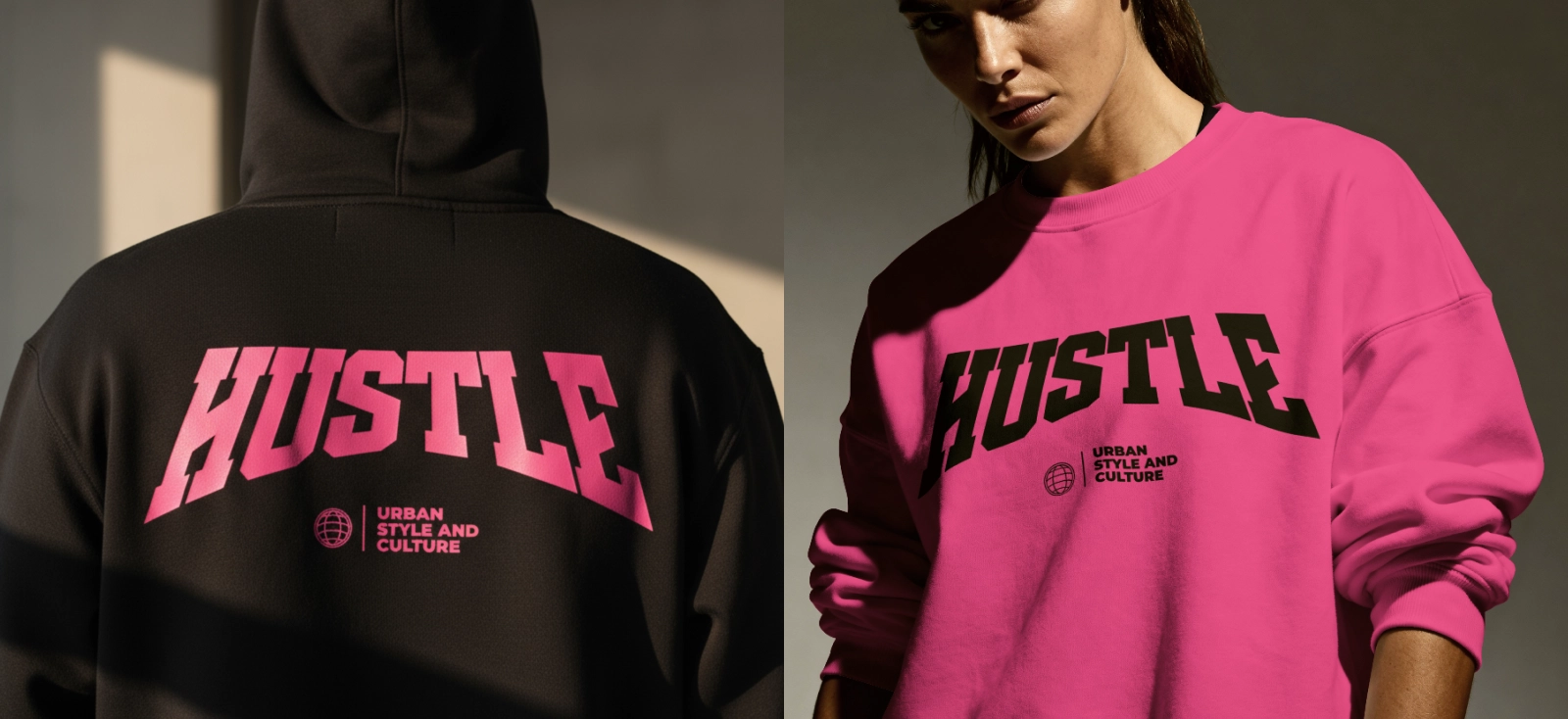
Choosing between a hoodie and a sweatshirt sounds simple until you’re trying to match the right vibe, warmth level, and silhouette.
If you’re here as a consumer, you probably want the quick differences, how they style, and which one feels warmer or more “you.”
If you’re here as a creator or seller, the real question is bigger: which one is the better canvas for your brand or merch drop? Hoodies can add perceived value and streetwear energy, but they also introduce design constraints like kangaroo pockets, zipper splits, and hood seams.
Sweatshirts are cleaner and often easier to print on, which can make them a reliable best-seller for minimalist logos, collegiate graphics, and embroidered chest marks.
In this guide, we’ll start with a clear definition (so you get the “what’s the difference” answer fast), then break down 10 key differences that matter for styling and merchandising.
After that, you’ll get 20 print-on-demand design ideas you can execute with Kittl templates, with placement tips that help your artwork look intentional on each garment.
What’s the difference between a hoodie and a sweatshirt?
| Feature | Hoodie | Sweatshirt | Best for POD |
| Core definition | Crewneck sweatshirt with an attached hood | Collarless, long-sleeved pullover with no hood | Use this row to answer “what’s the difference between a hoodie and a sweatshirt” fast on your product pages |
| Neckline and silhouette | Hood adds bulk and a more casual, streetwear look | Clean crewneck line that reads more polished | Sweatshirts for “elevated basics” brands, hoodies for streetwear and creator merch |
| Pockets | Often has a kangaroo pocket that interrupts lower-front designs | Typically pocketless with a clean front panel | Hoodies for back prints and sleeves; sweatshirts for big center-chest graphics |
| Closures | Pullover or zip-up options | Usually pullover only | Zip hoodies for split designs or left-chest marks; sweatshirts for simple front layouts |
| Front print canvas | Pocket seam or zipper reduces uninterrupted space | Large uninterrupted front area | Sweatshirts for bold front statements; hoodies for upper-chest logos or back hits |
| Back print canvas | Large, uninterrupted back panel | Large, uninterrupted back panel | Hoodies shine with oversized back graphics and drop-style designs |
| Warmth and coverage | Added warmth and wind protection from the hood | Warm but less coverage around neck and head | Hoodies for fall and winter drops; sweatshirts for year-round basics |
| Layering | Usually worn as an outer layer because the hood adds bulk | Easy to layer under jackets and coats | Sweatshirts for “daily uniform” collections; hoodies for cozy top-layer merch |
| Style vibe | Casual, youth culture, streetwear-coded | Collegiate, vintage, minimalist, smart-casual-friendly | Match designs to niche: bold graphics for hoodies, cleaner typography for sweatshirts |
| Easiest placements | Back, sleeves, left chest, upper chest above the pocket | Center chest, full front, left chest, full back | Hoodies for statement backs; sweatshirts for classic front-and-center prints |
A sweatshirt is a collarless, long-sleeved pullover made from knit fleece or similar fabric, and it has no hood.
A hoodie is a sweatshirt variation with an attached hood and often features a kangaroo pocket or a front zipper for layering.
10 key differences between hoodies and sweatshirts
If you’re comparing hoodie vs sweatshirt options, these are the physical details that explain the difference between a hoodie and a sweatshirt and why each one behaves differently for styling and custom printing.
1. The presence of the hood

A hoodie is a hooded sweatshirt with an attached hood that often includes drawstrings for coverage. A sweatshirt is a collarless long-sleeved pullover with no hood, usually built around a clean crewneck shape.
2. Pockets and storage options

Many hoodies include a front kangaroo pocket, which creates a seam across the lower front. Crewneck sweatshirts are typically pocketless, giving you a smoother front panel for graphics.
Print-on-demand guides regularly call out this pocket area as a placement consideration for hoodies, especially for large front designs like center chest prints.
3. Hardware and closures

Sweatshirts are usually pullovers, so the front panel stays clean and uninterrupted for centered graphics. Hoodies often come as pullovers or zip hoodies, and that zipper line can split center-aligned artwork into two awkward halves. Some blanks are designed to help with this, for example, an overlapped fabric detail across the zipper to support front decoration.
For print-on-demand, treat a zip hoodie front like two separate panels. Either place a small left-chest crest (logo, badge, or monogram) or design a layout that is intentionally mirrored across the zipper so it still reads when unzipped.
Also watch the extra hardware on hoodies like drawcords and eyelets, which can visually compete with small text near the neckline. If you want a quick way to test whether your design fits the zipper or sits cleanly around it, start from Kittl hoodie and sweatshirt templates and preview placements in the Kittl mockup generator.
4. Warmth and weather resistance

Hoodies tend to feel warmer outdoors because the hood adds coverage around your head and neck and can reduce wind exposure. In both garments, rib knit cuffs and a ribbed hem or waistband help seal in warmth by limiting airflow at the wrists and waist, trapping a layer of warm air so heavyweight fleece or French terry can insulate more effectively. Sweatshirts can still be very warm, but the open neckline usually offers less protection in windy conditions.
5. Formality and styling adaptability

In the sweatshirt vs hoodie style debate, crewneck sweatshirts usually look cleaner and easier to dress up because the neckline sits flat and minimal. For a smart casual look, you can layer a crewneck over a crisp collared shirt so the collar and shirt hem peek out, then finish with chinos or tailored trousers.
You can also add a well-fitted blazer on top to push a sweatshirt firmly into “polished, but relaxed” territory. Hoodies can be styled in a lot of ways, but the hood and drawcord details keep them reading more laid-back, so they are most often worn in streetwear and athleisure contexts, even when people try to elevate them with outerwear.
6. Layering capabilities

Crewneck sweatshirts often layer more smoothly under coats because there is no hood bulk at the collar, so lapels and jacket collars sit flatter.
The middle layer acts as insulation that traps body heat, which is exactly how a crewneck sweatshirt is typically used under a shell or coat.
Hoodies can absolutely be layered too, but fit and bulk matter. Choose a hoodie that is “low on bulk,” so it can fit comfortably under a jacket.
In performance contexts, brands even design hooded midlayers specifically to sit under outerwear.
An insulated hoodie can act as a layer perfectly under a rain shell when the cut is trim enough. But, if you want maximum versatility, low-profile hoodies with zippers can help regulate temperature, and gear testing notes that a chest zip can vent heat while staying easy to layer, li.
7. Fabric weight and drape

Both garments commonly use French terry and sweatshirt fleece, but fabric choice can noticeably change your print results. Because the smooth face of French terry supports higher-definition printing, fine-line illustrations and small typography usually look crisper and cleaner on the surface.
Brushed fleece is thicker and can require a heavier ink deposit, which is why detailed artwork can look softer or less sharp on fleece-heavy blanks, as noted in this guide on screen printing on fleece.
For DTG-based print-on-demand, high cotton content matters because water-based pigment inks bind best to porous natural fibers. Open, porous fibers like 100% cotton are ideal, and that cotton absorbs water-based pigments rather than repelling them.
If your blank is a poly blend, heat can trigger dye migration, where garment dye bleeds into the ink film.
Finally, when you see fabric weight listed as GSM, treat it as a quick proxy for thickness and structure. Higher GSM blanks tend to feel more substantial and can make large prints look more premium, while very light fabrics can show texture through the ink and feel less “built” for oversized graphics.
8. Historical origins

The modern sweatshirt is often traced back to Russell Athletic’s origin story, where a football player pushed for an all-cotton training top to replace itchy wool practice jerseys that were uncomfortable for long sessions and frequent washing.
That athletic DNA is why classic crewnecks still feel “right” with collegiate-type, team-style seals, and vintage sports graphics.
The hoodie came next as a functional upgrade. Smithsonian Magazine’s history of the hoodie notes that early hoodies were made by Champion in the 1930s and marketed to people who needed extra protection from the cold, including workers in cold-storage warehouses and outdoor jobs.
Champion also frames the hoodie’s early use as a warm-up and sideline layer for athletes in its Champion heritage page, which helps explain why hoodies still sit at the intersection of workwear practicality, sports culture, and streetwear.
9. Print on demand print areas

This is a practical part of the difference between sweatshirt and hoodie for merch sellers. Sweatshirts give you a large, uninterrupted front panel, so classic center chest designs, big typographic quotes, and detailed illustrations usually print and read cleanly.
Hoodies need a smarter front strategy because the kangaroo pocket seam can visually cut through artwork, and zip hoodies split anything centered down the middle. The simple fix is to shift your “main” graphic to the back of the hoodie, then design a smaller left-chest crest or upper-chest mark for the front so you avoid printing over the pouch.
A fast way to build matching front and back compositions is starting from Kittl hoodie and sweatshirt templates, then checking pocket and zipper placement using the Kittl mockup generator before exporting your print files.
To sanity-check how your design reads on the actual garment, you can preview placements on apparel using Kittl’s mockup generator before you publish a listing or send files to print.
10. Target demographics and niche appeal

Both are staples, but they signal different aesthetics and attract different audiences.
Sweatshirts tend to fit collegiate, vintage, minimalist, and smart casual niches, while hoodies dominate streetwear, gaming and esports, creator merch, and youth culture.
That difference in target demographic matters because it often changes what graphics sell best and where you place them on the garment. For inspiration, you can browse Kittl’s hoodie and sweatshirt templates to see popular design directions across different niches.
20 print-on-demand design ideas for hoodies and sweatshirts
Once you understand hoodie vs sweatshirt basics, the next move is creating designs that match how people actually shop. On Etsy, trend reporting regularly calls out gifting moments (including birthdays) and personalization as repeat drivers for what converts.
If you want a fast palette cue for 2026, Etsy’s own trend hub points to Patina Blue and Washed Linen as the Color and Texture of the Year vibe.
To turn ideas into listings, a simple creator workflow is: pick a base layout from Kittl hoodie and sweatshirt templates, preview placements with the Kittl mockup generator, then export correctly using Kittl download settings. Kittl also has a helpful breakdown of why mockups matter for POD conversion in why smart entrepreneurs never launch POD products without mockups.
1. Minimalist left-chest logos (sweatshirts and hoodies)

If you want “wear it every day” appeal, this is the safest bet. It also makes a great first drop for creators because it looks premium without needing huge artwork. Build clean marks using Kittl’s text effects workflow, then keep your collection consistent with Brand Styles.
2. Oversized back-print streetwear (hoodies)

Red and Black Experimental Typographic Redacted Classified T-shirt Template. Use Template
When the front pocket interrupts artwork, the back becomes the hero canvas. This is the “I saw it from across the street” style that fits streetwear and creator merch. Start from Kittl hoodie and sweatshirt templates and refine details with vector editing.
3. Vintage collegiate typography (sweatshirts)

Crewnecks love varsity layouts. They feel nostalgic, giftable, and “team spirit” without needing an actual team. Create arched text fast with text transformation, then browse inspiration in Kittl’s retro fonts guide.
4. Coquette bows and playful slogans (sweatshirts and hoodies)

Cute Bunny Coquette T-Shirt Template. Use Template
If you are selling to Gen Z, bows and “main character” micro-phrases are having a moment. Etsy’s trend reporting specifically calls out “Messy Coquette” and notes that bow tees and sweatshirts have surged. Build a cute, slightly chaotic layout using Kittl’s typography tools and test it on product shots with Kittl mockups.
5. Subtle sleeve prints (both)

Sleeve hits are an easy way to make a basic blank feel like “brand merch,” not a generic print. Great for inside jokes, community names, or a repeating mantra. Use text transformation and check readability with Kittl mockups.
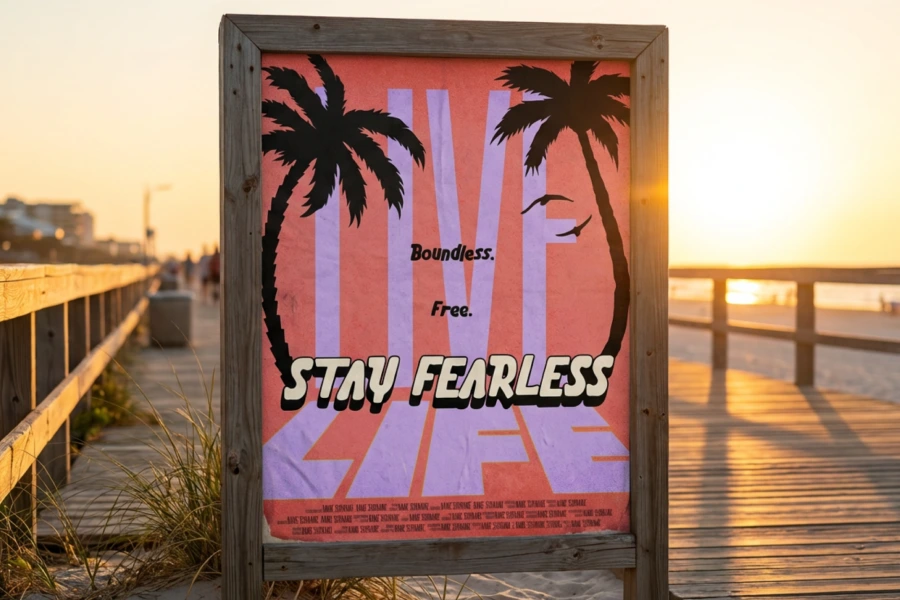
6. 90s poster-core nostalgia (sweatshirts)

Think stacked headlines, grain, and flyer energy. These sell well as gifts because they feel like a memory, not just a graphic. Add believable wear with texture clipping.
7. Outdoor and national park badges (hoodies)

New Adventure Template. Use Template
Hoodies already signal cozy and outdoorsy, so badges feel instantly on-theme. They are also an easy “gift for dad” or “gift for hikers” angle. Build emblem layouts using the approach from design your family crest, then browse icons through adding elements.
8. Fine-line botanical art (sweatshirts)

Cores Suaves Template. Use Template
Minimalist, calm, and very giftable. Works especially well for birthdays, Mother’s Day, and “new home, new era” vibes that Etsy trend reports often encourage sellers to plan around. Create clean line art with vector editing and lock in soft palettes inspired by Etsy’s Washed Linen texture mood.
9. Bold typography quotes (both)

Text-only designs still win when the typography feels intentional. Great for fast-testing multiple phrases in a niche. Make it look designed using Kittl’s wavy text tutorial.
10. Retro mascot characters (sweatshirts)

Coffee Break Mascot Template. Use Template
Mascots read especially good on crewnecks, and they pair perfectly with collegiate type. If you want a “small brand but big personality” vibe, this is it. Build with Kittl elements and polish shapes via vector editing.
11. Fictional band and tour-date backs (hoodies)

6 Unique Streetwear Template. Use Template
This is the “tour merch look” without referencing real artists. It’s a fun birthday gift for music friends because it looks authentic and collectible. Distress it with texture clipping and preview how the back reads using Kittl mockups.
12. Mental health and wellness affirmations (sweatshirts)

Wellmind Template. Use Template
Crewnecks carry comforting messages really well. Etsy’s own seller trend guidance repeatedly frames wellness and gifting moments as core planning themes. Use gentle curves with Clean, Monotype fonts and build calming palettes with warm and cool color guidance.
13. “Galactic metallic” chrome futurism (hoodies)

The Spider Web Template. Use Template
Futuristic chrome and spacey shine is a clear style signal right now, and Etsy trend reporting literally labels this vibe “Galactic Metallic.” Pair bold back graphics with high-contrast type using Kittl text effects.
14. Abstract geometric patterns (sweatshirts)

This is the “boutique minimal” move. It looks expensive and styles easily. Nail composition using symmetrical and asymmetrical balance.
15. Pet portraits and animal graphics (both)

Personalization is evergreen on Etsy, and pet-themed apparel is one of those gift categories that never really goes away. You can even spot pet and “dog mom” style items in Etsy’s trending sweatshirts feed.
Create the portrait using Kittl AI image generation, then add the pet name in a repeatable layout from hoodie and sweatshirt templates.
16. Ugly Christmas knit-pattern illusions (sweatshirts)

My Ugly Sweater Christmas Template. Use Template
These fly during Q4 because they are easy gifts and work for groups. Build repeating motifs, then “knitify” the look with texture clipping.
17. Zip-up hoodie split designs (zip hoodies)

Design something that is meant to split down the zipper so it looks intentional, not broken. Start with a base from Kittl hoodie and sweatshirt templates, then lock your layout in place using Rulers and Guides in Kittl.
Drag a vertical center guide to mark the zipper line, build your artwork on one side, then duplicate and flip the elements so both halves mirror perfectly and snap to the guide for symmetry. Use Margins in Kittl as a safe zone, so key text and faces do not sit too close to the zipper, and fine-tune spacing with the distance measuring workflow described in Kittl’s beginner layout tips.
Once everything is aligned, preview it on an actual garment using the Kittl mockup generator before exporting.
18. Tarot and mystical elements (hoodies)

Tarot Cards – Boho Design Template. Use Template
Study a few classic tarot decks first, so your symbols and motifs stay coherent across the collection. Then lean into your vibe (preppy retro, boho, alt) and build a back print using boho tarot-style frames and icons from Adding Elements. Make it feel like a set by locking your type, colors, and marks in Brand Assets.
19. Embroidered-look crests (sweatshirts)

Even if you print, you can design crests that feel elevated like embroidery. This is a strong “gift for him” or “gift for grads” vibe. Build the emblem using design your family crest and add depth with Kittl text effects.
20. Hometown and local pride designs (both)

Local pride is basically infinite SKU potential. One layout can become hundreds of city variants, and it is an easy birthday gift when you personalize it with a neighborhood or hometown nickname.
Etsy’s seller trend reporting explicitly encourages planning for gifting occasions and personalization across the year. Build a master template from Kittl hoodie and sweatshirt templates, then keep it consistent with Brand Styles.
21. Y2K cyber and tech aesthetics (hoodies)

Target Gen Z with chrome, glow, and digital edge on oversized dark hoodies. Build the core headline with glitch text effects and sharpen the palette using ideas from neon color palettes. This look also aligns with Etsy’s rising “Galactic Metallic” theme, which centers on chrome and futuristic shine.
Hoodie vs Sweatshirt: which one is the best canvas for your print-on-demand designs?
The difference between a hoodie and a sweatshirt is more than style. It changes your print space, placement, and what sells in each niche. When you’re ready to execute, start with Kittl hoodie and sweatshirt templates. Then, preview designs with the Kittl mockup generator, and export print-ready files using Kittl download settings.
If you want your listings to convert better, Kittl breaks down why mockups matter for print-on-demand
Frequently asked questions about hoodie vs sweatshirt
1. What’s the difference between hoodie and sweatshirt?
A sweatshirt is a collarless, long-sleeved pullover with no hood. A hoodie is a sweatshirt variation with an attached hood and often a kangaroo pocket or a zipper.
2. Can you call a hoodie a sweatshirt?
Yes. In everyday use, a hoodie is basically a sweatshirt with a hood. That’s why you’ll also see the term hooded sweatshirt used interchangeably with “hoodie.”
3. Hooded sweatshirt vs hoodie: Is there any difference?
Usually no. Most brands treat hooded sweatshirt and hoodie as the same item. The only time it matters is product labeling, where “hooded sweatshirt” may appear in more formal catalogs.
4. Is a hoodie warmer than a sweatshirt?
Often, yes, especially outdoors. The hood adds coverage around the head and neck, and many hoodies are made in heavier fleece. Warmth still depends on fabric weight, lining, and how well the ribbed cuffs and hem seal in heat.
5. Sweatshirt is for summer or winter?
Both, depending on fabric weight. Lightweight French terry crewnecks can work for cool summer nights, while heavyweight fleece sweatshirts are a winter staple and layer easily under a jacket.
6. Hoodie vs sweatshirt vs sweater: What’s the difference?
A sweater is typically knit (think wool, cotton knit, or similar yarn-based construction). A sweatshirt is usually knit fleece or French terry with a sporty, casual build. A hoodie is the hooded version of a sweatshirt.
7. Sweatshirt vs pullover: what’s the difference?
“Pullover” isn’t a separate garment like a sweatshirt or hoodie. It describes how it’s put on: you pull it over your head (no full-length zipper).
– A pullover sweatshirt is the classic crewneck (or non-zip sweatshirt).
– A pullover hoodie is a hoodie with no zipper.
– A zip-up hoodie is still a hoodie — it’s just not a pullover because it has a zipper.
8. What is a hoodie with a zipper called?
Most people call it a zip-up hoodie or full-zip hoodie. For design, treat the front as two panels because the zipper splits center graphics.
9. Why do Gen Z wear hoodies?
Comfort and versatility are big reasons. Hoodies also signal streetwear culture, feel gender-neutral, and work with oversized fits, which makes them an easy “default outfit” piece for school, gaming, travel, and everyday wear.
10. What do Americans call sweatshirts?
Most Americans say sweatshirt. You’ll also hear crewneck or crewneck sweatshirt to specify the no-hood style.
11. Which is better for print-on-demand, hoodie or sweatshirt?
If you want large, detailed front designs, sweatshirts are usually easier because the front panel is uninterrupted. Hoodies often work best with a bold back print plus a smaller left-chest mark to avoid the pocket seam or zipper line. To execute either quickly, start with Kittl hoodie and sweatshirt templates, preview placement using the Kittl mockup generator, then export print-ready files via Kittl download settings.
12. Hoodie vs sweatshirt for women: which is easier to style?
If you want a cleaner, more “dress-up-able” look, crewneck sweatshirts tend to style easier with structured layers. If you want a relaxed streetwear fit, hoodies pair naturally with cargos, denim, leggings, and oversized outerwear.
13. Sweatshirt for men: How should it fit?
For classic everyday wear, a crewneck sweatshirt should sit comfortably at the shoulders with room through the chest, and the ribbed hem should land around the hip. For streetwear, sizing up for an oversized fit is common, especially with heavier fabrics that hold shape.