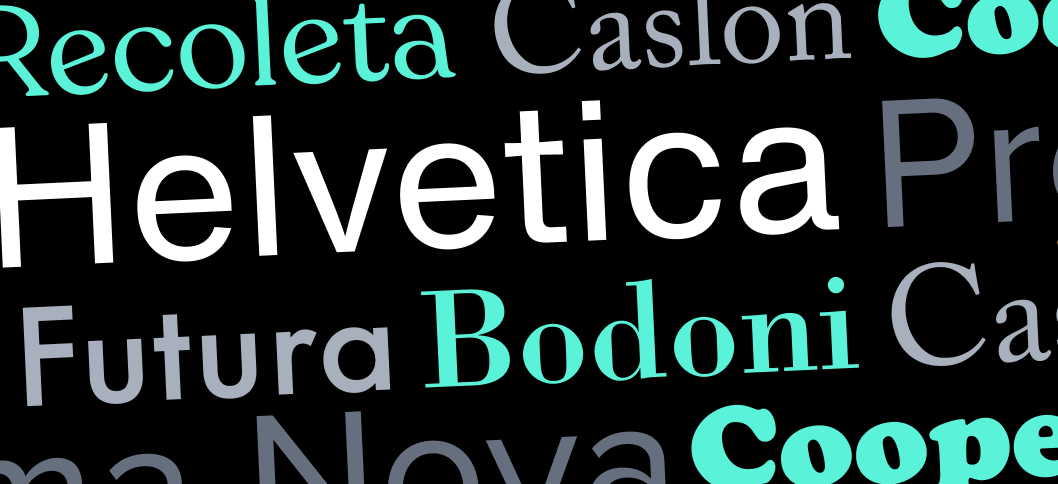
We’ve reviewed trending 2025 Monotype fonts. We’ve paired them with Kittl Fonts. We’ve built every kind of walkthrough you can imagine about typography.
From bold slabs to elegant serifs, Kittl’s library is packed for every kind of creative project, including iconic Monotype typefaces.
But, seriously. What makes Monotype font pairing special?
If this is your first time making a report, and you’re staring down a blank page, wondering how to make it look polished, don’t stress. You’re not alone.
If you are building a UN-level whitepaper or a design-forward magazine spread for the first time, we’re here to help you make it look like you’ve been doing this for years.
PS: We also include some fun facts about your favorite Monotype fonts!
So let’s get into it.
1. Adobe Caslon + Gotham

Adobe Caslon, with its bracketed serifs, moderate contrast, and historic roots (dating back to the 18th century), lends the headline a sense of authority and tradition. It’s often used in books, academic publishing, and formal print.
Unlike some grotesques that can feel tight or rigid, Gotham’s ample counters and monolinear construction give the eye room to breathe. There’s no stress or decorative flair — it’s clean, symmetrical, and highly legible on both screen and print.
Together, the combo makes it ideal for proposals, reports, or branded layouts that want to balance “business casual” credibility with accessibility.
Gotham was originally designed for public signage and later used in Obama’s 2008 campaign
2. Adobe Caslon + Proxima Nova

Adobe Caslon offers a classic book typography feel. It has slightly condensed proportions, moderate stroke contrast, and a diagonal stress that nods to its calligraphic origins.
Its bracketed serifs soften the terminals, giving it a more human touch than sharper transitional serifs like Baskerville. It sets beautifully at large sizes, but it’s especially strong in mid-size headings.
Proxima Nova is a modern hybrid. It bridges geometric and grotesque sans-serif styles: the rounded forms of “o” and “e” feel geometric, but the vertical terminals and proportional spacing align more with grotesques. The x-height is high, making lowercase characters almost as tall as the capitals. This improves readability, especially in digital formats.
Together, this pairing creates a smooth editorial feel.
3. Neue Haas Grotesk + Baskerville

Neue Haas Grotesk has closed apertures, uniform stroke width, and a compact rhythm. There’s almost no stress or ornament. Its characters are vertically proportioned and spaced to minimize noise.
Baskerville, on the other hand, has high stroke contrast, vertical stress, and sharp, unbracketed serifs. The uppercase “Q” has a dramatic tail, the “g” is a true double-story, and the counters feel airier than earlier old-style serifs.
It demands attention at display sizes and reads beautifully in short-to-medium blocks.
In an editorial layout, Grotesk sets a steady grid for body text, while Baskerville elevates headings with typographic authority. It’s a great combo for cultural reports, formal presentations, or high-design layouts where you want hierarchy and restraint.
4. Gilroy + Times

Gilroy is a geometric sans with monolinear strokes and near-perfect circular forms. Its characters (especially “o,” “e,” and “a”) are clean, round, and evenly weighted, which gives it a crisp, almost modular look.
The tall x-height and open counters make it feel light and readable even at smaller sizes — perfect for subheads or infographics.
Times is rooted in old-school newsprint efficiency. With its moderate contrast, tight spacing, and slightly condensed proportions, it was engineered to fit a lot of readable text into narrow columns.
Its vertical stress and sharp serifs give body copy a professional, editorial tone.
This combo is great for annual reports, minimalist whitepapers, or even startup brand decks.
Use Gilroy for headers and section labels (especially in bold weights), and let Times do the heavy lifting in paragraphs. Don’t forget to watch the tracking. Times can look cramped if set too small in digital formats.
5. Helvetica Now + Adobe Garamond

Helvetica Now is the reengineered version of the classic Helvetica. It corrects awkward spacing, redraws glyphs for better legibility, and introduces optical sizing.
Its shapes are clean, low-contrast, and centered around uniformity. With its straight terminals and narrow apertures, it’s best used in medium to large display sizes.
Adobe Garamond brings Renaissance elegance to the table. It has diagonal stress, organic curves, and bracketed serifs — all drawing from hand-lettered calligraphy. It’s generous in its counters and letterfit.
Perfect for reports, museum-style layouts, or corporate storytelling.
In a recent eye-tracking study, researchers found that people read faster and more accurately using sans serif fonts (especially when spotting spelling errors). Arial, in particular, showed shorter fixations and fewer rereads compared to serif fonts like Times or Georgia. And guess what font is the closest relative to Arial? Helvetica.
6. Rockwell + Adobe Garamond

Rockwell is a slab serif with blocky, geometric forms and unbracketed serifs. Its strokes are mostly monoline, giving it a mechanical, poster-like presence.
The slab serif is great for headlines, section labels, or data-heavy callouts. The squared shoulders and flat terminals make it feel firm and decisive.
Adobe Garamond, in contrast, is soft, organic, and rhythmically varied. Its diagonal stress, tapered strokes, and modest contrast make it ideal for long-form body text.
It holds the reader’s eye across lines, thanks to its flowing curves and generous spacing. It’s grounded in Renaissance calligraphy, so it brings historical depth.
This odd pairing makes Rockwell add structural weight and typographic authority up top. Garamond smooths out the user experience in the paragraph flow. The pair is ideal for grant proposals, heritage brand materials, or NGO reports.
Use Rockwell for headers only, and don’t track it too tight — its slab nature already dominates space. Let Adobe Garamond carry the narrative in Regular or Italic. It’s all about tone: blocky on top, graceful below.
7. DIN Next + Futura Now

Usually, we don’t recommend pairing two similar sans-serifs.
They tend to fight for the same visual role, and the contrast just isn’t strong enough to be functional. But DIN Next + Futura Now can work — if you assign each font a clear job.
DIN Next is built for structure. Its characters are narrow, tightly spaced, and engineered for legibility at small sizes.
With squared bowls, uniform stroke weight, and minimal expression, it’s best used for functional roles, like labels, navigation, captions, or tables.
Futura Now, in contrast, is a modernized take on the original Bauhaus-era design, it features perfect circles, clean terminals, and carefully tuned spacing across sizes. It shines in headlines, hero text, and pull quotes.
So if you use Futura Now for scale and personality, and DIN Next for clarity, don’t split body text between them. They’re too similar in tone, and you’ll lose typographic hierarchy.
DIN Next is derived from German road signage.
8. Bodoni + DIN Next

Bodoni is a classic Didone serif. It features extreme stroke contrast, vertical stress, and razor-thin hairlines.
The letterforms are tall, elegant, and demand attention — especially in titles, logos, or editorial callouts. Bodoni isn’t built for body copy.
But it needs a calm counterpart to avoid overpowering the layout, which is where DIN Next comes in.
DIN’s letters are precise, narrow, and mono-linear, with minimal decoration. It’s all about function and spacing. It’s structured enough to guide the eye, but neutral enough not to compete with Bodoni’s flair.
Recommended use: Bodoni for headlines or display moments, and let DIN Next handle the supporting text, metadata, or navigation. The serif’s high contrast draws the eye; the sans keeps everything grounded and readable.
This combo works best in clean layouts where white space and alignment do the heavy lifting. Think editorial design, fashion lookbooks, or cultural program guides.
9. Didot + Avenir Next

Didot is a refined Didone serif, known for its ultra-high contrast, vertical stress, and fine hairlines. Its stems are sharp; its ball terminals and teardrop shapes feel almost ornamental.
It’s not built for body text. Didot is a display face, best suited for headlines, pull quotes, or covers where style takes the lead.
Avenir Next, meanwhile, is a humanist-geometric sans. It’s a hybrid that’s less rigid than Futura, but more structured than a grotesque. Its wide counters, consistent stroke width, and tall x-height make it easy to read across sizes.
It’s especially strong in paragraphs, captions, or subheads.
So, you can use this combo when you need to convey taste, control, and professionalism. Anything from fashion reports, brand narratives, or premium product pages would be a perfect fit with this combination.
10. Baskerville + Gilroy

Baskerville is a transitional serif, sitting between old-style warmth and modern precision. It’s known for its high contrast, vertical stress, and crisp serifs, along with a signature sharpness in characters like the “Q,” “g,” and “k.”
Its spacing is generous, and the rhythm is smooth. It makes excellent headlines or medium-length body text.
Gilroy, by contrast, is a monoline geometric sans with open counters and a tall x-height. Its letterforms are clean, circular, and evenly spaced, making it ideal for digital layouts, labels, or small-size copy.
Compared to other geometric sans-serifs like Futura, Gilroy is softer and more contemporary: less formal, but not overly casual.
Use Baskerville for pull quotes, subheads, or title sections; use Gilroy for UI labels, metadata, or body copy. It’s a great pair for portfolio sites, editorial blogs, or minimalist reports where you want tone and modernity to co-exist.
11. Rockwell + Neue Frutiger

Rockwell is a geometric slab serif with flat, unbracketed serifs and monoline strokes.
Ideal for short headlines, callouts, or UI labels.
It doesn’t perform well in long text (the slabs get heavy). However, its blocky, industrial feel makes a great header.
Neue Frutiger is a humanist sans-serif designed for maximum legibility. Its open apertures, subtle stroke variation, and natural rhythm make it easier on the eyes than a grotesque or geometric sans.
Frutiger’s forms are designed to remain legible at distance or in motion (originally for airport signage), so it excels in body copy, captions, and interface text.
This pairing is ideal for infographics, UX-heavy layouts, educational content, or even printed reports where clarity and hierarchy are important.
12. Times + Helvetica Now Italic

If you’re looking for a pairing that’s perfect for corporate decks, academic writing, or annual reports — this one is for you.
Times (or more precisely, Times New Roman) is a transitional serif optimized for newspaper print.
Its narrow width, moderate contrast, and compact spacing make it efficient and authoritative. Originally designed in 1931 for The Times of London, it’s built to fit more words per column while retaining high readability — making it perfect for dense body text, reports, or policy documents.
Unlike old-school Helvetica Italic (which was just slanted roman), Helvetica Now Italic is a true italic, redrawn with subtle curves, slightly different letterforms (look at “a” and “f”), and more fluid rhythm. It’s great for subheads, annotations, or side notes.
The pair complements each other, making your report formal, legible, and structured, but with enough flexibility to avoid feeling rigid.
Helvetica’s original italic was technically oblique, not a true italic. It wasn’t until Helvetica Now that the italics were fully redrawn to reflect real typographic form — with new curves, alternate glyphs, and optical sizing. It took over three years to redraw the entire family.
13. Adobe Garamond + Trade Gothic Next

Building a layout that needs to feel thoughtful, authoritative, and tight on space? This pairing is for you.
Adobe Garamond is an old-style serif rooted in 16th-century French letterforms. It features diagonal stress, soft tapering, and bracketed serifs, giving it a warm, flowing rhythm ideal for body copy or extended reading.
Trade Gothic Next, on the other hand, is a sans-serif with narrow proportions and sharp vertical tension. Originally designed in the 1940s and updated in the “Next” version for better spacing and legibility, it’s great for subheads, short intros, or pull quotes.
Its condensed width makes it a space-saving workhorse, and its slightly irregular rhythm gives it character.
Like other Adobe Garamond pairings, this pair is ideal for white papers, research journals, book layouts, or think tank reports.
Adobe Garamond was one of the first digital revivals designed using historical metal type references — based on the actual punches of Claude Garamond and matrices of Robert Granjon. It was released in 1989 but still holds up as a benchmark for digital serif design.
14. Recoleta + Futura Now Italic

Need a font combo that feels charming but intentional? Recoleta + Futura Now Italic is your move.
This pairing leans into curves, movement, and a touch of nostalgia — but stays structured enough for serious work like brand storytelling, editorial spreads, or campaign layouts.
Recoleta is a soft serif with roots in 1970s retro type — think Cooper and Windsor, but cleaned up for modern use.
It has high x-height, curved ball terminals, and open counters, which makes it feel warm and friendly without going full vintage. Best used for headlines, titles, or expressive lead-ins.
Futura Now Italic, by contrast, is all about movement and geometry. It’s drawn with new italics that feature angled strokes, simplified forms, and tight spacing. It reads fast and leans forward, making it ideal for subheads, short intros, or dynamic captions.
This pairing is great for modern lifestyle brands, creative portfolios, or editorial content that wants to feel human and more upbeat.
15. Cabernet JF Pro + Neue Haas Grotesk

Some pairings are about balance, and this is one of them. Cabernet JF Pro brings the flair, Neue Haas Grotesk brings the restraint.
Cabernet JF Pro is a high-contrast display serif with ornate details and exaggerated curves.
Its letterforms, especially the “R,” “Q,” and “g,” are stylized and attention-grabbing, making it ideal for titles, branding, or typographic logos. It’s not meant for small sizes or long passages; it’s a headline specialist, plain and simple.
Neue Haas Grotesk is the precursor to Helvetica, designed with more nuance and warmth. It features tight spacing, neutral proportions, and minimal contrast, making it perfect for body text, UI labels, or clean subheads.
Compared to Helvetica, it feels a bit more human, especially in lowercase. Definitely less mechanical, and present a more natural rhythm.
This combo is excellent for brand campaigns, high-end packaging, or editorial spreads where the design needs both personality and precision.
16. Century Gothic + ITC Avant Garde Pro

If you love clean, circular sans-serifs but don’t want your layout to feel monotonous, Century Gothic + ITC Avant Garde Pro gives you contrast within the genre. Both are geometric, but their personalities diverge in all the right ways.
Century Gothic is light, spacious, and highly readable. Its design is based on the same principles as Futura, but with wider proportions, open counters, and a generous x-height. It performs well in body copy or quiet subheads.
ITC Avant Garde Pro, on the other hand, is bolder and more stylized. It features tight letterfit, strong circular construction, and custom ligatures that give it a visual rhythm. It’s best used for display sizes, short headlines, or identity work.
Used properly, this pairing is ideal for minimalist layouts, cultural posters, or creative brand identities where consistency matters (but a little personality is still welcome).
ITC Avant Garde was originally designed for a magazine logo in the 1970s and was never intended to be a full text typeface. But its striking ligatures became so iconic that it evolved into a full type family, influencing decades of expressive sans-serif design.
17. Cooper Black + Univers Next Italic

At first glance, these two shouldn’t work together.
Cooper Black is big, bold, and unapologetically round, while Univers Next Italic is slim, precise, and angular. But that contrast is exactly what makes them click. This pairing thrives on opposing energies that stay typographically balanced.
Cooper Black is a heavyweight soft serif with inflated counters, short x-height, and thick, rounded terminals.
Originally released in 1922, it was designed to be attention-grabbing in headlines and posters. And it still works best in display sizes. It’s warm, retro, and visually heavy.
Univers Next Italic is the cooler counterpart: a neo-grotesque sans with elegant, slanted forms and consistent stroke weight. The italic in Univers Next is thoughtfully redrawn with subtle detailing, making it clean, directional, and readable.
It’s perfect for captions, annotations, sidebars, or emphasis.
This duo is well-suited for editorials, music covers, brand materials, or cultural campaigns where you want personality and polish in the same layout.
Cooper Black has been called the “font of the ’70s” for its iconic use in pop culture—from the Beach Boys’ album covers to the Garfield comic strip. Its friendliness and visual bulk made it one of the first fonts to truly thrive in both print and early screen use.
18. Kuenstler Script + Proxima Nova

When your layout needs to elevate without overdoing it, Kuenstler Script + Proxima Nova nails the balance between ornamental and neutral.
Kuenstler Script is a formal, copperplate-style script with connected strokes, fine line contrast, and graceful curvature.
It’s elegant, delicate, and highly expressive. It’s the perfect type for headlines, quotes, and event titles. But like all script fonts, it should be used sparingly and at larger sizes to maintain readability.
On the other hand, Proxima Nova is the ultimate neutralizer. It’s a modern sans with circular forms, high x-height, and generous spacing, designed for clarity in both print and digital environments.
Its clean lines and geometric-humanist hybrid structure make it perfect for body copy, navigation, or captions.
As you can guess, this pairing is ideal for wedding layouts, upscale branding, invitations, or editorial features where tone and readability need to live side-by-side.
Kuenstler Script means “artist’s script” in German, and it was originally designed to emulate the elegant copperplate handwriting taught in 19th-century European academies.
19. Trajan 3 + Avenir Next Italic

Before we begin, we have to warn you that Trajan 3 + Avenir Next Italic is not a common combo. But it’s a powerful one when used with care.
Trajan 3 is an all-caps serif inspired by Roman inscriptions. Specifically the letterforms carved into Trajan’s Column in ancient Rome.
It features sharp, flared serifs, vertical stress, and no lowercase, which gives it a monumental, authoritative feel. It’s designed for display use only.
So you could imagine it to be ideal for headlines, titles, or logotypes.
As for Avenir Next Italic, it brings rhythm, fluidity, and humanism to the page.
While still geometric at its core, Avenir’s italic forms are slightly softened, with angled terminals and optically corrected curves. It feels modern but not “cold”. Great for bylines, subheads, or supporting text.
The way you can use this pairing varies. You can use it from premium editorial layouts, film campaigns, cultural reports, to ceremonial design systems.
20. Sofia Pro + Bodoni

Looking for a font pairing that feels modern and friendly, without sacrificing elegance?
Sofia Pro + Bodoni brings together two very different moods in a way that’s both stylish and strategic. It’s approachable at first glance, but the details reveal a sharp, editorial edge.
Sofia Pro is a geometric sans with a warm, contemporary personality. Its rounded terminals, high x-height, and even stroke weight make it great for UI, web layouts, or clean body text. It leans slightly toward a humanist rhythm.
It is less sterile than Futura but still highly readable and adaptable.
Bodoni, by contrast, is a high-contrast serif with vertical stress, sharp serifs, and thin hairlines. It’s a display face that commands attention in headlines, pull quotes, or premium brand titles. The visual texture is strong, so it needs space and scale to shine.
This pairing works beautifully for magazine-style layouts, lifestyle branding, or tech platforms that want to feel premium without losing approachability.
Pairing principles that help to pair your Monotype favorites
When you build your own combos, these heuristics help:
- Serif + Sans contrast
Most successful pairs mix a serif and a sans to provide contrast but avoid conflict. - X‑height / proportions matter
If two fonts have very different x‑heights, they’ll look mismatched unless scaled carefully. Blog guides often caution against pairing fonts that are “too similar” in structure. - Weight / style contrast
Use bold for headlines, lighter weights for body text, or mix a clean weight with a more stylized one. - Avoid “twins” (too similar fonts)
Don’t pair two fonts that are almost the same — they tend to compete rather than complement. - Use font superfamilies
When available, use different styles of the same family (e.g. serif + sans companion) to ensure harmony. Monotype’s pairing tools often recommend these.
And if you’re curious how to pair fonts like a pro, check out our advanced font pairing guide. It’s full of practical tips, designer insights, and real-world combos you can drop right into your layout.
Key takeaway: The ultimate Monotype font pairing cheatsheet for professional reports
If you just want quick answers, here’s your go-to reference. This cheat sheet maps Kittl-available Monotype fonts into pairings that work, without needing to deep-dive into typographic theory.
| Serif or stylized font | Sans or contrast font | Pairing contrast style |
| Adobe Caslon | Gotham | Classic serif with modern sans |
| Adobe Caslon | Proxima Nova | Timeless serif + clean modern sans |
| Neue Haas Grotesk | Baskerville | Neutral sans + classical serif |
| Gilroy | Times | Contemporary geometric sans + traditional serif |
| Helvetica Now | Adobe Garamond | Neutral modern sans + classic old‑style serif |
| Rockwell | Adobe Garamond | Slab serif with humanist serif contrast |
| DIN Next | Futura Now | Two sans / display styles with contrast in structure |
| Bodoni | DIN Next | High-contrast serif with engineered sans |
| Didot | Avenir Next | Elegant fashion serif with neutral geometric sans |
| Baskerville | Gilroy | Old-style warmth with geometric simplicity |
| Rockwell | Neue Frutiger | Slab serif power with humanist flow |
| Times | Helvetica Now Italic | Journalistic serif with expressive modern twist |
| Adobe Garamond | Trade Gothic Next | Warm, bookish serif + assertive sans |
| Recoleta | Futura Now Italic | Soft retro serif + sleek geometric accent |
| Cabernet JF Pro | Neue Haas Grotesk | Display serif with a dependable sans |
| Century Gothic | ITC Avant Garde Pro | Rounded geometric + stylized sans |
| Cooper Black | Univers Next Italic | Retro boldness meets sleek precision |
| Kuenstler Script | Proxima Nova | Elegant calligraphic headline + neutral sans body |
| Avenir Next Italic | Trajan 3 | Italicized modernism with Roman gravitas |
| Sofia Pro | Bodoni | Clean, modern sans + sharp fashion serif |
Ready to try these pairings?
All of these Monotype fonts are available directly in the Kittl Editor, so you can jump right in and start building your own editorial layout without any extra setup.
If you’ve already purchased other Monotype fonts and want to bring your own pairings into Kittl, explore more combos at Monotype’s font pairing tool and upload your licensed fonts straight into your Kittl workspace.