There’s no shortage of content for entrepreneurs. But most of it doesn’t help when you’re actually trying to grow something — when you need to make decisions about products, pricing, marketing, or positioning that have real consequences.
The difference isn’t more information. It’s better sources.
This guide brings together the best small business blogs and organizes them by what actually drives growth — so you’re not just reading, you’re applying.
Whether you’re building an online store, launching merch, or trying to get your first consistent customers, these are blogs for small business owners that help you move forward.
Why reading niche small business blogs is critical for growth
Small business blogs provide real-time, actionable strategies for marketing, finance, branding, and operations that generic advice often lacks. They help entrepreneurs apply proven ideas and solve immediate challenges—so growth becomes clearer and more intentional.
Most small business blogs stay general.
But growth doesn’t happen in general.
It happens when you:
- fix your positioning
- improve conversion
- choose the right channel
- understand your customer
That’s why niche blogs matter — they show you how to apply ideas in specific contexts like e-commerce, marketing, and branding.
Top E-commerce & Print-on-Demand Blogs
If your business depends on selling products, this is the category that directly affects your revenue.
Because in e-commerce, effort doesn’t equal sales.
These blogs focus on what actually makes a store perform — product positioning, demand, pricing, and presentation.
1. Shopify Blog

The Shopify Blog is the definitive small business blog for scaling an online store, covering everything from supply chain logistics to storefront conversion rate optimization.
It helps you:
- understand what makes products sell
- improve your storefront performance
- build systems that support growth
Instead of guessing, you can use their case studies to inform your merchandising strategy — seeing how real stores position products, structure pages, and convert visitors into buyers.
2. Printify Blog

The Printify Blog is a deep dive into the print-on-demand ecosystem. It doesn’t pretend design exists in a vacuum.
It focuses on:
- what products are trending (and why)
- how different materials and print types affect quality
- how to choose suppliers and manage expectations
- how to price products without killing margin
- how seasonal demand actually works
This is where Printify becomes valuable: it helps you align what you create with what people are already buying.
This is where things connect naturally:
- you spot a trend
- you create visuals fast
- you launch before the window closes
To achieve the second step fast, you can pair their product trends with Kittl’s template library to launch trending apparel — aligning what you design with what people are already buying.
Find Print-on-Demand templates like this for free in Kittl:

Free POD template Kittl.
Use Template

Free POD template Kittl
Use Template

Free POD template Kittl
Use Template
Or find the perfect system for generating traffic to your Shopify here:
3. BigCommerce Blog
BigCommerce is one of the best business blogs once your store starts moving beyond the early stage.
You’ll find content on:
- omnichannel selling (selling across multiple platforms)
- advanced B2B vs B2C strategy
- headless commerce and infrastructure decisions
- international expansion
- advanced customer experience
BigCommerce helps you think in systems.
It’s especially useful for businesses looking to upgrade their tech stack or founders who are starting to feel friction in their setup and need to make smarter long-term decisions.
4. EcomCrew
EcomCrew is one of the more grounded small business blogs in this space because it’s built by 7-figure sellers who have actually run and scaled e-commerce businesses.
They offer highly tactical advice like:
- Amazon FBA
- sourcing and importing
- supplier relationships
- margins and cost structure
- email retention strategies
- customer lifetime value
This is where you go when you want to understand:
- why your margins feel tight
- why scaling ads isn’t working
- why your product isn’t as profitable as it looks
Instead of relying only on acquisition, you can follow their email marketing blueprints to retain e-commerce customers — turning one-time buyers into repeat revenue.
5. WooCommerce Blog

The WooCommerce Blog is especially relevant for WordPress-based small businesses who want more control over their store setup.
It covers:
- plugin ecosystems and how to use them effectively
- site performance and speed optimization
- checkout flow improvements
- cart abandonment strategies
- SEO considerations for product pages
It helps you:
- improve how your store performs technically
- reduce friction in the buying process
- optimize your site for conversions
Instead of losing customers at checkout, you can implement their UX advice to design better product landing pages that guide users toward purchase.
6. A Better Lemonade Stand

A Better Lemonade Stand acts as an incubator for early-stage e-commerce entrepreneurs.
It focuses on:
- idea validation
- product sourcing
- branding decisions
- launching your first store
- understanding your audience
What makes it stand out is that it doesn’t rush you.
Instead of rushing into execution, you can use their checklists when mapping out a new brand identity — so what you launch actually makes sense.
Best marketing & SEO blogs for small businesses
Most small businesses don’t have a product problem.
They have a visibility problem.
These blogs help you build traffic, turn attention into action, and create systems that compound over time.
7. HubSpot Blog

The HubSpot Blog is the gold standard among small business blogs when it comes to building a complete marketing system — not just running isolated tactics.
It helps you:
- turn content into leads
- structure email marketing that actually converts
- connect your blog, CRM, and customer journey
Most blogs for small business owners tell you to “create content.”
HubSpot shows you how that content becomes part of a working system.
With their free templates, checklists, and frameworks, you can start building:
- lead capture flows
- email sequences
- content calendars that support real growth
Instead of posting randomly, you’re building something that compounds.
8. Ahrefs Blog
The Ahrefs Blog is one of the most actionable small business blogs for SEO, especially when you need to understand how people actually search.
It helps you figure out:
- what your customers are typing into Google
- which keywords are worth targeting
- how to structure content so it ranks
Most blogs for small business owners talk about SEO in general terms. Ahrefs shows you how to use it to make better decisions.
That’s what matters.
Once you apply their keyword strategies, you can start refining your product titles, descriptions, and content so they match real search demand — instead of guessing what people might be looking for.
9. Social Media Examiner
Social Media Examiner is one of the most practical blogs for small business owners trying to stay relevant on fast-changing platforms (TikTok, Instagram, Facebook, etc) and their algorithms.
It helps you:
- understand what content formats are working right now
- adapt to algorithm and feature changes
- improve how your content performs in-feed
That means you can adjust your posts, your ad creatives, and your content formats based on what’s actually getting attention recently — not what used to work.
Already got the angle set? Create amazing social media posts with Kittl’s ready-to-use templates for free here. See some here:

Tech brand social media bundle blue. Use Template

Startup social media design.
Use Template

Tech brand social media bundle purple. Use Template
10. Duct Tape Marketing
Duct Tape Marketing focuses on low-cost, high-impact marketing systems specifically for small, local, and bootstrapped businesses.
Duct Tape Marketing focuses on building simple, repeatable marketing systems — especially for small businesses without large budgets.
It helps you:
- generate consistent leads
- improve local visibility
- build sustainable marketing systems
Instead of relying on expensive campaigns, you can implement their localized SEO tactics for brick-and-mortar growth — especially if your business depends on nearby customers.
11. Neil Patel’s Blog

Neil Patel’s blog breaks down complex digital marketing data into clear, step-by-step strategies you can actually follow.
It helps you:
- understand where your traffic is coming from
- identify what’s underperforming
- improve how users move through your site
Most blogs for small business owners overwhelm you with options. This one helps you prioritize.
Because growth doesn’t come from doing more — it comes from fixing what’s already there.
Once you apply his conversion rate optimization (CRO) tips, you can refine your website’s visual hierarchy — making it easier for users to navigate, understand your offer, and take action.
12. Copyblogger
Copyblogger is one of the most important blogs for small business owners because it focuses on what actually turns attention into sales: your words.
It helps you:
- write sales pages that convert
- improve email performance
- communicate your value clearly
Once you apply their copywriting formulas, you can combine them with strong typography and layout in Kittl — creating social graphics and marketing assets that not only look good, but actually drive action.
From Kittl exclusive fonts that you can’t find anywhere else to your classic Montserrat, you can check out the thousands of fonts you can find on Kittl here.

Top branding & design blogs for entrepreneurs
Customers decide quickly whether your business feels worth their attention.
That decision is driven by your visuals — your logo, product images, packaging, and content.
These blogs help you control that perception so your brand feels credible from the start.
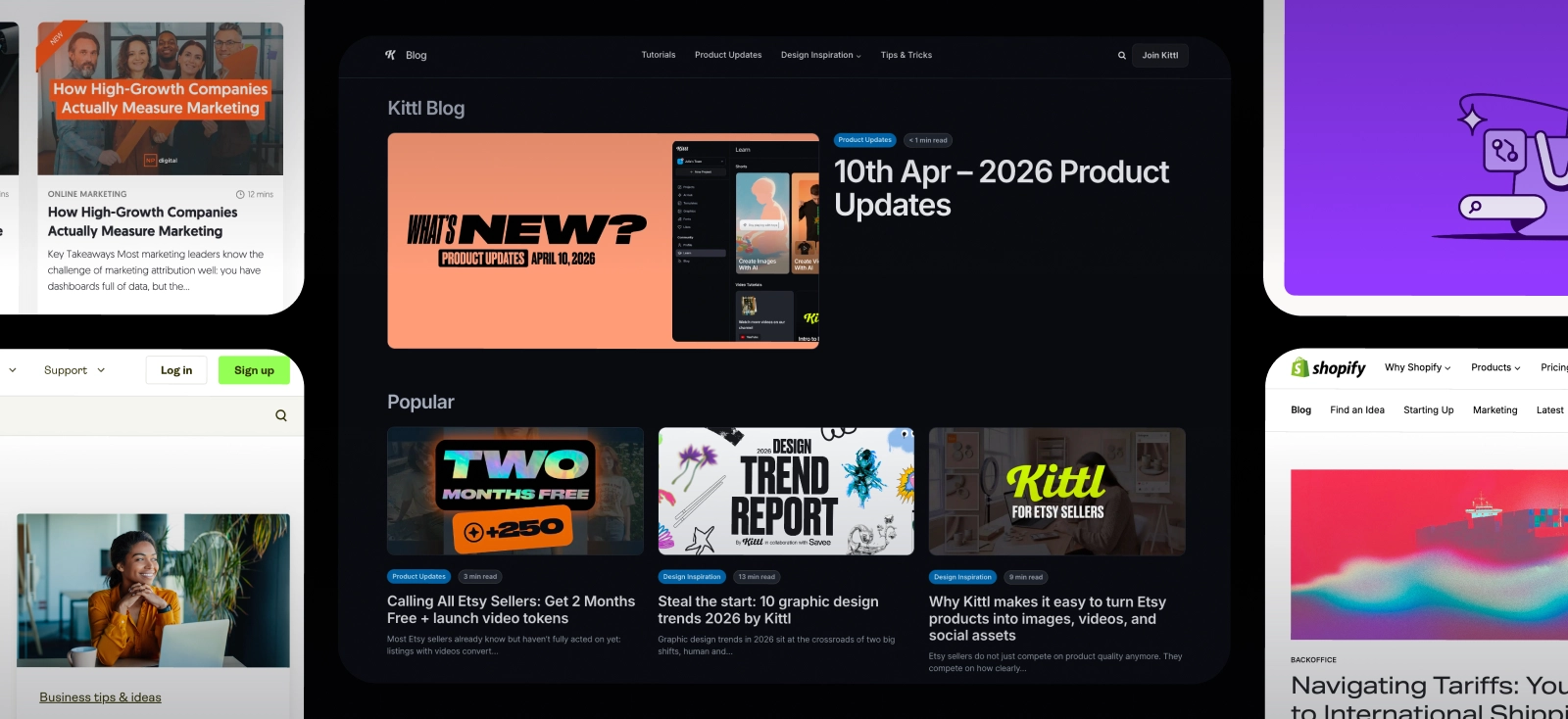
13. The Kittl Blog

The Kittl Blog is your primary resource for design trends, print-on-demand masterclasses, and graphic design tutorials that elevate your brand.
It helps you:
- create logos and brand identities
- design merchandise and product visuals
- build marketing assets that actually look professional
Most small business blogs treat design as something you outsource. Kittl treats it as something you can control.
That matters because design isn’t happening once anymore. It’s ongoing with new products, new campaigns, and even new content.
Instead of relying on external designers, you can directly apply their tutorials to create logos, merchandise, and marketing materials yourself — keeping your brand consistent without slowing down.
Find blogs like this on Kittl:
- Steal the start: 10 graphic design trends 2026 by Kittl
- Why Kittl makes it easy to turn Etsy products into images, videos, and social assets
- Common small business mistakes new brands make (and how to fix them)
- Print on demand vs. dropshipping: 7 critical differences for creators in 2026
- 50+ profitable print on demand niches in 2026 (and how to design for them)
- 35+ Free business advertising ideas & how to design them (2026 Guide)
- How to take a professional LinkedIn photo at home
- The two-font system guide: How to pair fonts in 2026 like a pro
And so much more!
14. The Futur
The Futur teaches the business side of design, focusing on branding strategy, pricing, and positioning.
It helps you:
- position your brand more strategically
- communicate higher value
- price your work or products confidently
Instead of competing on price, you can apply their frameworks to position your brand as a premium option in your market.
15. Logo Design Love
Logo Design Love focuses on the history, psychology, and structure behind strong brand identities.
It helps you:
- understand what makes logos memorable
- learn how identity systems are built
- avoid creating something generic
Most businesses rush their logo and move on.
But your logo appears everywhere. It becomes shorthand for your brand.
By studying the anatomy of famous logos, you can make more intentional design decisions before creating your own.
16. The Dieline

The Dieline is the leading blog for packaging design, showcasing how products stand out in retail and e-commerce.
It helps you:
- understand how packaging shapes perception
- improve your product presentation
- create better unboxing experiences
Instead of treating packaging as functional, you can use their examples to design custom mailers, labels, and packaging that reinforce your brand.
17. Brand New (UnderConsideration)

Brand New critiques rebrands and identity systems, explaining what works and what doesn’t. It helps you:
- understand how branding changes affect perception
- spot design trends
- avoid common rebranding mistakes
By learning from real brand critiques, you can make better visual decisions and keep your brand aligned with current expectations.
18. Creative Boom
Creative Boom covers design, illustration, and visual culture across industries.
It helps you:
- discover new visual styles
- expand your creative direction
- stay inspired beyond your niche
Instead of copying competitors, you can use it to explore new color palettes and typography — bringing fresh ideas into your next product or campaign.
Best finance & operations blogs
Some businesses don’t fail because they can’t sell — they fail because they mismanage cash, tools, and operations.
These blogs help you make better decisions so growth doesn’t turn into chaos.
19. Fit Small Business

Fit Small Business is a comprehensive resource covering software reviews, accounting, HR, sales, and operations.
It helps you:
- compare tools before committing
- understand which systems fit your business stage
- make practical operational decisions
Most small business blogs focus on strategy. This one focuses on execution.
Instead of guessing, you can use their software comparisons to choose the right POS, accounting, or business tools — saving time and avoiding expensive mistakes.
20. NerdWallet for Small Business
NerdWallet helps small business owners make smarter financing decisions.
It helps you:
- compare business credit cards
- evaluate loans
- understand funding options
Instead of guessing, you can use their insights to secure working capital for inventory, marketing, or growth.
21. Bench Blog

The Bench Blog simplifies bookkeeping and taxes for non-accountants.
It helps you:
- understand your finances
- stay tax-compliant
- build better bookkeeping habits
Instead of scrambling at year-end, you can follow their checklists to prepare your books early and avoid surprises.
22. QuickBooks Small Business Center
The QuickBooks Small Business Center focuses on operational fundamentals like payroll, invoicing, and cash flow forecasting.
It helps you:
- track income and expenses properly
- manage payroll and payments
- plan for future cash needs
Most businesses look at revenue. But revenue doesn’t tell the full story.
Cash flow does.
Instead of reacting to shortages, you can implement their cash flow models to plan ahead — so you can scale your ad spend or hiring without putting your business at risk.
23. SmallBiz Survival
SmallBiz Survival focuses on rural and local businesses.
It helps you:
- understand local markets
- build community-driven growth
- adapt strategies outside big cities
Instead of copying global tactics, you can apply their grassroots strategies to grow your local presence.
24. ZenBusiness Blog

ZenBusiness focuses on the legal and structural side of running a business, including LLC formation, compliance, and regulations.
It helps you:
- set up your business correctly
- stay compliant with state requirements
- avoid legal issues as you grow
Instead of fixing issues later, you can ensure your business entity is structured correctly from the start — so you can scale without legal or administrative friction.
General entrepreneurship & startup strategy
At some point, growth stops being about tactics. You need better decisions.
These blogs help you think more clearly as your business scales.
25. Smart Passive Income (SPI)
Smart Passive Income, run by Pat Flynn, focuses on building ethical, audience-driven businesses through digital products and content.
It helps you:
- build an audience before launching
- create multiple revenue streams
- grow sustainably over time
Most blogs for small business owners focus on quick wins. SPI focuses on foundations.
Instead of launching blindly, you can study his audience-first approach — building trust first, then introducing products that people are already ready to buy.
26. Foundr

Foundr extracts lessons from world-class founders and translates them into practical insights for entrepreneurs.
It helps you:
- understand how successful businesses scale
- improve leadership and decision-making
- think beyond early-stage limitations
Most small businesses operate reactively.
Foundr helps you think strategically.
As you grow, you can apply their leadership insights when hiring your first freelancers or team members — so you’re not just expanding, but doing it intentionally.
27. Small Biz Trends
Small Biz Trends is a daily resource covering economic shifts, new tools, and emerging trends affecting small businesses.
It helps you:
- stay updated on what’s changing
- understand how trends affect your business
- spot opportunities early
Most founders focus only on what’s in front of them.
This blog widens that view.
By staying informed, you can anticipate changes — especially those that impact your supply chain, tools, or market — before they become problems.
28. Marie Forleo’s Blog
Marie Forleo’s blog combines business strategy with mindset, productivity, and personal development.
It helps you:
- stay consistent as a solo founder
- manage burnout and overwhelm
- maintain momentum over time
Because inconsistency — not lack of ideas — is what stops most businesses.
By applying her productivity frameworks, you can manage your time and energy better — so your business keeps moving forward even when motivation drops.
29. Noobpreneur

Noobpreneur is a multi-author blog offering diverse perspectives on entrepreneurship, especially for early-stage founders.
It helps you:
- understand risk and decision-making
- learn negotiation basics
- navigate early business challenges
Most blogs for small business owners assume you already know how business works. This one meets you earlier.
By learning foundational negotiation tactics, you can handle supplier conversations, pricing discussions, and early partnerships with more confidence and clarity.
30. Both Sides of the Table
Both Sides of the Table, written by a venture capitalist, offers insight into how investors think about startups and growth.
It helps you:
- understand how businesses are evaluated
- see what metrics actually matter
- think more strategically about scaling
Most small businesses don’t think like investors. But understanding that perspective changes how you build.
If you ever plan to scale aggressively, sell, or raise funding, this blog helps you focus on the right metrics — so you’re building something that holds value beyond day-to-day operations.
Why branding is the common thread across every small business blog

If you step back and look at these small business blogs, a pattern becomes clear.
They’re not just teaching:
- marketing
- e-commerce
- finance
They’re all helping you answer one thing:
How do you grow a business that people actually trust and choose?
Because that’s what these blogs are really about. Not just tactics — but better decisions:
- what to sell
- how to position it
- how to present it
- how to communicate it
That’s why they matter.
The best blogs for small business owners don’t just give you ideas. They help you move faster, avoid mistakes, and build something that works in the real world.
Where branding comes in
Across all these blogs, branding shows up again and again — just in different forms.
- Shopify → product pages that convert
- Ahrefs → content people actually search for
- Social Media Examiner → ads that get attention
- Copyblogger → messaging that drives action
- Dieline → packaging that creates experience
Different topics. Same underlying factor: How your business is perceived
And perception is what drives:
- clicks
- trust
- conversions
- repeat customers
How you can learn and create strong branding assets with Kittl

This is where Kittl becomes more than just a design tool.
It sits at the intersection of: learning + execution
On one side, you have:
- tutorials
- design insights
- real examples from the Kittl Blog
So you’re not just creating — you’re learning how to create better.
On the other side, you have the tools to actually apply it:
- advanced text effects and font options for strong brand identity
- templates for merch, marketing, and content
- mockups to visualize products before launching
- background remover and image tools for clean visuals
- AI-powered features to speed up creation
So when you learn something from these small business blogs — you can immediately turn it into something usable.
Learn more about how to start your branding assets with Kittl here:
- Create a brand easily: 4 Kittl’s magic ways to help you
- 4 Easy Steps to Create Brand Assets and Logos in Kittl
- How to make free product mockups in minutes with Kittl (4 simple steps)
- And so much more on the blog
Final takeaway

The right small business blogs can save you time, help you avoid mistakes, and show you what actually works — whether you’re building an online store, improving your marketing, or managing your finances.
But reading isn’t enough.
Everything you learn from these blogs needs to be applied:
- better product positioning
- clearer messaging
- stronger marketing assets
- more consistent branding
That’s where execution matters.
Because no matter the strategy, your business is ultimately visible:
- your product visuals
- your ads
- your content
- your overall brand
And if those aren’t clear and consistent, the strategy behind them won’t land.
That’s why tools like Kittl matter.
They help you turn what you learn into real assets — whether it’s product designs, marketing graphics, or brand visuals — so you can actually apply the insights from these blogs and grow your business.

Shafira is a content writer who turns boring business talk into reads people actually enjoy. She grew up hoarding $1 novels in Singapore and writing hilariously bad fiction, but now she tackles content marketing with all that creative chaos since 2019. From blogs and newsletters to UX and SEO, she writes how she thinks: nerdy, honest, and a bit offbeat. She believes the best content is human-designed, not just plain text.