A good soap bar can still lose the sale before anyone smells it.
That sounds unfair, especially when you have spent weeks testing oils, curing batches, trimming edges, photographing swirls, and naming scents. But customers do not see that work first. They see the label. They see the thumbnail. They see the farmers market table. They see whether the bar looks like a $12 boutique product or a hobby project wrapped five minutes before opening.
That is why soap packaging matters so much. It protects the bar, gives buyers the information they need, and tells them what kind of brand they are looking at. For indie soap founders, Etsy sellers, Shopify bath and body brands, and farmers market businesses trying to move into wholesale, packaging is not a finishing touch. It is the sales surface.
How do you package soap for sale?
To package soap professionally, choose a material that protects the soap, fits the soap type, and supports your brand system. Common options include belly bands, shrink wrap, paper wraps, boxes, hang tags, and bundle sleeves. Your label should include the product identity, net weight, business details, and ingredients where required.
This guide breaks down 12 retail-ready soap packaging ideas, with design notes, cost logic, compliance basics, and Kittl workflows for building a soap packaging design system that can scale across multiple scents.
The generic eco-packaging problem
A lot of handmade soap packaging looks strangely similar.
Brown kraft paper. Twine. A small label. Maybe a stamped botanical icon. Maybe a sprig of dried lavender if the maker had a strong craft-fair morning.
There is nothing wrong with kraft paper. There is nothing wrong with twine. The problem is that those choices no longer make your soap stand out. On Etsy, in a farmers market basket, or on a boutique shelf, that look has become the default. Once your packaging looks like everyone else’s, customers start comparing on price.
That is painful because handmade soap is rarely cheap to make. Oils, butters, fragrance, colorants, molds, curing space, failed batches, labels, shipping materials, and photography all add up. If the packaging looks generic, the customer will not understand why your bar costs more.
This is where the Handmade Soap Shelf Test helps.

The Handmade Soap Shelf Test: If your soap was placed in an upscale boutique next to premium skincare, candles, and apothecary products, would the packaging justify a $12+ price tag?
If the honest answer is “maybe not,” the fix is not more decoration. It is a stronger packaging system.
A professional soap packaging system gives each scent its own identity while keeping the brand consistent. The lavender bar, charcoal bar, oat milk bar, citrus bar, and holiday bundle should feel related. Not identical. Related. That is what helps a small soap business look ready for Etsy search, wholesale buyers, gift shops, subscription boxes, and retail shelves.
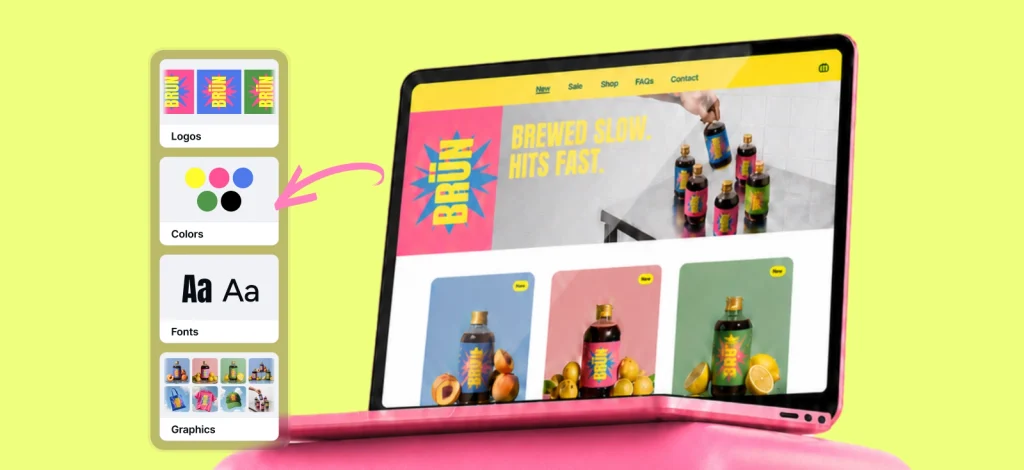
Kittl fits this job because soap brands need repeatable design, not one pretty label. With templates, Brand Kits, typography tools, mockups, AI-generated patterns, and export options, you can build one master soap label system and adapt it across scent variants without rebuilding your brand every time you launch a new batch.
Before choosing a packaging style, place three of your bars side by side. If they look like three unrelated brands, your first job is the system: colors, type, layout, logo placement, and label hierarchy.
12 ways to package soap for sale
These soap packaging ideas are built around commercial use, not craft-table novelty. Each option should protect the product, support the scent story, hold label information clearly, and look strong in product photos.
1. The premium belly band
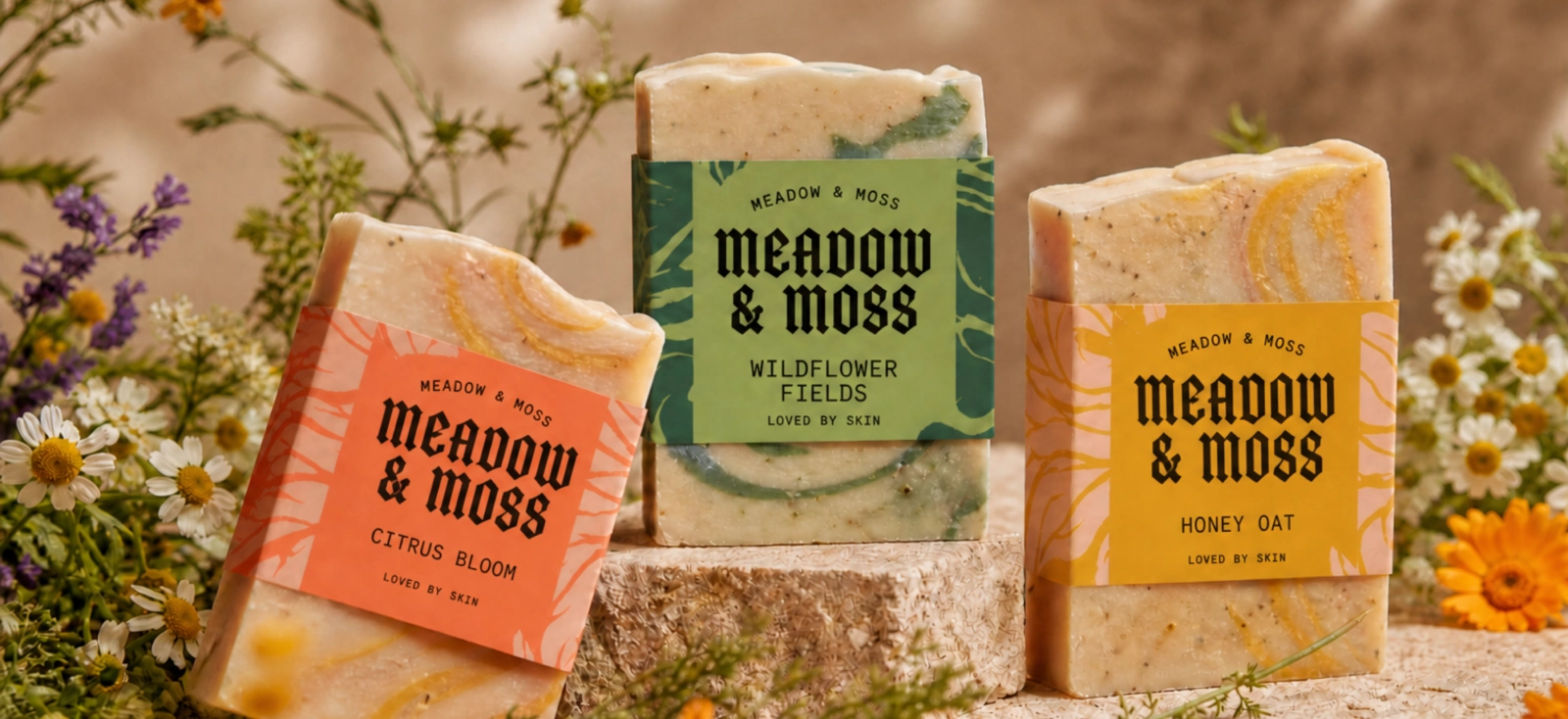
A belly band is a thick paper sleeve wrapped around the center of the soap, usually leaving the edges, texture, color, or swirl visible.
This is the multi-SKU standard for a reason. It is affordable, easy to print, simple to store, and flexible enough for cold-process soap, artisan soap, and small seasonal batches. It gives you enough space for the brand name, scent name, net weight, and core ingredients, while still letting customers see the actual bar.
The premium version comes down to paper stock and layout. Thin printer paper bends too easily and makes the product feel cheap. A heavier cardstock, around 80 lb or higher, gives the band structure. The design should have a clear front panel, side fold area, and back panel for ingredients and business details.
For multi-scent soap brands, belly bands are especially useful. Build one master layout, then change the scent name, color block, ingredient icon, and short scent note for each bar. This solves the common problem of rebuilding the brand every time a new fragrance enters the lineup.

In Kittl, create one belly band template with your logo, typography, spacing, and ingredient layout locked. Save your brand colors and fonts in Brand Kits, then duplicate the file for each scent. Lavender gets one color, charcoal gets another, citrus gets another. The structure stays the same, which is the whole point.
Measure the bar after it has fully cured. Handmade soap can shrink during curing, and a band designed too early may fit badly later.
2. The full-enclosure retail box
A full-enclosure retail box covers the entire soap bar in a printed cardboard carton.
This style is more expensive than a belly band, but it does a different job. It protects corners during shipping, stacks neatly on retail shelves, gives wholesale buyers a cleaner merchandising option, and offers more room for storytelling. If you sell through Faire, boutiques, gift shops, hotels, or subscription boxes, boxes can make your soap feel more retail-ready.
The back panel can hold INCI ingredients, business details, batch code, barcode, scent notes, usage instructions, and a small brand story. The front panel should stay disciplined: brand, product name, scent, weight, and one strong visual cue.
The mistake is treating every side of the box like a poster. A box has more space, but that does not mean it needs more noise. Let each panel do one job.
Kittl’s grid and alignment tools are useful here because box layouts punish messy spacing. If the scent name sits too close to the fold, or the barcode crowds the ingredients, the whole package feels rushed. Build a front, back, side, and top panel system that can repeat across your scent range.
Ask your printer for the dieline before designing. A box layout without the correct fold, bleed, and glue areas is a beautiful file that cannot go to print.
3. The botanical AI-pattern wrap
A botanical wrap covers the soap in printed paper with a scent-led pattern, such as lavender sprigs, eucalyptus leaves, orange peel, rosemary branches, or oat flowers.
This style works well for soap brands with a wellness, apothecary, spa, or botanical positioning. It gives the bar a more giftable feel and lets the scent communicate visually before the buyer gets close enough to smell it.
The risk is stock-art sameness. A lot of botanical soap packaging uses the same line leaves, the same watercolor lavender, and the same beige background. That is how brands end up looking interchangeable.
A stronger approach is to create proprietary pattern language. In Kittl, you could use the AI Image Generator to create a seamless watercolor eucalyptus pattern, then pair it with your own typography, label block, and logo placement. The goal is not to let the pattern run the whole package. The goal is to build a recognizable scent world.

For example:
- Lavender soap: soft botanical pattern with muted violet and sage.
- Citrus soap: orange peel, leaf shapes, and warm cream tones.
- Charcoal soap: abstract mineral pattern with deep gray and off-white.
- Oat milk soap: grain-inspired texture with warm beige and soft brown.
- Rose clay soap: pressed floral pattern with muted pink and clay tones.
Keep the scent name on a clean label block. Patterned wraps look rich, but text disappears fast when it sits directly on busy artwork.
4. The eco-luxe window box
A botanical wrap covers the soap in printed paper with a scent-led pattern, such as lavender sprigs, eucalyptus leaves, orange peel, rosemary branches, or oat flowers.
A window box gives you the protection of a carton while leaving part of the soap visible through a die-cut opening.
This is one of the best soap packaging ideas for bars with strong visual texture: swirls, layers, botanicals, exfoliant tops, embedded shapes, or glycerin clarity. The buyer gets the sensory appeal of seeing the soap, while the box still protects it for shelves and shipping.
The window shape matters. A circle can feel soft and spa-like. An arch can feel boutique and architectural. A narrow vertical window can look modern. A large window can work, but it leaves less room for information and can weaken the box structure if the substrate is too thin.
Text hierarchy is the main challenge. The product name, scent, and weight need to sit around the window without feeling cramped. Ingredients and business details usually belong on the back or side panel.
Use this for premium bars where texture sells: cold-process swirls, botanical toppings, transparent glycerin soap, or layered exfoliating bars.
Do one print test with the actual window cutout. A layout that looks balanced on screen can feel awkward once the opening removes part of the front panel.
5. The shrink-wrap and premium sticker system
Shrink wrap is practical packaging, especially for glycerin and melt-and-pour soaps that can sweat or develop glycerin dew.
The functional reason is simple: glycerin attracts moisture from the air. Shrink wrap helps protect the bar, keeps it sanitary at markets, and makes it safer for high-touch retail environments. It is also useful when customers handle products directly at farmers markets or pop-ups.
The design challenge is that shrink wrap has almost no personality on its own. The sticker does the branding work.
A premium sticker system needs clean typography, strong contrast, and enough label space for the required information. A small round sticker can look cute, but it often fails when you need scent name, weight, ingredients, and business details. Consider a front sticker plus a back label, or a wraparound label that adheres over the shrink wrap.
This style works well for colorful glycerin soap, translucent bars, guest soaps, kids’ soap, novelty shapes, and farmers market inventory.
If customers pick up your soap often, choose a sticker material that resists smudging. A beautiful matte label that rubs off by noon at a market is not a branding win.
6. The color-blocked minimalist sleeve
A color-blocked sleeve is a belly band or wrap built around solid color, confident typography, and very little ornament.
This is a strong choice for founders who want to move away from the rustic handmade look. It feels more DTC, more boutique, and more modern. It also performs well in Etsy thumbnails because color blocks read quickly at small sizes.
The best versions use strict visual hierarchy:
- Brand name at the top.
- Scent name as the main headline.
- One scent note or benefit line.
- Net weight in a consistent position.
- Ingredients and business details on the back.
This style is perfect for multi-SKU consistency. Each scent gets its own color, but the layout never changes. On a retail shelf, the set looks like a collection instead of a pile of unrelated bars.

Kittl’s font library and alignment tools are the main draw here. The design lives or dies by type. Choose a strong headline font, pair it with a readable supporting font, and keep the spacing precise.
7. The apothecary slide-out drawer
A slide-out drawer box works like a matchbox. The soap sits inside a tray that slides out from a printed outer sleeve.
This style creates a small unboxing ritual, which raises perceived value before the customer even uses the product. It is a good fit for luxury soap, men’s grooming lines, heritage apothecary brands, holiday gifts, and boutique wholesale accounts.
The outside shell can carry vintage-inspired typography, borders, monograms, botanical engravings, or ornamental frames. The inner tray can hold the soap with tissue, a scent card, or a small usage note.
This is a higher-cost option, so it should support a higher price point. Use it for hero products, gift sets, limited releases, or wholesale collections where presentation matters.
Kittl’s heritage typography, vintage fonts, and text effects are especially relevant here. A slide-out soap box can look expensive with the right type pairing, border weight, and spacing. It can also look like a costume prop if the vintage style goes too far. Keep the layout controlled.

Use the drawer format for your best margins, not every bar. Premium packaging should pay for itself.
8. The fabric and wax seal wrap
A fabric wrap uses muslin, linen, cotton, or another soft textile around the soap, often finished with a wax seal, twine, ribbon, or small label.
This style is tactile and memorable. It works best for small-batch artisan lines, wedding favors, holiday gifts, spa sets, and high-ticket bundles. It feels handmade in a more elevated way than scrapbook paper or rubber stamps.
The tradeoff is labor. Fabric wraps take time. Wax seals take time. Tying, folding, and aligning everything takes time. That is fine if the product price reflects it. It is not fine if you are selling $6 bars and spending four minutes wrapping each one.
Use this style selectively: gift sets, limited runs, wholesale holiday boxes, or premium scent collections.
Kittl can support the system through the wax seal logo, hang tag, and small printed insert. Design the seal mark as a clean vector logo, then export it as an SVG for manufacturing. The tag should carry the scent name and label details without looking like an afterthought.
Time yourself wrapping ten bars. If the labor cost makes the margin vanish, save this style for gift sets
9. The typographic kraft upgrade
Kraft paper can still work. The upgrade is removing the messy craft cues and treating kraft like a design substrate.
That means no rubber stamps with uneven ink, no crowded handwritten labels, no random twine bow trying to do branding’s job. Use clean black or white ink, strong editorial typography, negative space, and precise alignment.
A typographic kraft wrap works well for eco-friendly soap packaging because it keeps the material simple while making the brand look more mature. It can feel natural without looking unfinished.
This is also one of the cheapest soap packaging design options if you use local printing or print at home with the right setup. The design needs to be disciplined, though. Kraft already brings texture. The label does not need much decoration.
Strong fits:
- Unscented soap.
- Oat milk soap.
- Charcoal soap.
- Men’s grooming soap.
- Minimalist wellness brands.
- Zero-waste refill brands.
Eco-friendly should not mean visually weak. If the material is simple, the typography needs to carry more authority.
10. The dark noir soap wrap
Dark packaging stands out in soap because the category is full of pastels, beige, kraft, and soft botanical palettes.
A matte black, charcoal, espresso, or deep navy wrap can work beautifully for activated charcoal soap, coffee soap, tobacco and vanilla scents, cedarwood soap, men’s grooming lines, salt bars, and spa products with a moodier edge.
The design needs contrast. White, cream, silver, or muted metallic text can look sharp on dark stock, but printing dark packaging usually requires more care. Cheap black ink can look patchy. White ink can blur if the printer is not right for the job. Foil looks beautiful, but the cost climbs quickly.
Before ordering a large print run, mock up the packaging and run a small print sample. Dark soap packaging can look expensive when the type is crisp. It can also look muddy if the production is weak.

Dark packaging needs breathing room. If every surface is filled with text, the premium effect disappears.
11. The soap-on-a-rope heritage tag
Soap-on-a-rope packaging pairs the product with a functional rope and a heavy cardstock hang tag.
This format has a heritage feel and makes the bar more giftable. It also gives the customer a practical reason to understand the packaging: the soap can hang in the shower, dry between uses, and feel more like a designed object.
The hang tag carries the brand. It needs to hold the product identity, scent name, net weight, business details, and ingredients where required. A double-sided tag is usually better than cramming everything onto one side.
This works well for men’s grooming, gym shower products, guest soap, travel soap, outdoor brands, hotel amenities, and premium gift sets.
Kittl can be used to design double-sided hang tags with a strong front and a clean information side. Export the final file for print, and keep the tag template for future scent variants.
Show a rope soap hanging from a simple hook with the tag visible. Include a second image showing the front and back of the hang tag.
12. The wholesale master bundle
A wholesale master bundle packages three or four complementary soap bars in a larger branded box or sleeve.
This is one of the best ways to raise average order value. Instead of selling one bar, you sell a routine, a scent story, a gift set, or a seasonal collection.
Bundle ideas:
- Morning Shower Set: citrus, mint, rosemary.
- Sensitive Skin Set: oat milk, honey, unscented.
- Charcoal Grooming Set: charcoal, cedar, coffee.
- Floral Gift Set: rose clay, lavender, jasmine.
- Holiday Guest Soap Set: evergreen, spice, vanilla.
The packaging needs a master brand design that ties the individual bars together. Each bar can have its own scent color, but the outer box should make the set feel curated.

This is especially useful for Mother’s Day, wedding favors, corporate gifting, boutique wholesale, and Etsy gift search. It also gives you a stronger hero product for ads and email.
Name the bundle around the buyer’s use case. “Three-Bar Gift Set” is accurate. “The Guest Bathroom Set” sells the moment.
The 3-second Etsy thumbnail rule
A beautifully designed soap label can still fail if the product photo looks dim, cluttered, or oddly cropped.
On Etsy, your thumbnail has about three seconds to prove that the product is worth clicking. Maybe less. Customers are scanning rows of soap bars, many of which use similar colors, similar botanicals, and similar rustic props. If your image looks like it was shot on a kitchen counter under yellow lighting, the packaging has to work twice as hard.
The thumbnail needs four things:
- Clear product shape.
- Readable scent name or brand cue.
- Strong contrast against the background.
- Packaging that looks clean at a small size.
For Etsy sellers, that means a cleaner product grid. For wholesale, it can become a line sheet preview that boutique buyers can review before the physical boxes are printed.
This is where Kittl’s infinite canvas can help a lot. You can try out several different packaging styles in one workspace and see which works best for you. You can even group them into several campaigns, channels, and so much more like:
- Etsy thumbnails.
- Shopify collection images.
- Wholesale catalog previews.
- Email product blocks.
- Launch graphics.
- Seasonal scent announcements.
- Preorder pages.

Also, catch their eye better with our AI Video Generator with soap video templates like these:
Design your thumbnail like a shelf test. If the scent name and packaging style are not clear at small size, the image is probably too busy.
Label compliance: What must be on your soap packaging
Soap labeling can get confusing because “soap” is not always regulated the same way.
The FDA says a product must meet three conditions to be regulated as soap under its definition:
- It must be made mainly of alkali salts of fatty acids
- Those alkali salts must provide the cleaning action
- And the product must be marketed only as soap
If the product is marketed for moisturizing, deodorizing, making the user smell nice, or beautifying, the FDA treats it as a cosmetic. If it claims to treat or prevent disease, such as acne or eczema, it can be treated as a drug.
That distinction matters because many handmade soap brands add cosmetic-style claims without realizing they have moved into a different labeling lane. “Lavender soap” is one thing. “Moisturizing lavender body bar” can be another. “Eczema relief bar” is much riskier.
For basic consumer packaging, the Fair Packaging and Labeling Act requires many consumer products to show the product identity, the name and place of business of the manufacturer, packer, or distributor, and the net quantity of contents.
This is a practical checklist, not legal advice. Label rules vary by product type, claims, country, and sales channel, so founders should verify requirements for their exact product before printing thousands of labels.
The FDA Soap Labeling Checklist
Use this as a starting point for your soap packaging layout:
- Product identity: State what the product is, such as “soap,” “body bar,” or “facial cleansing bar.”
- Net weight: Include the net weight on the front panel, usually near the bottom area.
- Manufacturer details: Add the business name and address, or the correct manufacturer, packer, or distributor details.
- Ingredient list: If your product is regulated as a cosmetic, include ingredients in the correct format, commonly using INCI ingredient names.
- Claims check: Avoid disease-treatment claims unless the product is properly regulated for that use.
- Batch or lot code: Helpful for quality control, recalls, and wholesale conversations.
- Usage or care notes: Add only if needed, such as “keep dry between uses.”
- Barcode or UPC: Often needed for wholesale, retail, and larger stockists.
- Warning statements: Add where needed for fragrance allergens, exfoliants, eye-area warnings, or other product-specific concerns.
Create a label grid with fixed zones. Put the product name, scent, and net weight on the front. Move longer ingredients and business information to the back panel, box side, hang tag back, or insert. That keeps the packaging beautiful without hiding required information.
How to build a multi-SKU soap packaging system in Kittl
Multi-SKU consistency is where many soap brands start to struggle.
One scent looks nice. Then the second scent gets a new label color. The third gets a different font because the founder was in a different mood. The holiday bar gets a new logo placement. Six months later, the shop looks like a shelf of unrelated micro-brands.
A better system starts with one master layout.
For example, your belly band template might include:
- Logo at the top.
- Scent name as the main headline.
- Scent family color block.
- One ingredient illustration or icon.
- Net weight in a fixed position.
- Ingredients on the back panel.
- Business details at the bottom.
- Batch code and barcode zone.

In Kittl, you can save your fonts, logo, and colors in Brand Kits. All you have to do is create one label and then duplicate them for each scent and only change the controlled parts: scent name, scent color, scent note, and pattern. This makes the full product line feel intentional, even when you add new scents.
A 15-scent soap line should not require 15 different design systems. It needs one flexible system with enough room for variation.
Create three rules for every scent: one color, one ingredient cue, one scent line. If you need more than that to explain the bar, the packaging may be trying to fix a product-positioning problem.
How to make homemade soap packaging look expensive
Expensive-looking soap packaging usually comes from restraint, not decoration.
The details that raise perceived value are small but visible:
- Better paper stock.
- Cleaner typography.
- More white space.
- Consistent label placement.
- Stronger product photography.
- Fewer decorative elements.
- A clear scent system.
- Better hierarchy on the front panel.
- Professional mockups before print.
- Matching packaging across bundles, inserts, and social assets.
The fastest upgrade is typography. Many handmade soap labels look amateur because the font choices fight each other. Use one display font for the scent name and one supporting font for ingredients and product details. That is enough.
The second upgrade is spacing. Do not crowd the label because you are afraid of empty space. Empty space makes the product feel calmer, cleaner, and more expensive.
The third upgrade is consistency. If the lavender bar, charcoal bar, and citrus bar all follow the same structure, customers start to understand the line as a brand.
Before printing, shrink your label design to Etsy thumbnail size. If it still looks good when small, you are close. If it turns into a blur, simplify.
Build soap packaging like a product brand
The best soap packaging ideas do more than wrap the bar. They explain the scent, protect the product, create a stronger shelf presence, and help customers understand why your handmade soap is worth the price.
A soap brand that wants premium margins needs a packaging system: one label structure, one typography direction, one scent-color logic, one compliance layout, and one mockup style that carries across Etsy, Shopify, wholesale, farmers markets, and gift sets.
That is the move from soap maker to soap brand.
Kittl gives you the design workspace to build that system without hiring a packaging agency for every new scent. Start with one master label. Turn it into belly bands, stickers, boxes, tags, inserts, mockups, and bundle sleeves. Then keep the structure as your product line grows.
Your soap already took weeks to make. Give the packaging enough discipline to make that work visible.
FAQ
How do you package soap professionally?
Package soap professionally by choosing a packaging style that fits the soap type and sales channel. Belly bands work well for cold-process soap, shrink wrap helps protect glycerin or melt-and-pour bars, and boxes are stronger for wholesale or shipping. The label should include clear product identity, net weight, business details, and ingredients where required.
What is the best way to package soap for Etsy?
The best soap packaging for Etsy is packaging that reads clearly in a thumbnail. Belly bands, color-blocked sleeves, botanical wraps, and premium stickers can all work if the scent name, product shape, and brand style are visible at small size. Pair the packaging with clean mockups or bright product photography so the listing looks retail-ready.
How do I package glycerin soap so it does not sweat?
Glycerin soap often needs shrink wrap because glycerin attracts moisture from the air, which can create glycerin dew. A shrink-wrap and premium sticker system can keep the bar sanitary while still giving the packaging a polished look.
What materials are best for eco-friendly soap packaging?
Eco-friendly soap packaging often uses kraft paper, recycled cardstock, paper belly bands, cardboard boxes, compostable wraps, or fabric wraps. The material still needs strong design. Eco-friendly packaging can look premium when the typography, spacing, and label hierarchy are clean.
How do you fit all the ingredients on a small soap label?
Use a clear label hierarchy. Put the product name, scent, and net weight on the front. Move long ingredient lists to the back panel, box side, hang tag back, or insert. Use a readable supporting font and avoid shrinking text so much that customers and wholesale buyers struggle to read it.
What is the cheapest way to package handmade soap?
The cheapest professional option is usually a belly band or kraft paper wrap with a clean printed label. The key is making the low-cost material look deliberate. Use strong typography, consistent spacing, and a repeatable layout across every scent.
How do you make homemade soap packaging look expensive?
Use better paper, cleaner fonts, more white space, consistent scent colors, and professional mockups. Avoid clutter. A simple belly band with sharp typography can look more expensive than a crowded box covered in decorative elements.
Do homemade soaps need an FDA ingredient label?
It depends on how the product is made and marketed. The FDA says products that meet its definition of soap are regulated differently from cosmetics. If the product is marketed for cosmetic purposes, such as moisturizing, deodorizing, or beautifying, it may be regulated as a cosmetic and need cosmetic labeling. If it claims to treat or prevent disease, it may be regulated as a drug. Founders should verify rules for their specific product and claims before printing labels.

Shafira is a content writer who turns boring business talk into reads people actually enjoy. She grew up hoarding $1 novels in Singapore and writing hilariously bad fiction, but now she tackles content marketing with all that creative chaos since 2019. From blogs and newsletters to UX and SEO, she writes how she thinks: nerdy, honest, and a bit offbeat. She believes the best content is human-designed, not just plain text.