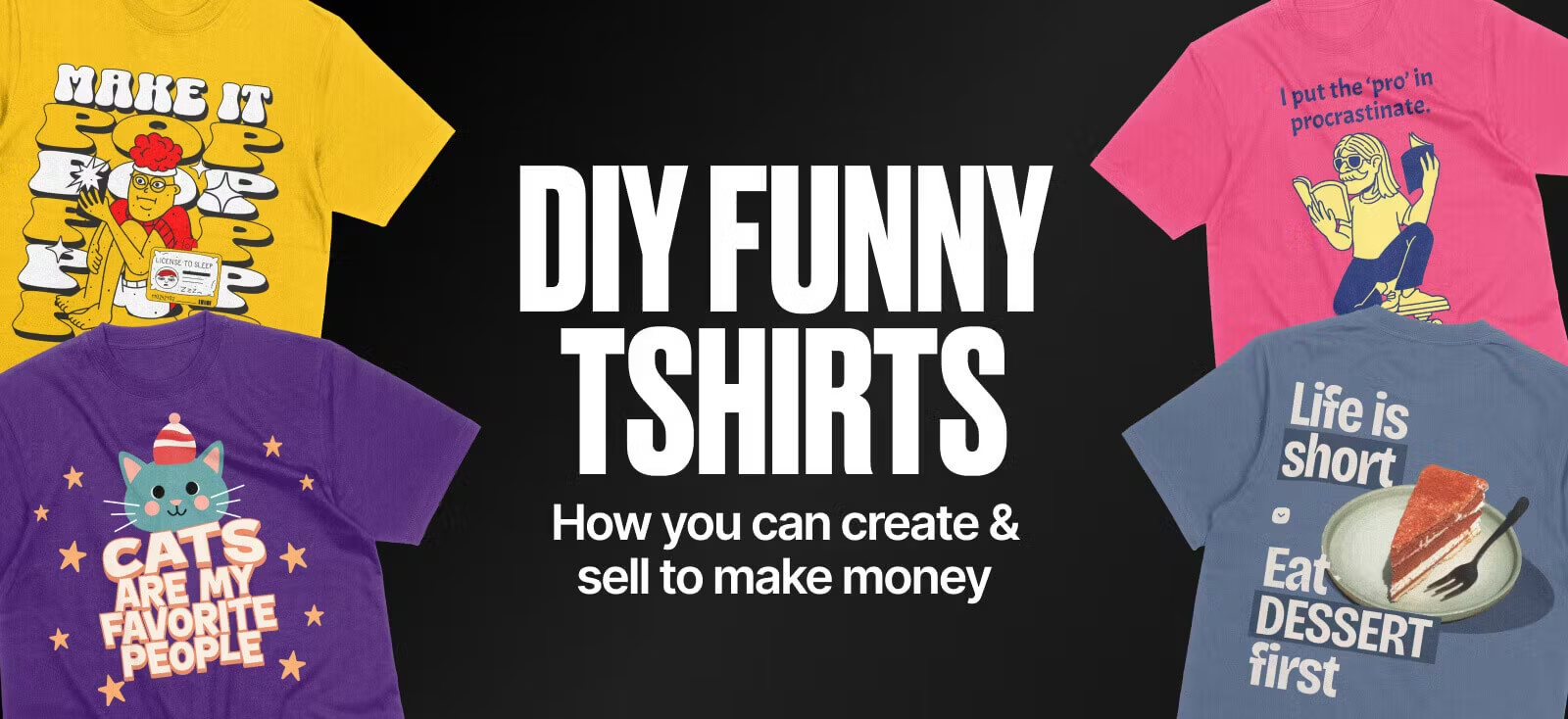
DIY funny shirt follows an easy logic through emotional appeal.
If there’s one thing that never goes out of style, it’s humor.
Humor is universal, and funny t-shirts are one of the best-selling apparel categories in the world. Whether it’s a clever pun, an inside joke, or a meme-inspired design, people love wearing shirts that make others laugh.
But here’s the real punchline: funny t-shirts aren’t just fun to design. They’re a massive business opportunity.
As a graphic designer, you already have the creative skills to turn simple ideas into eye-catching visuals. But what if you could design and sell funny t-shirts online, without complicated software or expensive tools?
Think designing print-ready t-shirts takes hours in Illustrator or Photoshop?
What if we told you there’s a way to do it in minutes — without switching between tools or wrestling with complicated settings?
Why DIY funny shirt is a profitable niche for designers
Funny t-shirts aren’t just a passing trend. They’re a multi-million dollar industry that thrives on humor, relatability, and pop culture. There are even many ways to approach this: Funny shirts for men, funny mom shirts, and funny husband shirts. It seems like the entire population likes a little humor in their life.
Aside from serving as a great conversational starter, the custom t-shirt printing market was valued at $5.16 billion in 2024 and is expected to grow at a CAGR of 11.5% from 2025 to 2030.
With a hint of a clever pun, a dash of sarcastic quote, or a whole lot of viral memes, these shirts have a way of turning heads and making you a millionaire.
But here’s the real opportunity:
- Evergreen appeal: Unlike seasonal trends, humor never goes out of style. A well-designed funny t-shirt can keep selling for years, making it a great long-term investment for designers.
- Broad audience: Scientists say laughter strengthens social bonds. So technically, wearing a funny t-shirt makes you a relationship expert. From sarcastic millennials to dad joke enthusiasts, funny shirts appeal to almost everyone.
- Emotional connection = impulse buys: People don’t just buy funny t-shirts; they identify with them. If a design makes someone laugh out loud or reminds them of an inside joke, they’re way more likely to buy it on the spot.
- Social media & viral potential: Funny t-shirts thrive in meme culture. A study in Academia.edu analyzing 1,000 memes on Facebook found that humorous content is more likely to be shared, increasing its reach and impact. Just saying — a good design can go viral on TikTok, Instagram, or Reddit, instantly driving traffic and sales.
Originality matters: How great DIY funny shirt stand out
While anyone can slap text on a shirt, not everyone can design one that actually sells. As a graphic designer, you have an advantage.
With the right approach, you can create high-quality, original funny shirts for women or funny dad shirts that stand out in an oversaturated market — and make money doing it.
Here’s what we found makes a funny t-shirt design successful:
1. Strong typography

The right typography amplifies the attitude so pick fonts that match the joke’s personality.
A punchline is only effective if it’s clear, readable, and visually engaging—because if people have to squint, the joke’s already dead. Good font choices and layout make all the difference.
Let’s say we are creating sarcastic t-shirts. A classic pairing? Impact for bold, in-your-face sarcasm (think: “Oh, Great.” in all caps) with Courier New for a deadpan, typewriter-style delivery (“Because life is just so easy.”).
In our design example above, we are using Sunny Drop in Kittl for the “Make it Pop” text, which complements the “License to Sleep” illustration. With its retro, bubbly curves and wavy lettering, Sunny Drop adds a playful, lighthearted feel.
The mix of structured layout and fluid typography creates a design that feels both dynamic and effortlessly fun!
2. Minimal but impactful graphics

A great, funny t-shirt doesn’t need over-the-top visuals. Sometimes, less is funnier.
The key is to let the joke do the talking while the design adds just enough context to make it even funnier.
A simple, well-placed illustration can enhance the joke without overpowering it, like a tiny low battery icon next to “Running on Fumes”, or a single stick figure shrugging under “It’s Fine. I’m Fine. Everything’s Fine.”
3. Trendy & timeless balance

Designers usually stress over hard copies, but sometimes the best inspiration is right in front of you on a t-shirt in the wild.
How many times have you done a double-take at someone’s shirt, thinking it’s some mundane, big-name brand logo or a well-known phrase, only to realize it turns out to be something else?
The best funny t-shirt designs jump on memes and pop culture while staying relevant long-term, and some of the most clever ones parody well-known brands, like “McSleepy’s” (McDonald’s) or flipping Adidas into “Adios” — giving them instant recognition with a witty twist.
Just make sure your joke is smart enough to avoid legal trouble because nothing kills humor faster than a lawsuit.
4. The high-quality execution of your DIY funny shirt

A great dad joke can be completely ruined by poor execution. Pixelation, bad font choices, and poor composition can make even the funniest husband shirts look unprofessional and unsellable.
Ensuring your design prints well and looks polished across different formats is key to making a T-shirt that people actually want to buy and wear.
One of the biggest mistakes designers make is working at too low a resolution. A blurry or pixelated print is an instant dealbreaker for customers, no matter how clever the joke is.
To keep your design sharp and high-quality, follow these key guidelines:
- Always design at 300 DPI (dots per inch) This is the industry standard for t-shirt printing, ensuring crisp details.
- Use a large canvas size. A recommended 4500×5400 pixels or higher prevents loss of detail when printing at different sizes.
- Avoid scaling up low-resolution images: If you start with a small design and try to enlarge it later, it will only become pixelated. Start with a high-quality source to maintain clarity.
How to design a DIY funny shirt with high-quality
A funny t-shirt is only as good as its design execution. Because a great joke can flop if the typography is bad, the layout is cluttered, or the punchline gets lost.
Let’s break it down step by step.
Step 1: Choosing the right humor style
Say you are creating a batch of funny mom shirts.
Not all humor is created equal — what works for one audience might fall flat for another. Choosing the right DIY funny shirt humors helps you craft a design that connects with moms rather than alienates them.
That being said, humor is subjective, and while sarcasm and dark humor can be hilarious to some, they can also be offensive or controversial to others.
A good rule of thumb? Avoid humor that targets specific races, religions, disabilities, or personal tragedies.
Instead, focus on universally relatable humor, wordplay, everyday struggles, workplace jokes, and lighthearted sarcasm (“Running Late Is My Cardio”) are great options that make people laugh without crossing the line.
01. Wordplay & puns
Puns are the perfect blend of wit and simplicity, making them a timeless choice, especially for creating DIY funny shirt, like a funny dad Tee.
A line like “I’m on a seafood diet — I see food and I eat it.” works best when paired with bold, easy-to-read typography.
The font choice should enhance the humor — something thick and playful like Bungee or Anton makes the dad joke pop, while a vintage serif can give it a retro feel.
02. Sarcasm & dry humor
A little different than funny dad shirts, the go-to for Gen Z and millennials, sarcasm thrives on deadpan delivery.
A simple phrase like “Professional Overthinker” works best when the typography adds to the joke — Comic Sans for maximum irony, or something sharp and condensed like Bebas Neue to make it feel like an official title.
Sarcasm also works great in minimalist DIY funny shirt designs, where less is more. And hey, if you need inspiration beyond humor, take a look at our 365 inspirational quotes for lines that could work as unexpectedly serious yet sarcastic designs.
03. Pop culture & memes
Tapping into movies, trends, and internet culture makes your design instantly relatable, but timing is everything.
Memes have a short shelf life, so it’s important to catch a trend at its peak. A reference to an old Vine or viral TikTok might get a niche audience laughing, but a well-known line from an evergreen movie or TV show has a longer-lasting appeal.
In terms of style, retro graphics, vintage-style badges, or bold block lettering work well for pop culture references. They blend quite well in your DIY funny shirt.
04. Minimalist & typographic
Whether you are creating funny shirts for men or funny wife shirts, sometimes, a well-chosen phrase is all you need. A simple line like “Low Battery. Send Coffee.” doesn’t require extra visuals — it works because the text does all the heavy lifting.
Choosing the right font is crucial here — clean, modern sans-serifs or monospaced typewriter fonts enhance the tone in your DIY funny shirt without distraction.
Not in the mood for humor? If you’re looking for something more motivational, philosophical, or timeless, check out our 200 famous quotes for designs that make a statement.
05. Illustration-based
Sometimes, an image speaks louder than words — but when paired with the right phrase, it takes the joke to another level.
A coffee cup looking exhausted under “Espresso Yourself” makes the pun even funnier, while a simple doodle of a ghost next to “Boo-tiful Mess” adds personality. The key is to keep the illustration clean and well-placed — too much detail can overwhelm the design.
Kittl’s built-in illustration library makes it easy to add hand-drawn icons, vintage illustrations, or abstract shapes to complement your joke without overpowering it.
When in doubt, less is more. If the joke needs an explanation, it’s probably not a great t-shirt design.
Step 2: Selecting the perfect fonts & layout for your DIY funny shirt

Typography is everything in a DIY funny shirt design. The right font pairing, spacing, and layout can take a simple joke and make it hilarious.
Here’s how to choose wisely:
- Bold & blocky for sarcasm: Impact, Anton, or League Gothic work for deadpan humor (“Oh, Great.”).
- Handwritten & messy for playful jokes: Permanent Marker or Caveat makes casual jokes feel personal.
- Typewriter fonts for dry humor: Courier New or Special Elite give that “I didn’t even try, but it’s funny” vibe.
- Vintage & script fonts for retro feels: Pacifico or Lobster work for nostalgic designs (“Dad Jokes. Certified.”).
Beyond font selection, readability is key. Overly thin, script, or decorative fonts might look stylish on-screen but lose legibility when printed. Especially on textured fabric.
Keep short, punchy jokes stacked to maintain clarity, and ensure the text has enough contrast against the background of your DIY funny shirt. Don’t forget that proper spacing (kerning and leading) prevents text from feeling too cramped or too loose, keeping the joke intact.
And if you are a busy designer just trying to meet the deadlines at the end of the day, while trying to keep your side POD business afloat, you can start with a pre-made template. We listen and we don’t judge.
Experiment with outline and shadow effects in Kittl’s text panel to improve legibility and add depth without compromising clarity.
Step 3: Selecting colors that print well

Choosing the right colors for your DIY funny shirt isn’t just about aesthetics — it’s about ensuring your colors look just as good in print as they do on screen.
Many designers create in RGB color mode, but most t-shirt printing methods, including DTG (Direct-to-Garment) and screen printing, use CMYK, which can cause colors to appear duller or slightly different than expected.
To avoid unpleasant surprises:
- Be mindful that neon and overly bright colors may not print as vibrantly on your DIY funny shirt unless your print provider specifically supports them.
- Check if your print-on-demand (POD) provider offers color profiles or recommended settings to ensure accuracy.
- If printing on dark fabrics, use white or light-colored outlines to prevent elements from blending into the background. A dark-colored shirt can absorb darker tones, making your design harder to see.
Kittl’s color management tools let you preview designs on different backgrounds, ensuring they’ll stand out on both light and dark T-shirts before you export them.
Step 4: Mocking up your DIY funny shirt for presentation & sales

Customers don’t just buy a design; they buy into a concept. They buy the vision of how it will look when they wear it. A high-quality mockup sells your DIY funny shirt before it even exists by making it feel real and tangible.
Take the time to present your DIY funny shirt professionally, and you’ll instantly increase its perceived value. If you are using Kittl, take a look at some of our life hacks for creating high-quality mockups:
- Use transparent backgrounds: This is crucial for print-on-demand platforms like Printful, Printify, and Redbubble, where clean, background-free designs integrate seamlessly into their mockup generators.
- Test on real mockup images: Instead of guessing how your DIY funny shirt will look, drag and drop your artwork onto a shirt template to instantly see it in context. Adjust the placement and sizing to ensure the joke or design is positioned exactly where it should be. Ensure the design is not too high or too low on the shirt chest-level placement is ideal.
- Try multiple color variations: Some designs pop on dark fabrics, while others look better on lighter colors. Experiment with different t-shirt colors to see what works best and offer variations to appeal to a wider audience.
- Export in high resolution: A great DIY funny shirt design can be ruined by a low-quality export. Make sure your mockup is crisp, clear, and print-ready to avoid pixelation or blurriness when displayed in online stores.
Step 5: Exporting in the right format for print

Even the best DIY funny shirt design can turn out blurry or distorted if it’s not exported correctly.
Each printing platform has specific file format requirements, and using the wrong one can lead to unexpected issues like pixelation, color shifts, or loss of detail. Choosing the right format ensures your design looks as sharp and professional as it does on-screen.
For text-based and vector-heavy DIY funny shirt designs, exporting as PDF keeps lines and shapes crisp, allowing for scalability without losing quality. Plus, if you need to write on the PDF after exporting, you can easily do so without compromising the entire document.
If your DIY funny shirt design includes illustrations, textures, or gradients; high-resolution PNGs with a transparent background are the best choice to preserve detail while ensuring seamless placement on different t-shirt colors.
Avoid JPEG, as it compresses images and may result in blurry edges or artifacts, which can ruin an otherwise great print.
The best platforms to sell your DIY funny shirt online

Creating a DIY funny shirt is just the first step — selling it is where the real opportunity begins. With the rise of e-commerce and print-on-demand (POD) services, designers no longer need to worry about inventory, upfront costs, or manufacturing.
The right platform can help you turn your creativity into a profitable business without the hassle of printing and shipping yourself.
Below, we break down the best platforms to sell your funny t-shirts, covering print-on-demand services, marketplaces, and custom storefront options — plus a few pricing strategies to maximize your earnings.
1. Print-on-demand marketplaces (No upfront investment, no inventory)
If you want to sell your DIY funny shirt designs without dealing with production, print-on-demand (POD) marketplaces are the easiest option. These platforms handle printing, fulfillment, and customer service, allowing you to focus entirely on design and marketing.
- Redbubble: Great for independent artists, easy to set up, and offers a global audience.
- TeeSpring: Now known as Spring, ideal for social media-driven sales and YouTube creators.
- Spreadshirt: Created its own marketplace app and allows you to set a custom shop.
- Merch by Amazon: Amazon’s invite-only POD platform with massive reach and Prime shipping.
Best for beginners who want zero upfront costs and don’t want to deal with customer service or logistics.
POD marketplaces set base prices, and you only earn a markup on top. Choose bold, niche designs that stand out in search results to increase visibility.
2. Selling on Etsy or Shopify (control your brand, higher profits)
If you want more control over pricing, branding, and customer experience, Etsy and Shopify offer a step up from print-on-demand marketplaces.
- Etsy: Best for selling custom, handmade, or unique designs with a built-in audience of buyers looking for independent brands.
- Shopify: A fully customizable online store where you control everything, from pricing to branding to customer experience.
Best for designers looking to build a brand rather than just sell one type of individual DIY funny shirt.
Integrate a POD service (like Printful or Printify) with Etsy or Shopify to automate fulfillment while keeping a professional storefront.
3. Creating your own website & brand (the ultimate long-term play)
For designers who want complete independence, launching your own website gives you full control over branding, customer relationships, and profit margins. While this approach takes more effort upfront, it can lead to higher earnings beyond your DIY funny shirts merch profits and long-term brand recognition.
Best options for building a t-shirt store:
- Shopify (with Printful or Printify for automated fulfillment)
- WooCommerce (WordPress) for a self-hosted e-commerce experience
- BigCommerce or Squarespace for a more streamlined setup
Best for designers serious about building a brand and keeping 100% of their profits.
Use email marketing, SEO, and social media ads to drive traffic and build a loyal audience.
Pricing strategies to maximize your profit from your DIY funny shirt

Pricing your DIY funny shirt correctly can mean the difference between a thriving store and low sales. Here’s how to find the right balance:
- Cover your costs: Factor in the base price of POD services, transaction fees, and marketing expenses.
- Competitive pricing: Research similar designs on Etsy, Redbubble, or Amazon to price your shirts competitively.
- Premium pricing for unique designs: If your t-shirt is niche, trendy, or has high perceived value (like a DIY funny shirt), don’t be afraid to charge more.
Bundle discounts Offer deals like “Buy 2, Get 1 Free DIY funny shirt” or free shipping over a certain amount to increase order value.
Position your t-shirts as “limited edition” or “premium designs” rather than generic products people pay more for exclusive and high-quality designs.
Ready to turn your DIY funny shirt into a business? Start designing with Kittl today and bring your best ideas to life.
Turn your DIY funny shirt ideas into reality
A great funny t-shirt isn’t just about the joke its about how well it’s designed, printed, and sold.
From choosing the right humor style and typography to ensuring print quality and finding the best platforms to sell, every step plays a role in making your design a success.
You may be creating for fun, building a side hustle, or launching a full-fledged t-shirt brand. For whatever it is — the key is to work smarter, not harder. Instead of juggling multiple design programs, searching for assets, and spending hours tweaking text effects, why not use a tool that simplifies the process?
With Kittl, you get one-click text effects, a massive font library, built-in illustrations, and professional export settings — all in one place. No downloads, no complicated workflows — just a powerful design platform built for creatives who want to move fast without compromising quality.
Ready to bring your funniest ideas to life? Sign up for Kittl today and start designing your next best-selling t-shirt.