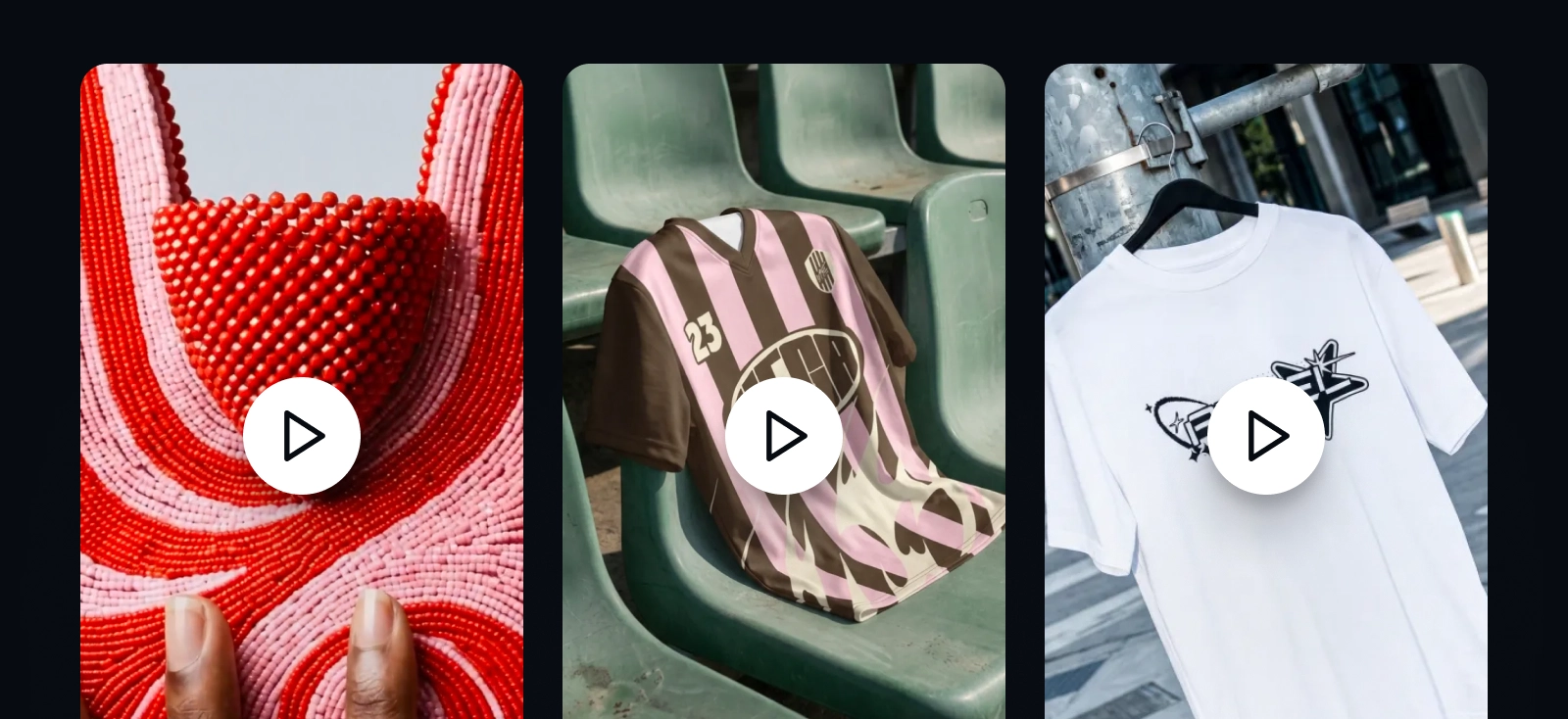
If you’ve tried promoting your products on TikTok or Instagram Reels, you’ve probably noticed something quickly: what works on a product page doesn’t always work in a feed.
A clean product image might look great in a listing. But in a scroll-based environment, it often gets ignored — not because the product isn’t interesting, but because it isn’t moving.
That shift isn’t just anecdotal. Video is expected to account for more than 80% of all web traffic, while nearly 90% of businesses already use video as part of their marketing.
At the same time, short-form content has become one of the main ways (73% of people) evaluate products before buying.
This is exactly why AI video ads are starting to reshape how small businesses create content — and why more creators are turning to AI video generators to keep up with demand.
Not because they’re more “creative,” but because they remove the friction that usually stops content from being made in the first place.
With Kittl’s AI Video Generator, that shift is even more practical. You’re not starting from zero or switching tools — you’re taking the static product visuals you’ve already created and turning them into motion, directly in the same workspace.
Why most product ads get ignored on TikTok & Reels
Most product ads don’t fail because of the product itself. They fail because they don’t match the environment they’re shown in.
On a marketplace like Etsy, people arrive with intent. They’re comparing options, reading details, and deciding what to buy. A well-structured listing supports that kind of behavior.
TikTok and Instagram Reels work differently.
People aren’t searching for your product — they’re scrolling past it.
That changes everything about how your content needs to perform.
In a feed, your product has a fraction of a second to do three things:
- Catch attention
- Communicate what it is
- Feel relevant enough to keep watching
If it doesn’t do that immediately, it gets skipped.
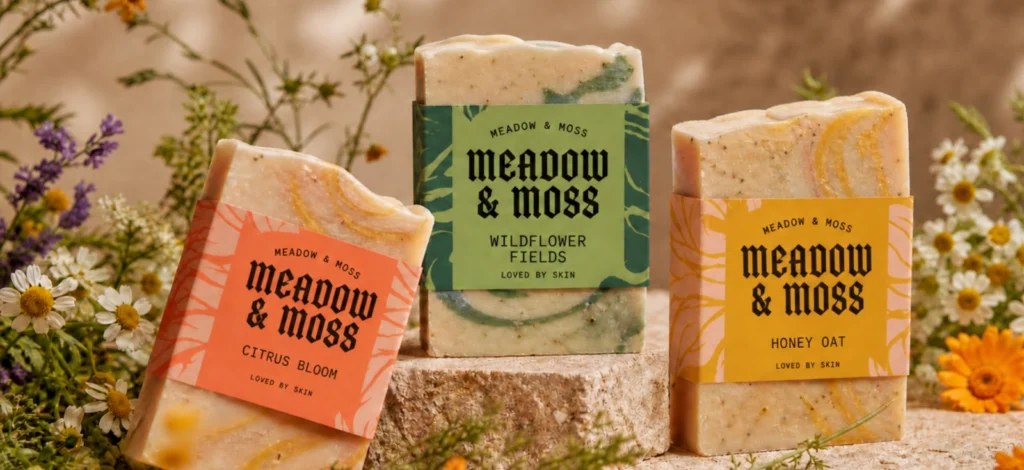
This is where many small businesses run into a gap. The assets they already have — product photos, mockups, clean visuals — are designed for clarity in a listing, not for movement in a feed.
So when those same visuals are reused as ads, they often feel static in a space where everything else is in motion.
The instinctive solution is to “make a video.” But that’s where the second problem appears. Creating video the traditional way often requires a video editor, which adds another layer of time and effort to the process.
Creating video the traditional way introduces friction:
- Setting up lighting and backgrounds
- Filming multiple takes
- Editing clips together
- Resizing and exporting for different platforms
None of these steps are individually difficult. But together, they turn content creation into a process that’s hard to repeat — especially if you’re managing multiple products or trying to stay consistent.
And consistency is what actually matters here.
On platforms like TikTok and Reels, performance doesn’t usually come from one perfect ad. It comes from testing variations, adjusting quickly, and learning what works over time.
When creating video takes too much effort, that cycle slows down. Fewer ads get made, fewer ideas get tested, and growth becomes dependent on guessing instead of experimenting.
That’s why the shift toward AI video ads isn’t just about speed. It’s about making that cycle possible again — turning content creation into something you can repeat, adjust, and scale without adding more work each time.
Design your video so the first frame works on its own. On TikTok and Reels, people decide in a split second whether to keep watching, and that decision often happens before any motion even registers. If your product isn’t clear immediately, the rest of the video won’t get a chance to matter.
What makes a high-performing AI video ad
Once you understand how people interact with content on TikTok and Reels, most high-performing product ads start to look surprisingly simple.
They’re not necessarily more creative. They’re just better aligned with how people scroll.
Instead of trying to tell a full story, effective AI video ads focus on a few key things that happen quickly and clearly.
1. The product is visible immediately

There’s no buildup.
In a feed, your first frame is doing most of the work. If someone has to wait to understand what they’re looking at, they’ll usually move on before they get there.
Strong ads make the product obvious from the start — not hidden behind transitions, text, or effects.
2. There’s just enough motion to feel real
Movement is what separates a product ad from a static image.
But it doesn’t need to be dramatic. In many cases, subtle motion works better:
- a slow rotation
- a slight zoom
- a shift in perspective
These small changes make the product feel more tangible without overwhelming it.
This is where AI video ads are particularly useful. They add motion without requiring full production, which keeps the focus on the product itself.
3. The context is clear within seconds
People don’t spend time decoding ads.
They’re looking for quick signals:
- what the product is
- how it might be used
- whether it fits their style or needs
This doesn’t require a storyline. Often, a simple visual direction is enough:
- a clean product showcase
- a styled, aesthetic presentation
- a quick lifestyle hint (without overcomplicating it)
The goal isn’t to explain everything. It’s to make the product feel familiar enough to keep watching.
4. It feels native to the platform
The ads that perform best don’t feel like ads.
They match the pace, simplicity, and visual language of the feed they’re in. That usually means:
- short duration
- minimal distractions
- a clear focal point
Overly polished or over-edited content can actually feel out of place here. Simpler visuals often blend in better and perform more consistently.
If you’re unsure what style to go for, start by matching what already appears in your feed. The goal isn’t to stand out immediately — it’s to blend in just enough to earn a second of attention, then let the product do the rest.
How to make video ads with AI using SeeDance 2.0 (Step-by-Step)
Once you stop thinking about video as a separate production process, the workflow becomes much simpler.
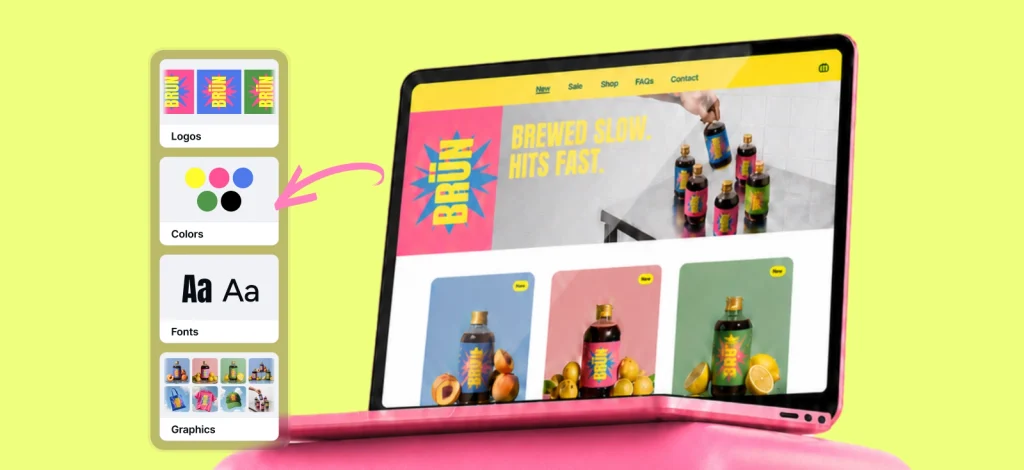
Inside Kittl, you’re not jumping between tools or rebuilding assets. Your design, your mockup, and your video all live in the same space. The process becomes: product image → mockup → video → variation.
SeeDance 2.0 works best with products and objects. It’s not designed to animate existing human faces or real people from your images. If you’re creating product ads, stick to clean product visuals or mockups for the most reliable results.
Step 1: Start with what you’ve already created

Everything starts with your product — but in Kittl, that doesn’t mean you need to have it ready beforehand.
You can:
- Start from a template (for T-Shirts, posters, packaging, etc.)
- Design directly in the editor using fonts, vectors, and layouts
- Or upload an existing product image if you already have one
Once your design is ready, you can immediately apply it to a mockup:
- Place it on a product (like apparel, prints, or candles)
- Adjust positioning and scale
- Preview how it looks as a finished product
This step matters more than it seems.
Because instead of preparing assets across multiple tools, you’re building everything in one place — from the design itself to how it appears in a real product context.
By the time you move to video, your product already looks “real” — you’re not animating a flat design, you’re animating something that feels ready to sell.
Step 2: Turn your product into motion with SeeDance 2.0

Once your product visual or mockup is ready, you don’t need to export it or move it anywhere.
With Kittl’s AI Video Generator, powered by SeeDance 2.0, you can generate a video directly from your existing project using SeeDance 2.0.
This is where the workflow shifts.
Instead of editing clips manually, you describe how the product should move and feel.
Strong prompts focus on motion + mood, not just the object:
- “slow rotating product shot with soft shadows and studio lighting”
- “minimal aesthetic video with subtle zoom and clean background”
- “cinematic product reveal with depth and lighting shift”
- “floating product with gentle movement and soft glow”
Weak prompts stay too literal:
- “a t-shirt”
- “product ad”
- “make a video”
These don’t give enough direction.
Rule of thumb: If your prompt doesn’t describe movement or atmosphere, the result will usually feel generic.
Step 3: Generate and preview your video

Once you generate your video, resist the urge to treat it like something you need to “fix.”
With traditional video tools, you tweak timelines and edits. Here, your control is the prompt.
So instead of adjusting the output, adjust the input.
If something feels off:
- change the motion (“slower rotation”, “gentler zoom”)
- simplify the direction
- remove unnecessary visual complexity
This is faster — and more consistent — than trying to manually correct results.
Step 4: Optimize for TikTok & Reels before downloading

Before exporting, quickly check:
- Duration: keep it short (3–6 seconds works well)
- First frame: product must be immediately visible
- Motion: simple beats complex
Avoid:
- over-styled cinematic effects
- too many transitions
- dark or unclear lighting
This is what turns a simple AI image to video ads workflow into something scalable — you’re not recreating assets, you’re building on them.
Step 5: Keep everything connected inside your project

This is where Kittl’s workflow becomes a real advantage.
Because your design, mockup, and video are all part of the same project:
- you don’t need to export and re-upload files
- you don’t lose alignment between versions
- you don’t rebuild assets for every variation
You can move fluidly between:
- adjusting your design
- repositioning your mockup
- regenerating your video
That continuity might sound like a small detail, but it’s what makes the process repeatable.
For small business owners, that’s the difference between:
- creating one ad
- and building a system that produces many
Step 6: Create 2–3 variations per product (this is where results come from)
This is where most of the value comes from — and where most workflows usually break.
Because everything lives in one place, you can create multiple versions of the same product:
- different styles
- different motion directions
- different visual tones
Small changes in direction can lead to very different results in a feed.
Instead of asking, “Is this good enough to post?” the question becomes, “Which version performs best?”
This is the part most people skip—and where the advantage actually is.
Instead of making one ad, try:
- Version A: clean studio rotation
- Version B: cinematic lighting + zoom
- Version C: floating / abstract motion
Same product. Different feel.
Then:
- post them
- see which one performs
- double down on that style
When creating variations, don’t just change the visuals — change the feeling. A product can come across as minimal, premium, or playful depending on motion and lighting alone. Those subtle shifts often matter more than the design itself when it comes to performance.
How small businesses actually use AI video ads (real scenarios)
Once creating AI video ads becomes fast and repeatable, the biggest shift isn’t just how you make content — it’s how often you can use it.
Instead of treating video as something you only create occasionally, it becomes part of your everyday workflow. And that opens up a range of practical use cases that don’t require a full marketing plan or production setup.
Here’s how small businesses are actually using AI video ads in practice.
1. Launching a new product without a full shoot

When you’re introducing something new, timing matters.
But organizing a shoot — getting samples, setting up visuals, editing clips — can slow that down.
With AI video ads, you can:
- start from your product image or mockup
- create a short video immediately
- publish it the same day
This is especially useful for:
- Print-on-Demand products
- digital products
- pre-launch ideas you want to test
2. Creating quick promotional ads
Sales, discounts, and limited-time offers often need fast turnaround.
Instead of reworking existing content, you can generate simple variations like:
- “product with dynamic lighting and energetic motion for a sale ad”
- “clean product showcase with subtle zoom for a limited offer”
These don’t need to be complex. They just need to feel active enough to stand out in a feed.
3. Filling your content calendar without burnout
One of the biggest challenges for small business owners is consistency.
Posting regularly means constantly needing new content. And when every video requires effort, it becomes difficult to keep up.
With AI video ads, you can:
- create multiple variations in one session
- batch content for the week
- reuse the same product with different styles
For example:
- Day 1: clean studio motion
- Day 2: cinematic lighting
- Day 3: minimal aesthetic
Same product. Different content.
4. Testing what actually works (instead of guessing)

Most products don’t fail because they’re bad — they fail because the presentation doesn’t connect.
AI video ads make it easier to test different directions quickly:
- minimal vs cinematic
- soft lighting vs bold contrast
- slow rotation vs dynamic motion
Instead of committing to one idea, you can try several and see what performs.
This is where growth actually happens — through iteration, not prediction.
5. Turning existing product photos into new content
Most businesses already have product images.
The problem is, those images were created for listings—not for feeds.
AI video ads let you reuse what you already have:
- no reshooting
- no redesigning
- no starting from scratch
You’re simply extending your existing assets into a new format that fits how people consume content today.
For small business owners, this makes it possible to create AI product video ads consistently, without adding more production work.
Don’t wait for a “reason” to create a video. On TikTok and Reels, consistency matters more than timing. Even simple product videos posted regularly will outperform occasional, high-effort content.
Start creating AI video ads without the usual overhead

At this point, the shift is pretty clear.
Creating video ads is no longer about setting up shoots, editing timelines, or figuring out production workflows. It’s about how quickly you can turn an idea into something you can test.
That’s what makes AI video ads so useful — not just because they’re faster, but because they remove the hesitation that usually slows content down.
Instead of asking whether a product is “worth” making a video for, you can create one in seconds and see how it performs.
And right now, it’s even easier to try.
Right now, you can try creating AI video ads free using SeeDance 2.0 inside Kittl.
If you’ve been waiting for the right moment to start creating video content, this is probably it.
- Start creating your first AI video ad with SeeDance 2.0
- Try different styles and see what fits your brand
- Build a content workflow you can actually maintain
The advantage isn’t just having video — it’s being able to create AI video ads whenever you need them.
FAQ
What is a video ad?
A video ad is a short piece of content designed to promote a product or service, usually on platforms like TikTok, Instagram Reels, or YouTube. Unlike static images, video ads use motion, timing, and visual context to show how a product looks, feels, or fits into real life — often in just a few seconds.
For small businesses, video ads are less about storytelling and more about clarity: helping someone quickly understand what you’re selling and why it matters.
How do I create a video ad?
Traditionally, creating a video ad involves filming your product, editing clips, and exporting them for different platforms.
With AI tools like Kittl’s AI video generator, powered by SeeDance 2.0, the process is much simpler:
- start with a product image or mockup
- describe the type of ad you want
- generate a ready-to-post video
This allows you to create video ads quickly without needing filming equipment or editing skills.
Which ai video editor is best for ads?
The best AI video editor depends on your workflow.
If you’re working with product designs, mockups, or visual content, tools that combine design and video — like Kittl — are often more efficient. Instead of switching between platforms, you can create your design, apply it to a product, and turn it into a video in one place.
This is especially useful for small businesses that need to create content consistently, not just once
Which AI is best for making advertisements?
There isn’t a single “best” AI for all types of ads — it depends on what you’re creating.
For product-based ads, tools that focus on turning images into short-form video content tend to be the most practical. SeeDance 2.0, used inside Kittl’s AI video generator, is designed specifically for this kind of workflow, making it easier to create product-focused ads without filming.
Can I use AI videos for advertising?
Yes — AI video ads are already widely used across platforms like TikTok, Instagram, and online stores.
For small businesses, they’re especially useful because they reduce the time and cost of content creation. Instead of producing every video manually, you can generate multiple variations and test what works, which is often more effective than relying on a single polished ad.
Is it legal to use AI for ads?
In most cases, yes — but it depends on how you use it.
As long as you:
- use assets you have the right to (your own designs, licensed content, etc.)
- avoid misleading or deceptive claims
- follow platform guidelines
AI-generated ads can be used just like traditional content.
It’s always a good idea to review the advertising rules of the platform you’re posting on (like TikTok or Instagram) to stay compliant.
What is the most realistic AI video editor?
“Realistic” can mean different things depending on the use case.
For product ads, realism isn’t about perfectly simulating reality — it’s about making the product feel tangible and clear in motion. Subtle movement, lighting, and perspective often matter more than hyper-real detail.
Tools like Kittl’s AI video generator focus on this kind of realism, helping products feel more natural in a feed without requiring complex production.

Shafira is a content writer who turns boring business talk into reads people actually enjoy. She grew up hoarding $1 novels in Singapore and writing hilariously bad fiction, but now she tackles content marketing with all that creative chaos since 2019. From blogs and newsletters to UX and SEO, she writes how she thinks: nerdy, honest, and a bit offbeat. She believes the best content is human-designed, not just plain text.