Lunar New Year Symbols 2026 are about more than looking festive. They’re about choosing meaning that people instantly recognize and feel connected to.
This year, it lands on 17 February 2026. And it’s not a quiet week. The Lunar New Year season brings a real jump in shopping and travel, with people actively looking for gifts, festive items, and limited drops.
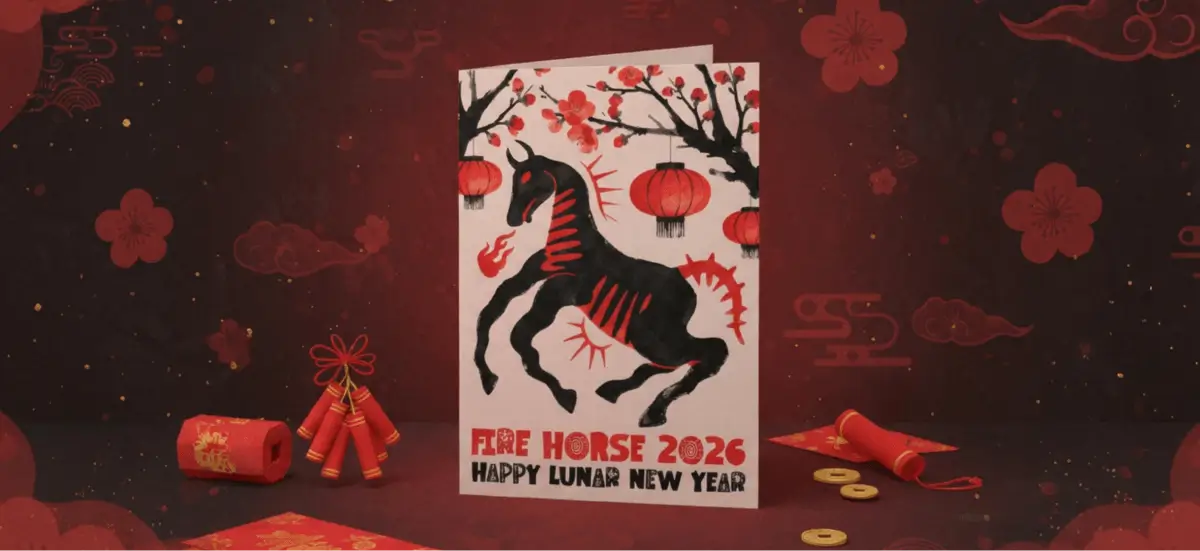
2026 is the Year of the Horse, linked with energy, confidence, and forward motion.
And yes, the internet is doing its thing too. In China right now, some people are even putting Draco Malfoy’s face on New Year decorations because his Chinese name sounds like “horse” plus “fortune,” which feels lucky for the Year of the Horse.
In this guide, you’ll find Lunar New Year Symbols 2026, what each one means, and how to choose the right symbol so your designs feel intentional (and sell better).
Keep reading, because one symbol usually clicks and suddenly you know exactly what to make next.
Why Lunar New Year symbols 2026 matter more than you think
Lunar New Year symbols exist because, for centuries, Chinese culture has relied on visual meaning to express hopes for the future.
Long before modern branding or mass literacy, colors, numbers, and symbols were used to communicate luck, protection, prosperity, and harmony in ways everyone could understand.
That belief system still shapes how people decorate, gift, and shop during Lunar New Year today:
- Colors carry meaning, not just style: Red has long symbolized good fortune, joy, and protection from bad luck. Its use during the Lunar New Year dates back to ancient festivals meant to ward off evil spirits and invite prosperity
- Numbers are tied to sound and symbolism: Certain numbers are considered lucky or unlucky because of how they sound in Chinese. Eight is favored because it sounds like wealth, while four is often avoided due to its association with death
- Symbols represent wishes for the year ahead: Zodiac animals, lanterns, and traditional characters like Fu are visual expressions of what people hope to attract in the new year, such as success, family harmony, or protection. These symbols have been passed down and reinforced through generations of celebration
For 2026, this matters more than ever. When people search for or buy designs tied to Lunar New Year symbols 2026, they’re not just looking for something festive. They’re looking for meaning that aligns with what they want more of in the year ahead.
For print-on-demand sellers, understanding this is the difference between designs that look seasonal and designs that actually resonate.
17 Lunar New Year symbols 2026 and what they represent
Lunar New Year symbols for 2026 reflect shared hopes for luck, prosperity, protection, and forward momentum as the Year of the Horse begins.
1. The Horse (Year of the Horse 2026)

The heart of Lunar New Year symbols 2026 is the Horse. 2026 is the Year of the Horse according to the Chinese zodiac, part of a 12-year cycle that assigns meaning and personality traits to each year.
In Chinese culture, the Horse symbolizes independence, ambition, strength, and forward movement. It is often associated with people who value freedom, progress, and determination. These qualities make the Horse especially meaningful during the New Year, when people are focused on momentum and personal growth.
Why buyers connect with this symbol
The Horse represents energy and progress. People are drawn to it because it reflects hopes for movement, success, and pushing forward in the year ahead.
2. Lanterns (hope and guidance)

Lanterns are a long-standing symbol of the Lunar New Year and are especially prominent during the Lantern Festival, which marks the end of the celebrations. Lanterns symbolize hope, guidance, and light for the future.
Traditionally, lanterns were used to illuminate paths and bring families together, reinforcing their association with unity and optimism.
3. Peonies (honor and prosperity)

Peonies are often called the “king of flowers” in Chinese culture. They symbolize wealth, honor, and high social status, and are frequently used in New Year decorations and art.
Peonies are especially associated with abundance and elegance, making them a refined symbol of prosperity.
4. Fish (surplus and abundance)

Fish are a common Lunar New Year symbol because the word for fish sounds like the word for surplus. Displaying fish represents the wish to have more than enough in the year ahead.
Fish imagery often symbolizes abundance that carries over year after year, reinforcing long-term prosperity.
5. Firecrackers (warding off negativity)

Firecrackers have been used for centuries during the Lunar New Year to drive away evil spirits and negative energy. The loud sounds were believed to scare away misfortune and make space for good luck.
Although real firecrackers are less common today due to regulations, their imagery remains an important symbol of celebration and renewal.
6. Mandarin oranges (luck and abundance)

Mandarin oranges are commonly gifted and displayed during the Lunar New Year because their name sounds similar to words associated with luck and wealth in several Chinese dialects.
They are often given in pairs, symbolizing the doubling of good fortune and abundance.
7. Flowers and blossoms (renewal and growth)

Flowers, especially plum blossoms and peach blossoms, are powerful symbols of renewal in Chinese culture. Plum blossoms are admired for blooming in winter, symbolizing resilience and perseverance, while peach blossoms are associated with longevity and new beginnings.
These flowers are traditionally displayed to welcome growth and positive change in the new year.
8. The Fu character (福) meaning good fortune

The Fu character is one of the most recognizable Lunar New Year symbols. It represents good fortune, blessings, and happiness. Traditionally, it is displayed on doors, walls, and decorations during the New Year period.
A unique tradition associated with Fu is hanging it upside down, because the word for “upside down” sounds the same as the word for “arrive” in Chinese. This creates the phrase “fortune has arrived,” reinforcing the symbolism through sound and placement.
Why do buyers connect with this symbol? Fu is direct and reassuring. People like it because it clearly expresses a wish for good fortune, making it emotionally comforting and culturally meaningful.
9. Red envelopes (hongbao)

Red envelopes, known as hongbao, are traditionally filled with money and given during the Lunar New Year as a symbol of good luck, prosperity, and protection. They are especially associated with elders blessing younger family members.
The red color of the envelope is believed to ward off evil spirits, while the money inside symbolizes transferring good fortune for the year ahead.
10. Dragons (power and protection)

Dragons hold a special place in Chinese culture as symbols of power, strength, wisdom, and protection. Unlike Western dragons, Chinese dragons are benevolent and associated with good fortune and authority.
During Lunar New Year, dragon imagery often appears in decorations and performances to invite prosperity and protect against negative forces. While dragons are most prominent during the Year of the Dragon, they remain important symbols in all Lunar New Year celebrations.
11. Lion dance symbolism (luck and safety)

The lion dance is a traditional performance during the Lunar New Year meant to bring good luck and drive away evil spirits. The lion is believed to scare away negativity through movement, noise, and color.
Lion dances are commonly performed at homes and businesses to bless spaces for the year ahead, reinforcing their association with safety and prosperity.
12. Gold ingots and coins (wealth and abundance)

Traditional Chinese gold ingots, also known as sycee, symbolize wealth and financial prosperity. They are often displayed or illustrated during the Lunar New Year to attract abundance in the coming year.
Coins and ingots are visual reminders of material success and financial security, making them especially common in New Year decorations.
13. Paper cuttings

Paper cuttings are traditional decorative artworks made by intricately cutting paper into shapes and motifs that represent good fortune, longevity, and celebration. These cuttings are usually placed on windows and interior spaces to enhance festive energy.
The art of paper cutting has been part of Chinese culture for generations and is especially associated with big festivals like the Spring Festival. The designs often include animals from the zodiac, flowers, and auspicious phrases, all intended to bring blessings into the home.
14. Chinese knots

Chinese decorative knots are ornamental knots used during the Lunar New Year celebrations and other festivals. Made from a single length of cord tied into symmetrical patterns, these knots symbolize unity, continuity, and longevity.
Traditionally, they are hung in homes or gifted to loved ones as tokens of interconnectedness and good fortune. While they appear as decorations, their deeper significance comes from the idea of an unbroken form representing an unbroken flow of blessings.
15. Door gods

Door gods are protective figures often depicted on the main entrance of homes during the Lunar New Year. They are believed to guard the household against evil spiritsand misfortune throughout the year.
Images of legendary generals or heroic figures are placed on doors so that the dwelling is spiritually shielded as the new lunar year begins. This custom reinforces the idea of renewal and protection as the holiday gets underway.
16. Dumplings (jiaozi)

Dumplings (jiaozi) are a beloved food during the Lunar New Year, especially in northern regions of China. They are shaped like ancient currency, which makes them a symbol of wealth and prosperity for the coming year.
Many families prepare dumplings together on New Year’s Eve, and in some traditions, a coin is hidden inside one dumpling to represent special luck for the finder.
17. Spring festival couplets (chunlian)

Spring festival couplets, known as chunlian, are pairs of poetic phrases traditionally displayed on doorways during the Lunar New Year.
These verses are chosen to express wishes for prosperity, harmony, and well-being in the coming year. Their origins trace back to ancient protective charms that were believed to ward off negative spirits and invite positive energy into the home.
Couplets are typically written in calligraphy and placed on either side of the door frame, with a shorter horizontal phrase across the top. The choice of words reflects carefully considered hopes for health and success.
Key takeaways: Lunar New Year symbols 2026 and their meanings
Lunar New Year 2026 symbols are cultural expressions of luck, protection, renewal, and intention that shape how people welcome the year ahead.
In 2026, these symbols reflect a shared desire for movement, progress, and positive change in the Year of the Horse.
- Lunar New Year symbols are rooted in centuries of cultural belief and tradition
- The Year of the Horse represents momentum, ambition, and forward movement
- Objects like lanterns, firecrackers, fish, and dumplings symbolize protection, abundance, and fresh starts
- Crafted and written symbols, such as couplets, paper cuttings, and knots, emphasize intention and continuity
- Many symbols are based on sound, storytelling, and shared meaning rather than appearance alone
If these symbols are already giving you ideas, it’s probably time to start designing.
Whether you’re creating print-on-demand products or seasonal visuals for a small business, you can jump into Kittl to experiment with Lunar New Year symbols and layouts, remix ideas, make the designs move or generate something new for 2026.