
Climate change posters aren’t just about pretty graphics; they’re a way to shout, rally, and demand attention for one of the biggest crises of our time.
Some of the most powerful environmental movements in recent years have relied on bold, eye-catching visuals to get their message across, proving that a well-designed climate change poster isn’t just decoration—it’s a megaphone.
Take Extinction Rebellion (XR), for example. Their neon-bright posters and that now-iconic hourglass logo didn’t just make a splashthey became a fixture in major cities, forcing people to confront the climate crisis head-on.
Then there’s the Green New Deal UK’s climate strike posters. Instead of the usual messy, handwritten protest signs, these designs were polished, playful, and impossible to ignore. Every single printed poster was snatched up and waved in the streets, turning them into the defining visuals of the rally.
And if you think this is just a niche design trend, think again. Google Trends data shows that searches for climate change posters hit an all-time high during the 2019 global climate strikes.
And this isn’t just a one-time spikeinterest keeps growing, especially around big events like Earth Day and international climate summits. People are actively looking for bold, compelling visuals to represent this fight.
Designing a climate change poster is not just about making something that looks good. It’s about creating something that makes people stop, think, and maybe even take action.
Let’s break down what makes an effective climate poster and look at some killer examples that prove design can be a powerful force for change.
Bringing facts to life in your climate change poster design
We’ve gathered key aspects of climate change to help spark ideas for your poster designs.
From rising temperatures to plastic-choked oceans, we’re breaking down key climate issues with visual inspiration and storytelling ideas to make your design hit harder.
Plus, we’re linking to trusted sources so you can dig deeper, grab color references, and shape a compelling narrative for your design. And if you’re used to thinking about layout and storytelling from a web design perspective, you may find that those same principles help you build clearer, more impactful climate visuals here too.
1. Extreme global heat
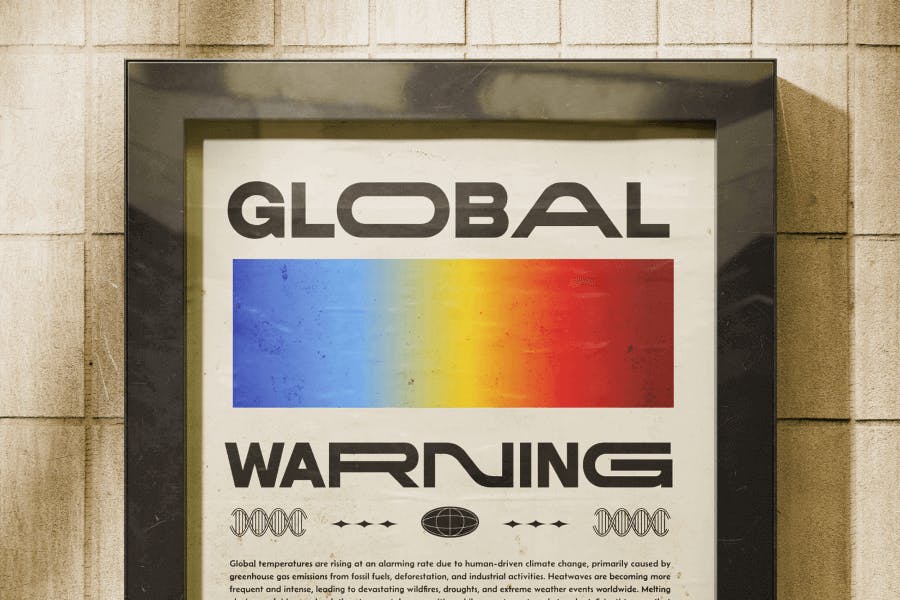
Since 2010, every year has ranked among the 10 hottest on record, with new heat records breaking nonstop – according to the scientists from NOAA. The warming stripes graphic (blue-to-red bars) is a simple but powerful way to show this trendblue for cooler past years, red for todays extreme heat.
If you’re working with color, go for a heatwave palette:
- #1E40AF (Deep Blue) Cooler past climates
- #60A5FA (Sky Blue) Mild warming
- #FACC15 (Hot Yellow) The tipping point
- #DC2626 (Crisis Red) Intense, record-breaking heat
- #7F1D1D (Burnt Red) Scorching, near-unlivable conditions
Using a gradient effect that shifts from deep blue to searing red can make temperature rise feel real, almost like a visual fever chart. Consult a color chart to be more confident with your bold color choices.
Check out #ShowYourStripes (made by climatologist Ed Hawkins) to grab warming stripes for your region. Their Showcase tab is packed with creative ways people are using them. You might even get ideas for merch to pair with your posters!
2. Pollution & plastic waste
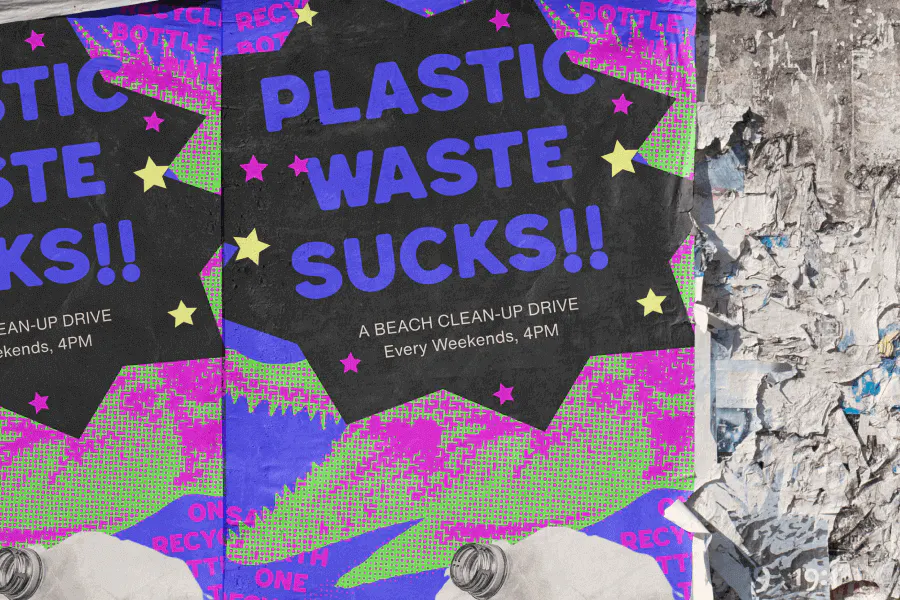
The ocean is drowning in plastic. Ecowatch says that there are 8 million tons of it that flood the water every year, that’s a garbage truck’s worth per minute. By 2050, there could be more plastic than fish in the ocean by weight. Yes, really.
Want a different take? Go loud. A Pop Art-inspired poster with halftone dots and comic-book “BOOM!” bubbles could show a fish choking on plastic, turning an overwhelming crisis into something punchy and in-your-face.
Or take it full 80s arcade pixelated fish dodging falling plastic bottles like a glitchy underwater Space Invaders. A Vaporwave approach could work, too. Think neon pink and electric blue waves, but instead of reflections, the ocean glows with floating trash.
Or maybe go Retro-Futurism, playing with ironypicture a utopian travel ad with a tagline like Visit the Glowing Plastic Seas! but with a dystopian twist.
3. Skyrocketing CO₂ levels
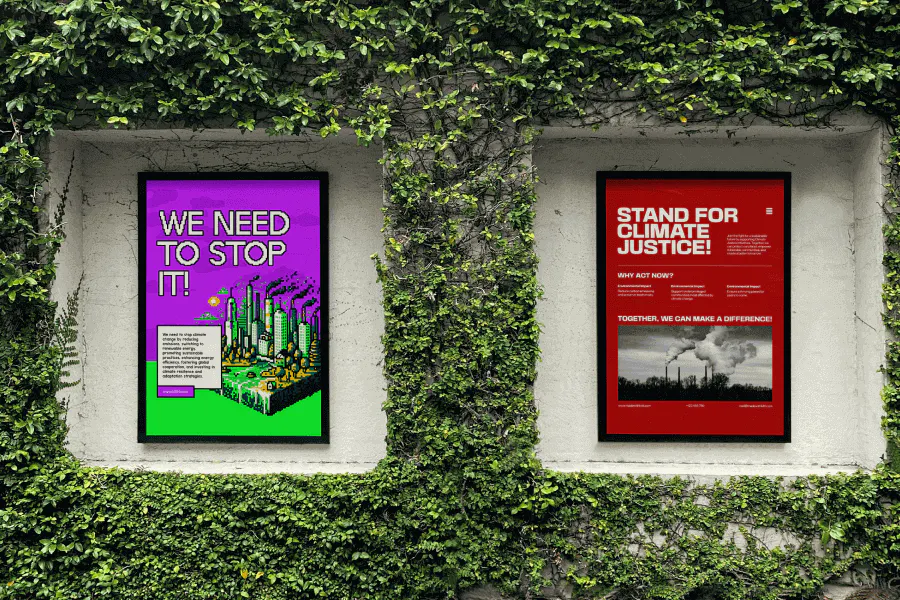
Did you know that, according to Science Alert, our CO2 levels are now 50% higher than pre-industrial times? It’s soaring past 420 ppm – a level Earth hasn’t seen in 4 million years. We’re heading into uncharted territory, and the numbers don’t lie.
When it comes to visuals, there are plenty of ways to represent this. A city skyline drowning in smog can emphasize pollution, while a giant industrial chimney spewing numbers instead of smoke makes the data impossible to ignore.
You could also go with a steep, skyward graph or an hourglass filling with black smoke to highlight the urgency.
4. Deforestation rates
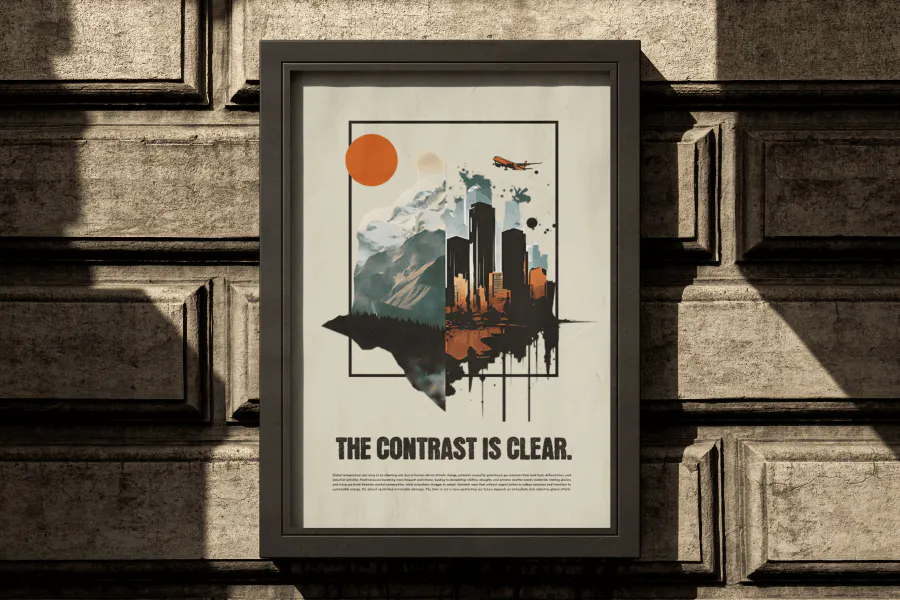
Pearce Sustainability Consulting Group mentions that forests are currently disappearing at a staggering rate. One football field per second (86,000+ per day). That’s not just a statistic. It’s a visual loss happening in real time. By the time you finish reading this, another few football fields of trees will be gone.
Surrealist landscapes could capture the unnatural shiftlush forests morphing into barren wastelands with unsettling distortions or floating, uprooted trees. A gothic-inspired approach could go darker, with ghostly, skeletal trees and shadowy figures wandering through a post-deforestation void, making the loss feel eerie and inescapable.
Or go bold with maximalist chaos, a forest bursting into flames with oversaturated, clashing colors, turning destruction into something visually overwhelming. Even a pop-art style takebright, comic-book trees being chopped panel by panelcould make the message loud and impossible to ignore.
The point? Forests aren’t just disappearing — they’re being erased. Your design can make people feel that loss in a way that hits hard.
5. Rising sea levels
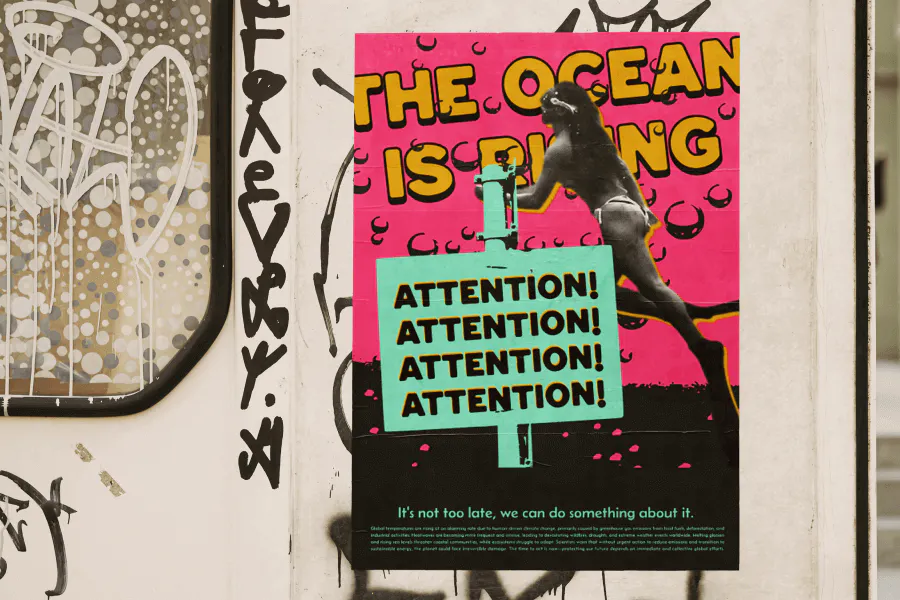
Sea levels have already risen 89 inches (20 cm) since 1880, and the pace is only getting faster, according to NOAA Climate.gov. That might not sound like much, but in low-lying cities, even a few extra inches mean flooding that never used to happen.
If you’re designing around this, layered vector waves creeping up a city skyline can tell the story in a clean, modern way. You could also try a side-by-side comparison illustration — one cityscape from the past, one submerged version for the future.
Want a climate change poster design that’s subtle? A measuring stick graphic showing different sea levels over time (kind of like height marks on a wall) can make the numbers feel real.
Play with perspective and scale. A small, flooded street sign next to towering floodwater or tiny humans standing at the base of a looming waterline. Even a photo-illustration mashup (real city, stylized rising water) can add impact while keeping things visually sharp.
6. Biodiversity in peril
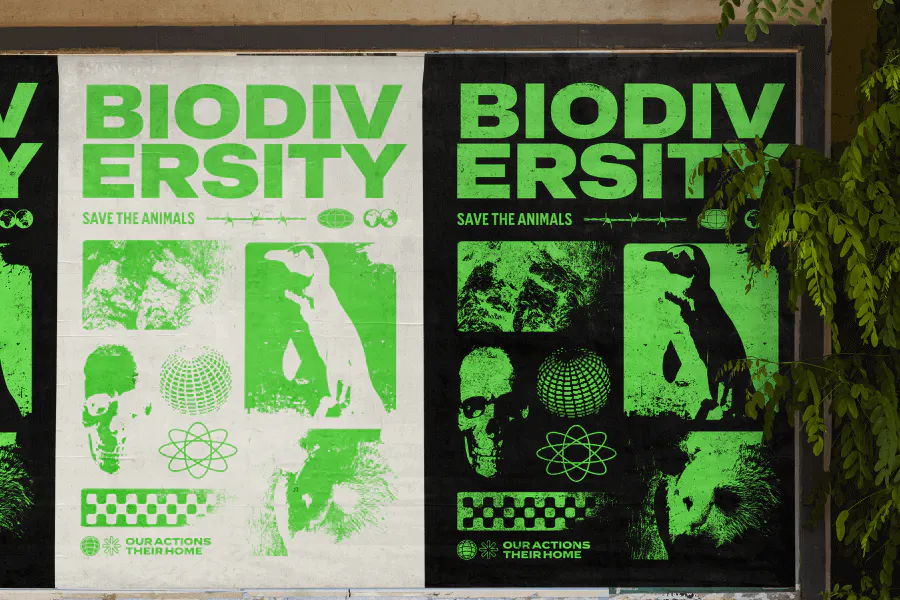
According to the UN Foundation, the world is losing species at a rate never seen before. 1 million species are on the brink thanks to human destruction. And it’s not slowing down since 1970, World Wide Fund for Nature found that our wildlife populations have dropped by 69%. This isn’t just a sad statistic a mass disappearance happening right in front of us.
There are a lot of ways to approach this visually. A brutalist-style poster, bold, high-contrast, with stark black-and-white animal silhouettes glitching out or breaking apart, can capture the feeling of irreversible loss.
Or go the opposite way with a soft, minimalist approach, where animals subtly fade into a blank space, making viewers feel the absence rather than just see it.
If you want something with a surrealist edge, an hourglass filled with silhouettes of disappearing species instead of sand can drive home the idea that time is running out.
Or lean into hyperrealism. Use a photo collage with fragmented, ghost-like overlays to make it feel eerily real.
7. Ocean acidification
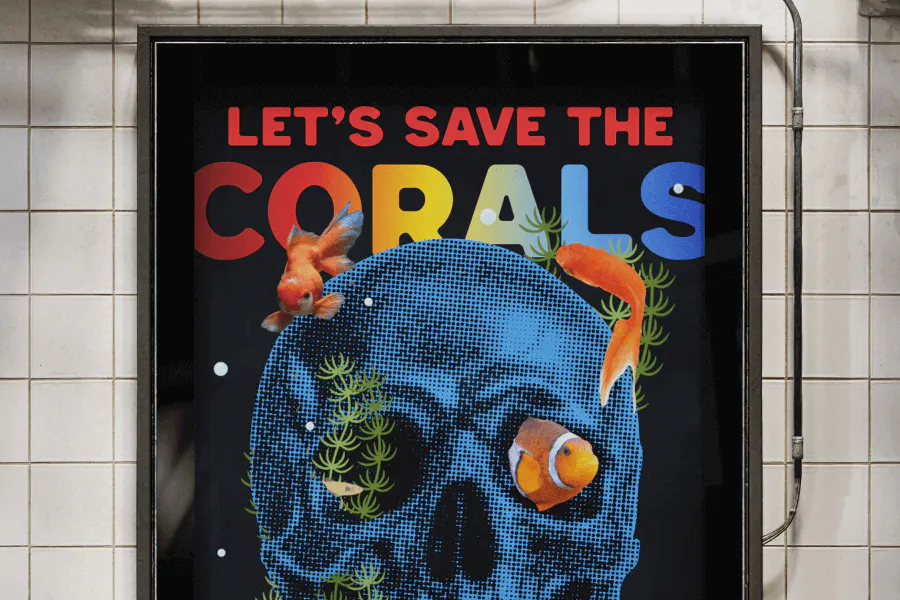
The ocean has been silently absorbing a third of our CO2 emissions, but at a cost. It’s now 26% more acidic than it was before the Industrial Revolution.
And if we keep this up, Ocean & Climate Initiatives Alliance warns us that the ocean acidity level could jump 150% by 2100, making the water corrosive to coral and shellfish. Basically, the ocean is turning against the life it once nurtured.
Design-wise, you’ve got plenty of ways to show this. A dissolving coral reef or even a skeleton of a once-thriving marine ecosystem can drive the message home. Bleached white corals are another striking image — under heat stress, they lose their color completely, and that eerie, lifeless white says it all.
You could even layer real underwater photos with hand-drawn acid-like textures or using neon greens and purples (colors often linked to acidity) can add a sickly, unsettling contrast to an otherwise vibrant ocean scene.
Template examples – Climate change posters to inspire & customize
Need a spark to get started? Check out these climate change poster templates—customize them, remix them, or just use them for inspiration.
1. We need to stop it
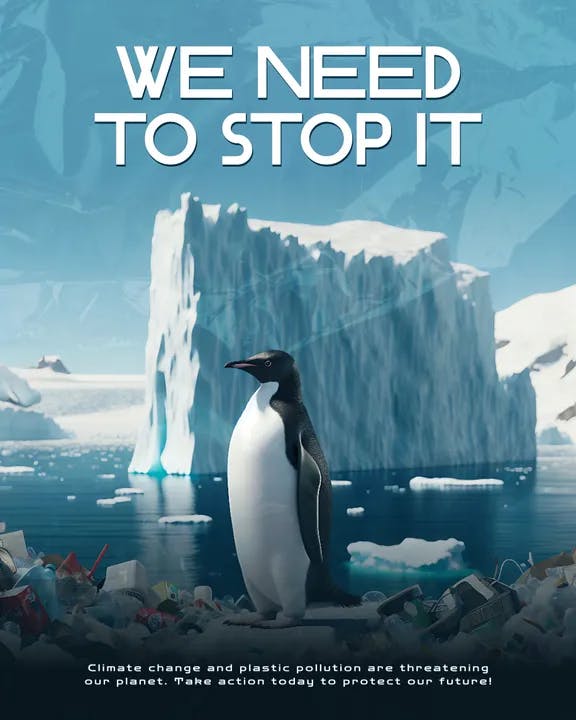
Interestingly enough, this design feels like it’s frozen in time literally, with an icy texture that makes it look like you’re peering through a block of ice.
The AI-generated image of the penguin and its surrounding area enhances the surreal yet chilling realism, capturing the bleak reality of pollution in the Antarctic.
2. Save our planet
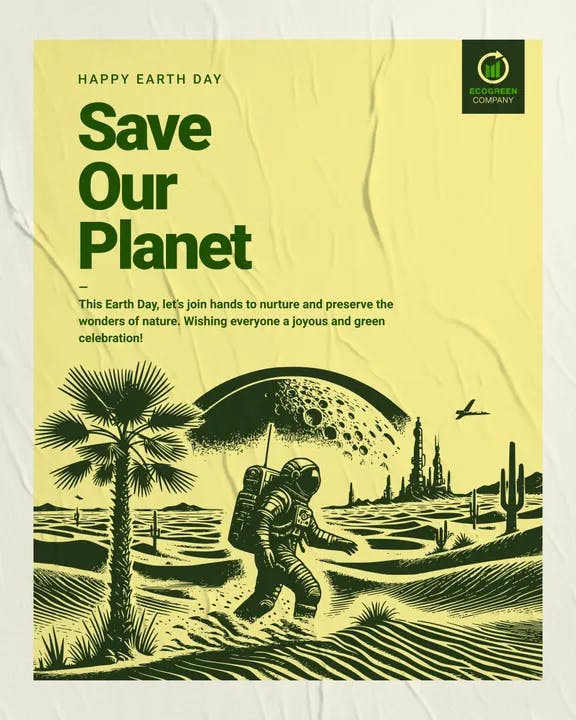
Simple yet visually striking, this duo-tone design proves that you don’t need a rainbow of colors to make an impact.
The deep green graphics and text unify the message, standing bold against the soft yellow backdrop — a contrast that feels both natural and urgent. It’s a clean, no-fuss call to action, letting the message take center stage without distractions.
3. Say goodbye to plastic
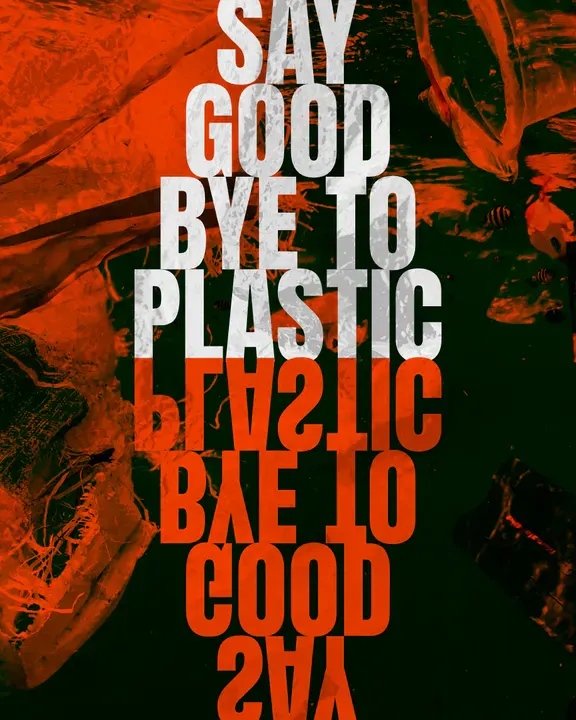
If our climate situation should be described in a movie genre, its a crime thriller. With its bold, all-caps typography and a stark red-and-black vectorized backdrop — the kind you’d see on a gritty murder mystery cover. It doesn’t just say goodbye to plastic; it frames it as the villain, making pollution feel as urgent and sinister as a true crime case.
4. This Earth Day, take action
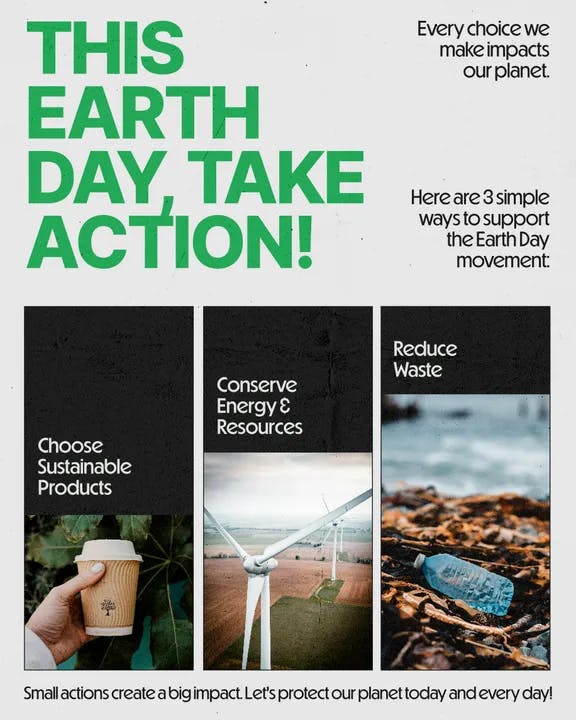
Minimalist but hard-hitting, this climate change poster design keeps it clean while making a strong statement. The bold, blocky headline demands attention, while the sleek, structured body text lays out clear, practical steps.
5. Stop pollution in pixels
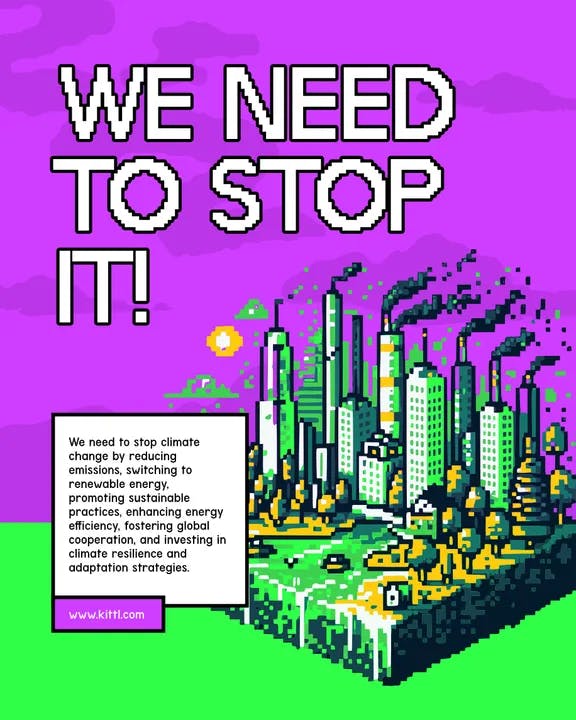
See, we weren’t kidding when we said you could turn full-on ‘80s arcade vibes into a climate change poster! Pixels aren’t just for games — they can deliver serious messages too, and this design proves it.
The electric green and deep purple combo creates a striking contrast, blending nostalgia with urgency. It’s bold, unexpected, and makes you stop and think — just like any great retro game, but with real-world stakes.
5. Save the planet poster in sketch-style illustration
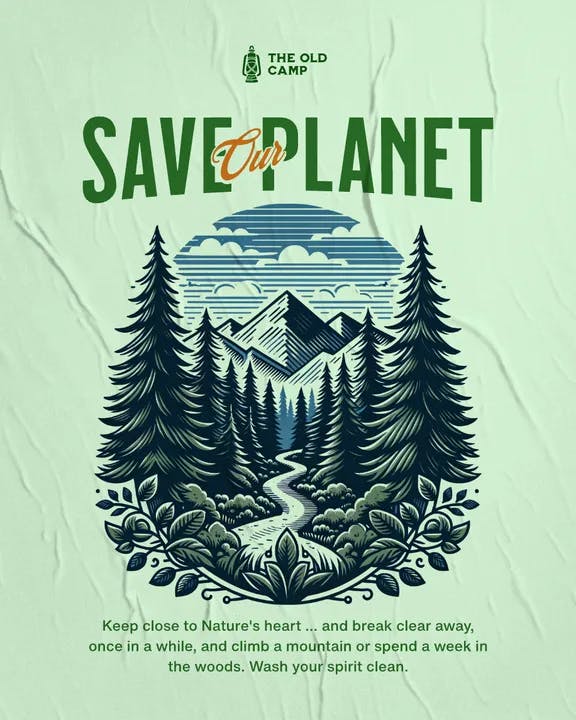
The sketch-style illustration gives the poster a raw, organic feel — like a passionate plea straight from the artist’s notebook. The soft mint backdrop sets a calming tone, while the green lettering with a hint of orange in “the” adds just the right touch of warmth.
It’s a cozy yet powerful reminder that protecting the planet isn’t just urgent — it’s something we should care about like home.
6. Climate change casualty warning poster
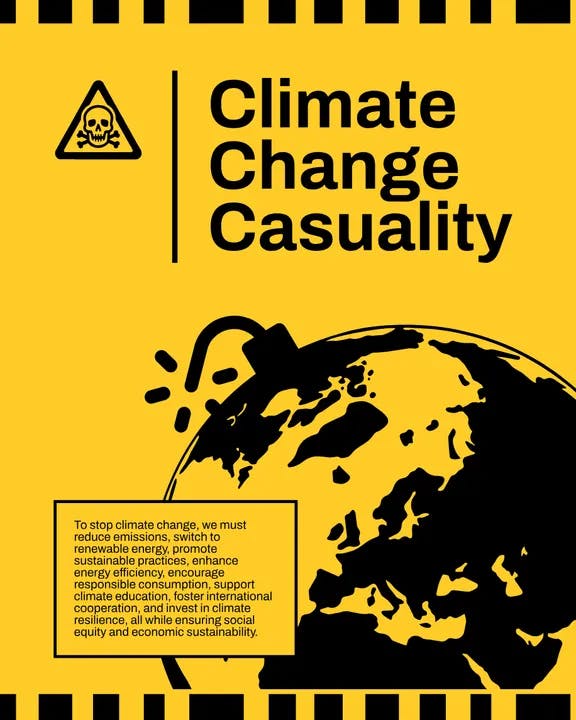
Screams danger without the clutter — inspired by a bold police-line-style warning tape and a ticking time bomb of an Earth. This poster is a no-nonsense wake-up call: climate change isn’t a distant threat, it’s a crisis counting down right in front of us.
7. We can make a difference poster in dramatic red and white
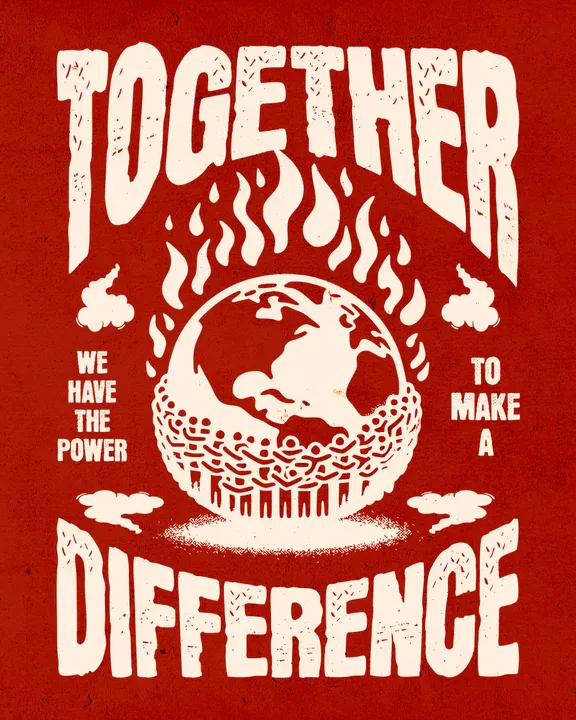
Not every climate change poster leans into green — this one goes bold with red, flipping the script on eco-awareness. The fiery tones and powerful illustration demand urgency, making it clear that action isn’t just an option — it’s a necessity.
7. Reduce waste, save earth with a cartoonish twist
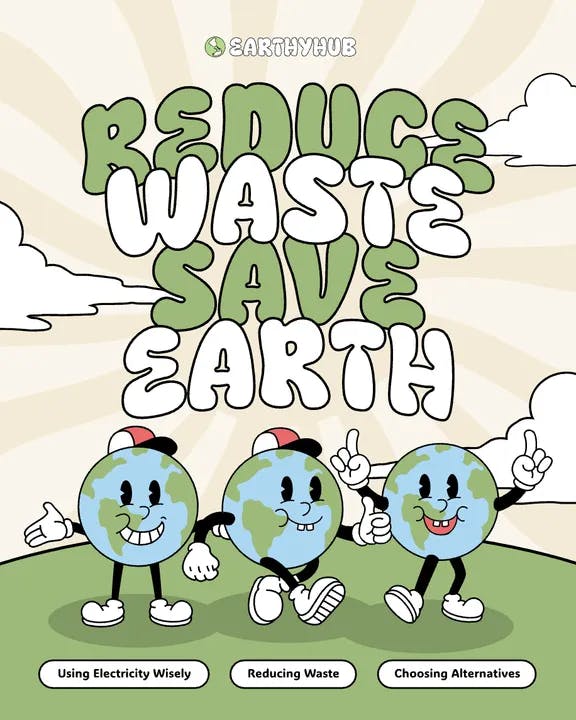
Finally, an Earth Day poster that bursts with playful energy, using bubbly fonts and a cheerful cartoon-style Earth to spread a positive message.
The bright, inviting design makes sustainability feel approachable — because saving the planet should be something everyone can get excited about!
8. Plastic free future protest poster
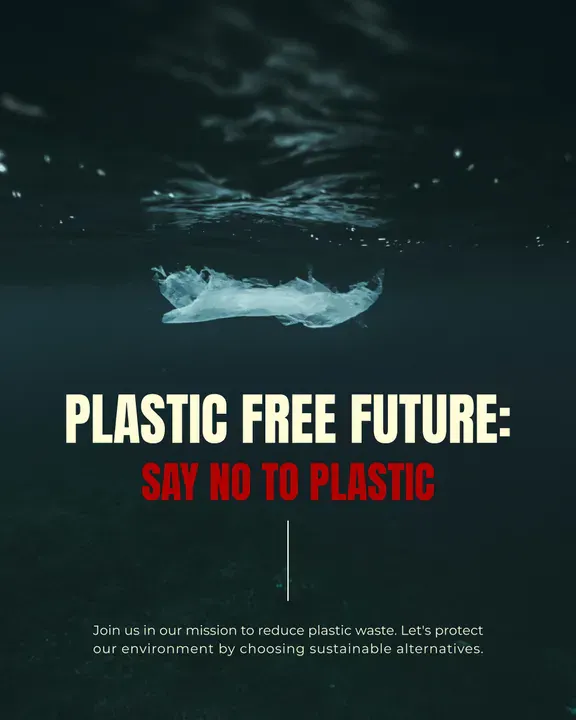
A climate change poster design idea for an environmental advocacy with a murder mystery theme? Sure! You can use stark red typography to frame plastic pollution as a crime against nature.
The solitary plastic bag floating in the ocean reinforces the haunting reality of marine devastation, urging viewers to take action before it’s too late.
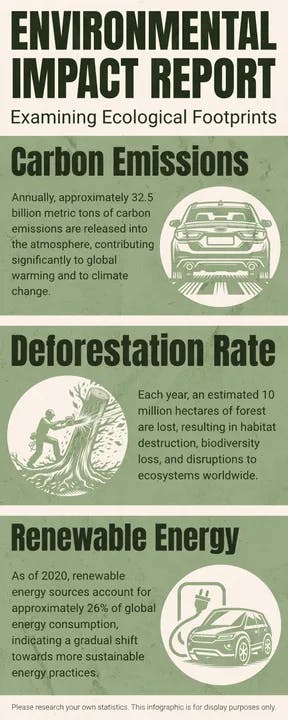
Bonus: Informative climate change poster design idea
If you’re looking for a climate change poster design idea for an infographic, consider an Environmental Impact Report layout. It helps visualize key climate data, carbon footprints, and sustainability goals in a clear, compelling format.
Climate change poster ideas that demand attention
Climate change is real, it’s urgent, and as a designer, you have the power to make people stop and pay attention.
Hopefully, these climate change poster ideas sparked something for you — whether it’s bold and in-your-face or subtle and thought-provoking. A great climate change poster doesn’t just inform — it sticks with people, and even inspires action.
And hey, if you create a climate poster you’re proud of, wwe’ded love to see it! Share it with the Kittl community and let’s get inspired by each other’s work.
Who knows? Your design might be the one that makes someone finally take climate change seriously.