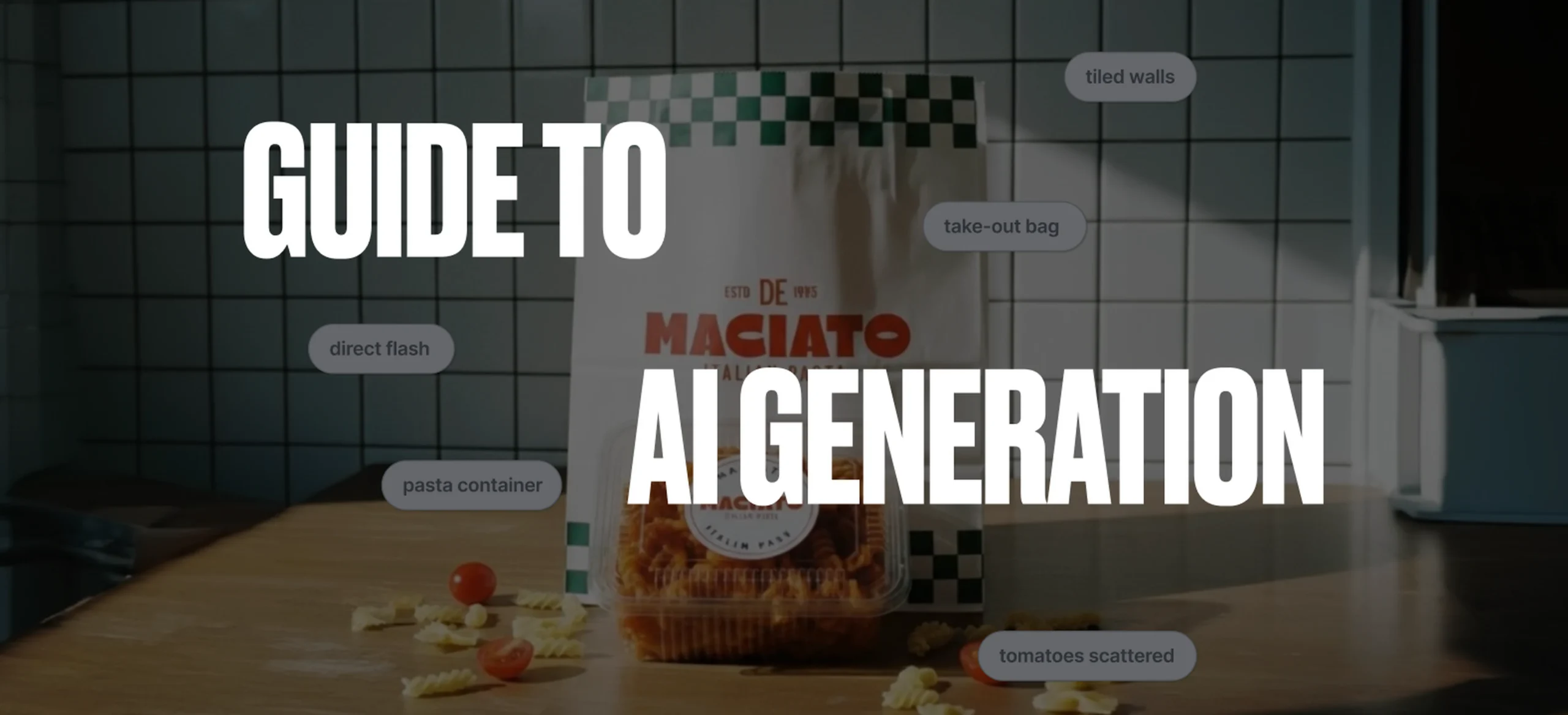
In 2026, AI image generation has become a creative force that designers can’t ignore.
Every day, about 34 million AI-generated images are created across more than 2,000 platforms. What started as a fun experiment has quickly evolved into one of the most powerful tools in the design world.
For graphic designers, marketers, and creative entrepreneurs, this shift changes everything.
Instead of beginning with a blank canvas, many projects now start with a single AI prompt. The real magic, though, isn’t just in generating an image.
It’s in what you do next — bringing those visuals into your layouts, typography, and branding to create something that looks intentional and professional.
This guide explores the full picture: what AI image generation really means, how it works, and which tools are defining the future of design in 2026.
What is AI image generation?
AI image generation is the process of creating visuals from text or reference inputs using machine learning models.
Instead of manually illustrating or photographing a concept, a designer can type a short prompt, like “a vintage poster with bold typography and glowing neon lighting,” and receive a detailed, styled image in seconds.
Most generators work through a class of models known as diffusion models, which learn to convert random noise into recognizable images.
Over time, these models train on millions of examples, learning how to interpret color, texture, lighting, and perspective.
For designers, this technology translates into freedom. It allows the creation of realistic scenes, stylized artwork, or concept visuals that might otherwise take hours to produce. Platforms such as Kittl integrate this power directly into their editor, so the generated images are ready to refine, scale, or combine with typography and layout tools.
We turn AI Image Generation outputs and help you integrate them seamlessly into your design instead of exporting them as raw assets.
How does AI image generation work for designers?

When you enter a prompt into an AI image generator, the system follows a series of logical steps to bring that idea to life.
- Understanding your prompt
The AI first breaks down your text into key parts: subjects, adjectives, art styles, and actions. For example, in the prompt “a detailed watercolor poster of a city street at night”, it identifies style (watercolor), subject (city street), and mood (nighttime). - Building visual concepts
Using its training data, the model imagines what each part of your prompt could look like. It creates a visual map that defines composition, color balance, and texture based on those details. - Generating the image
The system starts with random digital noise and gradually refines it through thousands of micro-adjustments until the noise becomes an image that fits your description. This is the diffusion process in action. - Refining and enhancing results
Many platforms let you adjust style strength, lighting, or aspect ratio after the initial render. Some tools also allow image-to-image creation, where you upload a reference photo or sketch to guide the output.
Different AI models specialize in different areas, for example:
- Nano Banana focuses on realistic lighting and lifelike detail.
- Seedream 3 and Seedream 4 excel in artistic and typography-friendly styles.
- Ideogram produces strong text handling and stylized poster-like visuals.
- Flux 1.1 Pro delivers high realism and professional-grade depth, making it ideal for designers who want cinematic or studio-quality imagery.
For designers, this means a single prompt can inspire dozens of variations. This is a HUGE time-saver during brainstorming or concept development.
And when AI image generation is combined with design features, like in Kittl, that output doesn’t just stay as inspiration. It becomes part of your finished composition, ready for branding, posters, or print projects.
10 most popular AI image generators in 2026

Before we dive deeper into how AI-powered optimization fits into the design workflow, it’s worth looking at the bigger picture.
The field of AI image generation is evolving at lightning speed, and understanding the leading tools helps designers choose the right one for their goals.
At Kittl, we’ve kept close track of every major update and innovation shaping this landscape — from creative art generators to enterprise-grade systems.
Knowing what each platform does best helps us (and you) see where the industry is heading and how these tools can work together to make design faster, smarter, and more creative.
1. Kittl AI Suite
Kittl’s built-in AI generators are made for design-ready results. With models like Nano Banana for realistic lighting, Seedream 3 for stylized artwork, and Google Imagen 4 for cinematic, high-fidelity visuals, it’s a complete creative environment. Designers can generate, edit, vectorize, and finalize their visuals all in one place. Kittl’s AI Image Generation is too good to be missed.
2. Midjourney
Midjourney continues to expand its creative capabilities with the release of Version 7, which is now the platform’s default model. According to the Midjourney Update Log, V7 introduces sharper image quality, stronger prompt comprehension, and a new “omni-reference” system that helps maintain consistent characters and objects across scenes.
Not everything has been smooth, though. In June 2025, AP News reported that major studios, including Disney and Universal, filed lawsuits against Midjourney, alleging unauthorized use of copyrighted material for model training.
3. DALL·E 3
Backed by OpenAI, DALL·E 3 remains one of the most advanced text-to-image models available today, known for its ability to interpret complex prompts with striking accuracy and realism.
According to OpenAI’s official overview, this version “understands significantly more nuance and detail” than its predecessors, producing images that stay faithful to user intent.
Even in scenes with layered elements or intricate compositions. In August 2024, The Verge reported that OpenAI expanded access to DALL·E 3, giving free ChatGPT users up to two image generations per day
4. Leonardo AI
Leonardo AI is a creative platform that’s gained traction for fantasy art, concept design, and gaming visuals. According to its official website, it now serves more than 18 million creators and offers production-quality tools for generating images, textures, and even videos.
A recent review by Cybernews highlights its new motion-video capabilities and advanced editing tools: creators can now convert a simple prompt into an animated scene using features like Motion 2.0.
5. Adobe Firefly 3
Firefly is Adobe’s answer to AI generation, focusing on commercial use and proper licensing. Its outputs are safe for client work and integrate seamlessly with Adobe tools like Photoshop and Illustrator, which makes it a natural fit for creative professionals already using the Adobe ecosystem.
6. Google Imagen 4
Google DeepMind’s latest text-to-image model, Imagen 4, pushes the boundaries of visual generation with significantly improved photorealism, finer detail, AND sharper typography.
According to the Google Cloud Blog announcement on May 20, 2025, the model now supports higher-quality image output across all styles, multilingual prompt support, and better text rendering with near-real-time generation speed.
7. Ideogram
Ideogram stands out in the AI-image generation space for its exceptional text rendering and design-centric focus.
Its latest model, Ideogram 3.0 (released March 26, 2025), brings enhanced realism, broader style options, and more robust editing tools geared toward typography and poster design.
For anyone creating promotional graphics, T-shirt designs, or creative layouts that lean heavily on legible text & bold layout, this generator provides a strong blend of illustration & layout capability.
8. Canva Magic Media
In 2025, they expanded Canva Magic Media’s capability as part of its Visual Suite 2.0 upgrade, bringing design, editing, and generation into one unified workspace.
While Magic Media doesn’t offer the deep stylistic control of specialized generators like Midjourney or Ideogram, it could assist you when you need fast, usable visuals for social posts, presentations, or campaign assets.
9. Runway ML
Runway ML continues to blur the line between image and video creation, giving designers and filmmakers one platform to bring static and moving visuals together.
The company’s latest updates include its Gen-4 Turbo model, which speeds up video generation, and Gen-4 References, which improve object consistency and control across frames.
These features make Runway a powerful choice for motion designers, video editors, and storytellers exploring AI-assisted filmmaking.
10. Bing Image Creator
In August 2025, Microsoft announced that Bing Image Creator now includes both GPT-4o and DALL·E 3 models, offering more stylistic range and better realism for free users.
This update, confirmed in the official Bing Search Blog. However, not every upgrade has gone smoothly. Earlier in 2025, TechCrunch reported that Microsoft temporarily rolled back a new model version (PR16) to improve output quality after user feedback.
The company has since refined image generation results, striking a balance between creativity, speed, and clarity.
How to choose the right AI image generation tool

With so many AI image generators available, the best one for you depends on what you create, how you work, and the level of control you need.
While every tool claims to be the most powerful, the real difference lies in how well it fits your workflow:
- Realism vs. illustration
Decide whether you need lifelike renders or stylized art. Models like Google Imagen 4 and Nano Banana excel at photorealism, while Seedream 4 and Ideogram are better for creative, illustrated, or typography-driven projects. - Free vs. commercial use
Always check license terms before publishing AI-generated work. Kittl Pro and Expert plans, for example, offers commercially safe outputs, while others may restrict usage or require a paid plan for professional rights. - Integration vs. standalone use
Consider how the tool fits into your design process. A platform like Kittl integrates generation, editing, and vector design in one space, while tools such as Midjourney or DALL·E 3 work better for quick concept exploration before importing results into another editor.
From AI image generation to design: the missing link

Creating a great AI image is only half the story. The real challenge comes after the generation: turning that visual into a polished piece of design.
Many tools stop at the image stage, leaving designers to export, import, and re-edit their work elsewhere.
Kittl bridges the gap between generation and design, bringing both stages together in a single workspace. For example:
- Generate a realistic image with Nano Banana
Start with Kittl’s AI model Nano Banana to produce a photorealistic scene or product image with professional lighting and depth. - Refine and clean up your image
Use the AI Background Remover to isolate the subject or the Eraser tool to remove unwanted details seamlessly. - Add typography and layout elements
Bring your design to life by layering custom text effects, shapes, or branding elements directly onto your AI-generated image. - Export as print-ready artwork
Once your design feels complete, export it in high resolution for posters, product packaging, or social media visuals. Ready for commercial use!
This integrated process makes Kittl more than just another AI generator. It’s a design environment built for end-to-end creativity.
Every idea, from a quick concept to a finished product, can take shape in one place.
Key takeaway: The future of AI in design
AI is becoming a core part of how professionals think, design, and deliver. The latest research from McKinsey predicts that generative AI could add up to $4.4 trillion in annual value to the global economy, with design and marketing among the sectors set to benefit most.
That growth reflects a larger shift: creative tools are merging with automation to make design both faster and more expressive.
- Creativity and productivity are converging. AI is taking over the repetitive parts of design work. For instance, resizing, background removal, or formatting. They are freeing up time for idea development and storytelling.
- Collaboration is becoming more fluid. Clients and designers can now communicate through visuals, using AI to prototype ideas in real time instead of waiting for full drafts.
- Design roles are evolving, not disappearing. As AI becomes a creative partner, the designer’s role is shifting toward creative direction, curation, and strategy.
- The design workflow is unifying. Platforms like Kittl integrate generation, editing, and export tools in one place, allowing designers to move seamlessly from concept to finished product. For teams building similar creative products, the challenge is no longer just generating images — it’s connecting models, editing tools, licensing logic, and export workflows into one reliable experience. That’s where generative AI development services can help turn AI-powered design ideas into scalable, production-ready platforms.
The next evolution of design isn’t about AI replacing designers. Really, it’s about amplifying what they can create.
So, what are you waiting for? Try Kittl’s AI tools today. Design smarter, faster, and with total creative control.