In a year obsessed with speed, algorithms, and endless visual noise, design trends in 2026 are making room for a trend that slows everything down: Trinket Design — a style that treats everyday objects like artifacts worth studying.
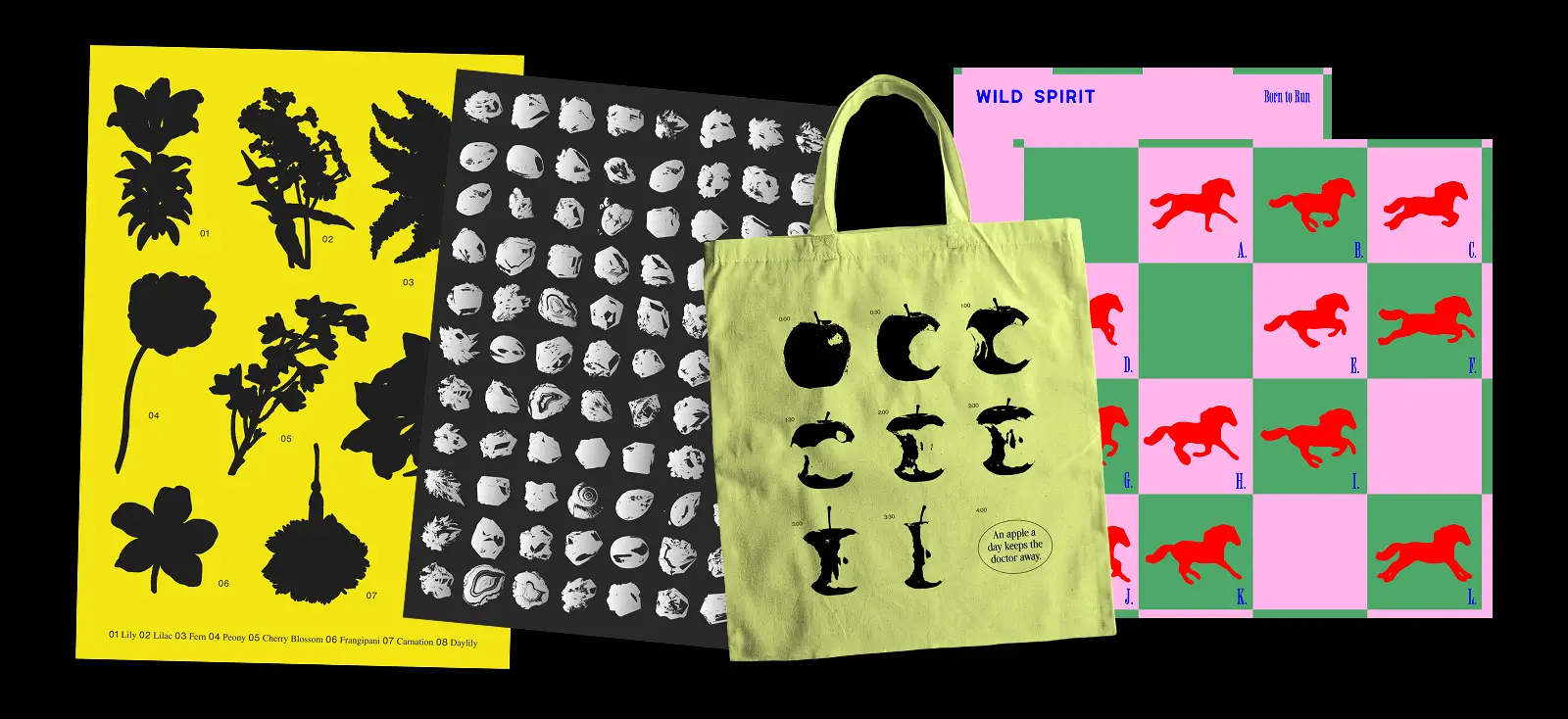
Think scanned objects, silhouette cut-outs, numbered labels, and collections arranged with obsessive care. Trinket Design turns ordinary items into curated visual archives, blending catalog logic with artistic intention.
It sits somewhere between a scrapbook, a museum sheet, and a Tumblr-era moodboard: structured, poetic, and deeply nostalgic.
In this trend breakdown, we’ll explore where Trinket Design comes from, why it’s resurfacing now, how it merges nostalgia with digital identity, and what defines this distinctive visual style.
You’ll also learn how to build your own using Kittl’s templates, effects, and so much more tools to experiment with.
The origins of Trinket Design
Trinket Design grew out of a simple instinct: collecting things.
From Tumblr grids to Pinterest boards to early Flickr scans, the internet has spent decades turning personal collections into visual identity. Trinket Design takes that impulse and formalizes it — transforming objects into flat archives.
Originally, this aesthetic came from:
- botanical specimen sheets
- scientific encyclopedias
- gemstone and mineral catalogs
- entomology boards
- printed collections of shells, fruit, or flowers
These formats were systematic and restrained: flat images, silhouettes, neutral backdrops, tiny labels. They existed to document the world.
But in 2026, this archival logic has been reimagined. Trinket Design now feels artistic, sentimental, personal. It’s the fusion of museum cataloging + nostalgia + digital culture — the visual equivalent of emptying your bag and finding a story in every object.
Pro Tip
Search for “silhouette,” “cut-out,” “specimen,” “crystals,” “shells,” and “botanical” in Kittl’s element library to access objects that already match the archival look.

Why Trinket Design is trending in 2026
We’re living in the age of endless images. Every scroll brings hundreds of items, micro-trends, and recommendations. Trinket Design emerged as a counter-movement — not to escape this overload, but to organize it.
1. The rise of real-world collecting
Trinkets have reentered fashion and culture: keychains, charms, bag accessories, pins, mini toys, crystals. People are carrying collections with them — literally. This instinct is bleeding into the design world.
2. Social media amplifies object-based identity
Trends like:
- What’s in my bag
- Monthly Favorites
- One item in every color
- Gift Guides
- Deconstructed product lists
have normalized the idea of displaying identity through objects.
Trinket Design is the aesthetic version of those cultural habits.
3. Curation becomes a creative act
In a world of excess, how you select and arrange items becomes the art.
It’s why the layouts feel scattered but never random. It’s because objects are chosen with intention, each one a symbol of mood, taste, nostalgia, or identity.
4. Nostalgia still dominates design

Trinket Design taps into the comfort of old catalogs, specimen boards, vintage encyclopedias, and Tumblr-era “collection” posts. It feels like analog order in a digital world.
5. AI makes object-based workflows easier
One reason Trinket Design is thriving in 2026 is how easy it’s become to create object-based visuals. Tools like Kittl’s Background Remover, Vectorizer, and AI Image Generator give designers a fast way to produce the cut-outs, silhouettes, and high-contrast objects that define this trend — even if they don’t have a scanner or a studio setup.
With Kittl’s AI Image Generator, you can:
- Create objects that aren’t available at home
Use: “flat scan of [object], top-down, isolated on white background, minimal shadows, crisp edges, archival style”
Examples:
– “flat scan of vintage marine shells…”
– “flat scan of retro keychains…”
- Generate consistent variations for encyclopedic collections
Use: “[object category] set, 8 variations, top-down, silhouette-friendly, high contrast, consistent scale, neutral background”
Examples:
– “ceramic vase set, 10 variations…”
– “pressed flower set, 12 variations…”

- Produce missing pieces for visual balance
Use: “single [object], threshold-style, bold silhouette, isolated, white background, clean cut-out edges”
- Match the style of your existing layout
Use: “[object], threshold outline style, two-tone, specimen-sheet aesthetic, thin inner shadows, clean vectors”
Examples:
– “threshold-style fruit silhouettes…”
– “two-tone botanical specimen object…”

Combined with manual tools like the Pen Tool, palette controls, and texture overlays, you can build visuals that feel scanned.
Where Trinket Design shows up in 2026
Trinket Design has moved far beyond niche Pinterest boards and Tumblr-era collections. In 2026, it’s appearing across both digital and physical spaces — sometimes quietly, sometimes boldly, but always with intention.
1. Advertising & campaign visuals

Brands are increasingly using trinket-style object spreads in:
- billboards
- seasonal ads
- product bundle promotions
- mood-driven “collection” campaigns
2. Social media & influencer content

Platforms like TikTok, Instagram, and Pinterest have revived object-curation culture. The trend mirrors familiar content formats such as:
- “What’s in my bag”
- “Monthly favorites”
- “Starter packs”
- “Gift guides”
- “Aesthetic object grids”
Trinket Design is essentially the graphic-design translation of these visual habits.
3. Posters, decor & editorial layouts
Designers are using silhouettes, scans, and labeled objects to create poster-style compositions featuring collections of:
- plants
- stones
- crystals
- fruits
- stationery
- vintage tools
These pieces double as artwork and identity markers — decorative, but also personal.
4. Packaging & product storytelling

Trinket layouts help brands show what’s inside their products or what makes them unique. Expect to see it on:
- tea blends
- skincare ingredients
- chocolate bars
- ceramic collections
- lifestyle kits
It’s functional, beautiful, and highly informative.
5. Craft, lifestyle, and indie brands
Small businesses love Trinket Design because it feels artisanal and curated. It works especially well for:
- florists
- apothecaries
- vintage stores
- candle makers
- craft goods
- farmers’ market vendors
The aesthetic says: “Each of these items has a story.”
Pro Tip
When designing product-focused trinket layouts, export at 3000x3000px in Kittl. Silhouettes and micro-labels stay crisp at print resolution and won’t blur when scaled.
Creating Trinket Designs in Kittl
The beauty of this trend? It’s incredibly accessible — even for beginners. With just a few tools, you can create clean, curated object collections that feel archival and intentional.
Here’s how to build one from scratch:
1. Start with a trinket-style template
Kittl has templates designed specifically around object arrangements, silhouettes, and labeled collections. These give you:
- grid logic
- spacing guidance
- built-in labeling styles
- specimen-style type pairings

Floral trinket blue. Use Template

Floral trinket yellow. Use Template

Floral trinket red. Use Template
2. Choose your “trinkets”
Anything can become a trinket: flowers, crystals, bag charms, seashells, snacks, fruit slices, stickers, everyday tools.
Pick a theme or mix categories to tell a story.

3. Turn your objects into silhouettes or clean cut-outs
Use:
- Background Remover for photo items
- Vectorizer → Threshold for silhouettes
- AI Image Generator for missing or hard-to-find objects
This ensures visual consistency.

4. Add numbering & micro-labels
Numbering anchors the archival look.
Use monospaced fonts like Sligo Oil, Roboto Mono, or Z65009 Mono.
Keep labels small — the charm is in the subtlety.
5. Arrange everything in a loose-grid layout
Give objects breathing room. Avoid symmetry that feels too structured, but keep spacing intentional. The goal is “organized curiosity.”
6. Choose a background mood

There are two main modes:
- Neutral archival (cream, gray, off-white)
- Vibrant editorial (red, cobalt, yellow, green)
Both work — the background sets the personality of your collection.
Pro Tip
Pro Tip
Add Kittl’s Paper Texture overlay at 5–10% opacity to achieve a tactile, scanned, museum-specimen feel.
Explore more 2026 design trends

Trinket Design is only one of the visual languages defining 2026. This year’s landscape blends archival nostalgia, expressive typography, bold editorial color, and AI-human hybrid workflows in ways we’ve never seen before.
Explore the full Kittl 2026 Design Trend Report to dive deeper into the movement reshaping creative work this year. You’ll find powerful examples, inspiring visual references, and ready-to-use templates to help you stay ahead.
Key takeaways: Make your own trinket design!
Trinket Design proves that the smallest objects can tell the biggest stories.
It’s intentional, nostalgic, expressive, and incredibly adaptable — and Kittl makes it easy to experiment with silhouettes, labels, and curated object layouts in minutes.

Shafira is a content writer who turns boring business talk into reads people actually enjoy. She grew up hoarding $1 novels in Singapore and writing hilariously bad fiction, but now she tackles content marketing with all that creative chaos since 2019. From blogs and newsletters to UX and SEO, she writes how she thinks: nerdy, honest, and a bit offbeat. She believes the best content is human-designed, not just plain text.