If you sell on Etsy, you are not just “making graphics.”
You are designing products, yes. But you are also packaging an offer, building trust in a thumbnail, translating an idea into something people want to click, and doing it over and over again across different products, variations, seasons, and customer requests.
That is why the Kittl vs Canva for Etsy sellers comparison matters more than it first seems.
At surface level, both tools can help you make something that looks polished. Both can help you use templates, edit text, upload images, and export files. That part is easy. The real question is what happens after that first decent-looking listing.
What happens when you need ten variations of the same design for different names, colors, or quotes? What happens when every other shop in your category starts using the same visual language? What happens when your typography needs to carry the whole product? What happens when you need listing images, mockups, size charts, social assets, and maybe even motion content, all without turning your week into a file-management exercise?
That is where the difference between Canva for Etsy and Kittl starts to feel a lot less cosmetic.
This is not really about which tool is “better” in the abstract. It is about which one fits the way Etsy sellers actually work.
What Etsy sellers actually need to create

Before comparing tools, it helps to get clear on what you’re actually producing.
Because in practice, most Etsy sellers need more than just a product design. You’re building a full listing system that has to work in search, on mobile, and across different buyer expectations.
That usually includes:
- the actual design file for the product
- a clean thumbnail image that still reads on a crowded search page
- additional listing images explaining use, scale, features, or customization
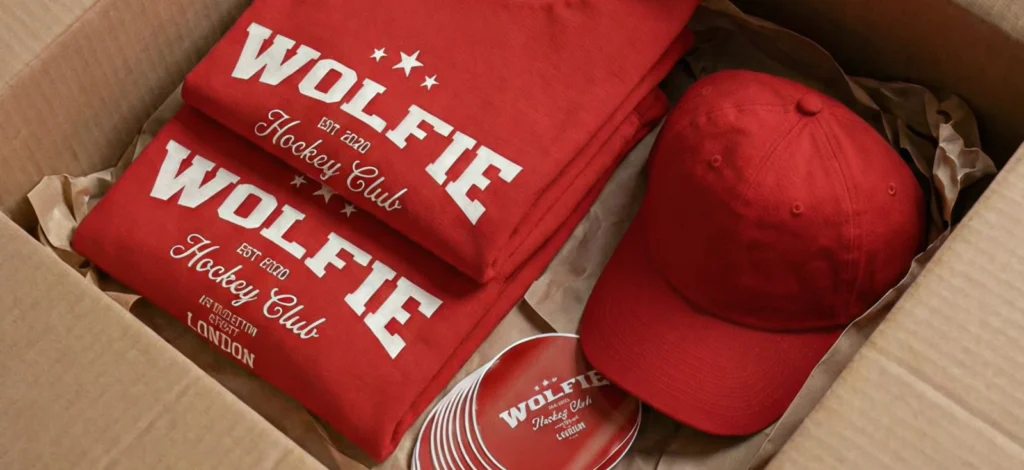
- mockups to help someone picture the item in real life
- branded visuals that make your shop feel coherent
- files exported correctly for print, digital delivery, or customer download
- variations for names, dates, colors, niches, seasons, or product types
That is already a lot.
Your listing is not a gallery — it’s a sequence. Each image should answer a different question, not repeat the same visual.
So the real question becomes: what kind of tool can actually support all of this without slowing you down?
What Etsy sellers actually need from a graphic design app

A lot of Etsy sellers are not looking for the most advanced software in the world. They are looking for something that helps them create strong visuals without turning everyday shop tasks into a slow, repetitive mess.
So when comparing tools, it’s not enough to ask, “Can I design in this?”
You need to ask better questions:
- Can I make variations without hating my life?
- Can I create listing assets, not just product art?
- Can I make things look distinct without needing an overly technical workflow?
- Can I keep my shop visually consistent as it grows?
- Can I make polished products without everything looking template-shaped?
That last point matters more than people think. On Etsy, being too generic is its own problem. But so is using a tool that is too complex for the pace of running a shop.
The sweet spot is not maximum simplicity or maximum power. It is usable power — a system that helps you move fast without flattening your products into sameness.
To understand the Kittl vs Canva for Etsy sellers comparison more clearly, it helps to look at how each tool handles real Etsy workflows.
Where Canva works well for Etsy sellers
It makes sense that a lot of sellers begin with using Canva for Etsy.
Canva is approachable. It lowers the intimidation barrier. You can open a template, replace text, swap graphics, export, and move on. For someone testing a first product idea or trying to get a shop off the ground quickly, that ease is genuinely useful.
That is why Canva for Etsy can work well for things like:
- simple product announcement graphics
- beginner-friendly listing images
- basic social posts
- quick promotional banners
- lightweight mockup presentations
- starter branding materials
There is a reason people recommend it so often. It gets people moving. And for an Etsy seller who is still validating an idea, momentum matters more than perfection.
But that early ease can hide a problem. Canva is great when your workflow is still simple enough to fit inside a simple structure.
Once your shop grows, your needs change. You are no longer just trying to make one nice-looking thing. You are trying to build a repeatable visual system.
That is where Canva starts to feel less like a growth tool and more like a starting tool.
Where Canva starts to feel limiting for Etsy sellers
Canva is good at what it is good at. The issue is not that it fails at basic design. The issue is that Etsy selling often pushes beyond basic design surprisingly fast.
When templates start making your listings blend in
Templates are useful. They speed things up and help sellers avoid starting from a blank page every time.
But Etsy is crowded. In many categories, buyers are scrolling through rows of products that already look half-related. If your listing visuals are built too heavily from the same kinds of templates that everybody else is also using, your shop can start looking familiar in the worst way. Not bad. Just replaceable.
That is the trade-off. Templates help you get started, but they are not always the best foundation for standing out long term. Especially on Etsy, where buyers are often making snap judgments based on visual personality before they have read a single product detail.
If your listing looks like it could belong to 10 other shops, buyers will treat it like a commodity — even if your product is better.
When page-by-page design turns variation into admin

Etsy sellers rarely make just one version of anything for long.
Sooner or later, you are building families of products: different names, different quotes, different colors, holiday versions, niche-specific versions, customer-requested edits. And then, around those products, you are also making thumbnails, secondary listing images, promo graphics, and mockups.
In a more one-page-based workflow, every variation can start to feel like its own little island. Duplicate. Edit. Duplicate. Edit again. Check consistency. Export. Repeat.
It works, technically. But it starts feeling like the tool is asking you to manage versions manually instead of helping you think in systems.
That is not a small issue for Etsy sellers. A lot of growth on Etsy comes from learning how to repeat yourself intelligently. When the workflow makes every version feel like a separate task, scaling becomes slower than it needs to be.
If creating 10 variations feels like 10 separate tasks, you don’t have a design workflow — you have a manual process. And that doesn’t scale.
When typography needs to do more than just fill space
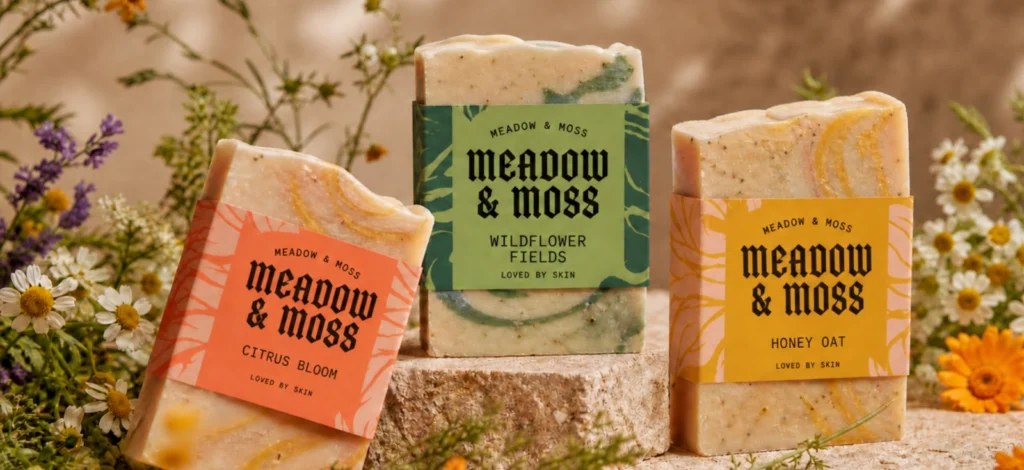
For many Etsy shops, typography is not a little design detail. It is the product. If you sell shirts, printable wall art, labels, packaging, invitations, signs, branding assets, personalized gifts, planners, or digital downloads, the type often carries the entire emotional and commercial weight of the design.
And that changes what you need from a tool.
Basic text editing is not enough when the lettering itself is supposed to feel ownable. You need better fonts, yes, but you also need more room to shape the result. You need control over how the text feels, not just what it says.
That is where Canva can start to feel limited for product-based Etsy work. It can absolutely help you place text and style it cleanly. But when you want type to feel distinctive instead of merely neat, the ceiling shows up faster.
When mockups need to help you design, not just present

For Etsy sellers, mockups are not only for showing off a finished product. They are part of how you decide whether the product works.
- Does the scale feel right?
- Does the design placement make sense?
- Does the product color help or hurt it?
- Does the listing image feel premium enough to stop the scroll?
- Does the whole thing look believable?
When mockups sit too far away from the design process, you end up treating them like a final decoration step. That is less useful than it sounds. Good Etsy mockups often need iteration, not just insertion.
So this is not really about whether Canva can make mockups. It can. The bigger question is whether the mockup workflow helps you think better while designing the product.
Canva helps you start fast. But if your process doesn’t evolve with your shop, it becomes the bottleneck.
Where Kittl becomes the stronger fit for Etsy sellers
This is where Kittl starts to feel less like “another graphic design app” and more like a better match for the way Etsy sellers actually work once they move beyond beginner mode.
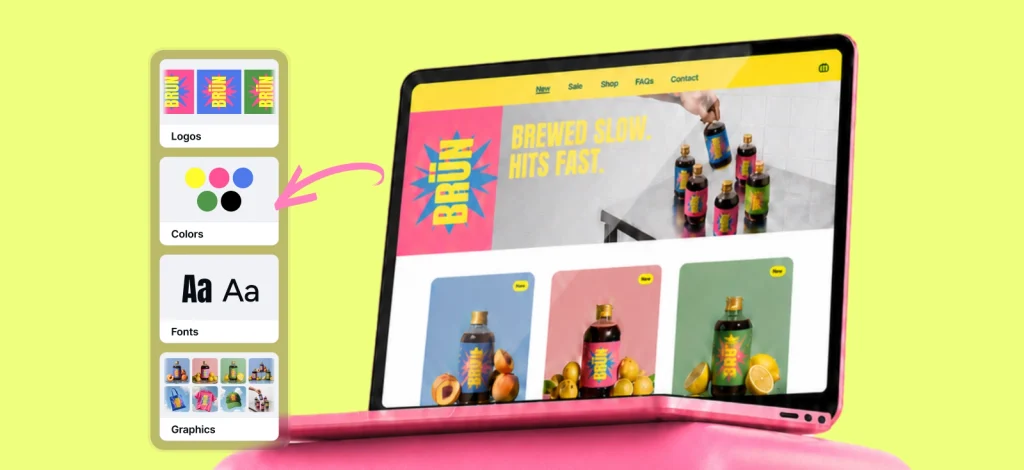
Not because it is harder. Not because it is trying to be overly technical. But because more of its strengths line up with Etsy-specific pressure points: product variation, visual differentiation, typography-led products, mockup-driven listings, and the need to create multiple connected assets without everything turning into file chaos.
Flexible canvases make product systems easier to manage

One of the most important differences in Kittl vs Canva for Etsy sellers is not just that Kittl has more space. It is that the workspace behaves more flexibly.
With Kittl’s Infinite Canvas, or a flexible canvas that you can move around freely, resize each canvas differently, and group them together, things change fast.
Instead of treating every variation like a separate little unit you have to open, edit, and manage one by one, Kittl lets you build related designs side by side. You can compare product variants visually. You can group listing assets together. You can keep mockups, alternate versions, and experimental directions within the same project instead of scattering them into disconnected pages.
That sounds like a workflow detail until you imagine real Etsy tasks.
You are launching six quote prints for the same audience and want them to feel cohesive without looking copied. You are creating a bridal-party set with different names and roles. You are building a POD collection where the shirt design, packaging insert, listing image, and promotional visual all need to feel like they belong to one shop.
In a more rigid page-by-page workflow, those relationships can stay hidden. In a flexible canvas environment, they stay visible. That means you can catch inconsistencies faster, compare decisions more clearly, and spend less time jumping between separate units of work.
Read more about how a flexible canvas can help you more in POD production here: 5 ways pro designers think differently on Kittl’s Infinite Canvas.
For Etsy sellers, that is not just convenient. It changes the way you approach production. You stop feeling like you are making isolated graphics and start feeling like you are managing a visual system.
And that matters because Etsy growth often depends on exactly that: building systems, not reinventing everything every time.
Kittl is stronger when typography is part of the product

Kittl started with typography, and you can feel that in the product. That matters because so many Etsy listings rely on lettering to do the heavy lifting. The font choice, the shape of the words, the way the letters interact, the text effects, the personality in the composition — all of that directly affects whether a product feels premium, distinctive, giftable, trendy, nostalgic, bold, playful, or worth clicking at all.
Kittl gives you a stronger foundation here in two ways:
1. The font ecosystem itself. If you are trying to avoid products that look like they came from the same few overused font pairings, better type options matter.
Kittl’s exclusive fonts, refined classics, and more design-led typography library give sellers more room to create something that feels specific to their shop instead of broadly familiar. Find what you’re looking for in Kittl’s Font Library here.

2. In Kittl, typography is not just there to be typed into a box and styled with a few quick presets. It can become real design material. You can push it with text effects, manipulate it more expressively, and build treatments that feel more original.
And when you want to go further, tools like the pen tool, shape builder, vector editing, and the ability to combine and refine shapes make a real difference.

That means you are not limited to “pick a nice font and hope that is enough.” You can shape lettering into product identity.
For Etsy sellers, that is huge. Because when typography is carrying the product, stronger text tools do not just improve aesthetics. They improve differentiation. They help your work feel less template-driven, less interchangeable, and more worth paying for.
On Etsy, typography isn’t decoration — it’s positioning. The same idea can feel cheap or premium depending entirely on how the type is shaped.
Mockups should help you design, not just present

A lot of Etsy work is not just about creating the product. It is about making the product look sellable.
That means mockups are not just a final step. They are part of how you decide if a product actually works.
In Canva, mockups are useful, but they often feel like a presentation layer. You place your design, export, and move on.
In Kittl, mockups are part of the design process itself.
You can:
- resize and reposition your design directly on the product
- adjust elements and see changes update one click away
- test variations without leaving your workspace
- refine your listing visuals while designing the product itself
That changes how you work. Instead of designing first and checking later, you design in context. And for Etsy, that usually leads to stronger listing images and better-performing products.
A strong mockup doesn’t just show your product — it removes doubt. If a buyer has to imagine too much, they usually won’t buy.
AI should help you produce, not just generate

For Etsy sellers, AI isn’t about making random images. It’s about producing faster — without losing control of your style or your shop. You need:
- variations of the same product
- supporting visuals for listings
- graphics that actually match your aesthetic
- a faster path from idea → product → listing
In Canva, AI often feels like a starting point. You generate something, then manually turn it into something usable.
In Kittl, AI is built into the production process.
With features like Kittl Flows, you can take one design and instantly generate multiple variations — different styles, directions, or versions that still feel connected. This way, you can turn one idea into an entire product line.
And instead of struggling with prompts, Kittl helps you get to usable results faster. Prompt suggestions, visual prompt builders, and built-in examples give you a strong starting point, so you’re not guessing what to type just to get something decent.
It also supports generating in the formats you actually need. Not just square images, but layouts that fit listings, thumbnails, and product visuals — which removes a lot of small, repetitive fixes.
Learn more about our AI updates here: From blank prompt to finished design: 3 new AI updates in Kittl.
So instead of jumping between tools, you can generate, iterate, refine, mock up, and export in one flow.
The real advantage of AI isn’t speed — it’s repeatability. If you can generate variations that still look like your brand, you’ve solved one of the hardest parts of Etsy.
Kittl vs Canva for Etsy sellers breakdown
| What Etsy sellers need | Canva | Kittl |
| Starting fast | Very easy for beginners. Good for getting first listings live quickly. | Still approachable, but stronger once you want a system that can grow with you. |
| Templates | Helpful for speed and simple designs. | Helpful too, but better when you want to move beyond template sameness. |
| Product variation workflows | Possible, but can feel manual when you create many versions. | Better for managing related versions side by side in one flexible project. |
| Shop consistency | Works, but often requires more manual checking across separate pages. | Easier to manage when designs, mockups, and variations live closer together. |
| Typography-led products | Fine for basic text styling. | Much stronger when type is central to the product, thanks to better font depth and stronger text-building tools. |
| Originality | Can start to feel visually familiar in crowded Etsy categories. | Better for creating products that feel more distinct and less template-shaped. |
| Mockup workflow | Useful for presentation. | Stronger for iteration, since mockups feel more integrated into the design process. |
| AI support | Accessible and beginner-friendly. | More useful when you want guided creation, variations, and a workflow tied to design production. |
| Video | Still good for quick, simple content. | Now much more relevant than older comparisons suggest, especially for product visuals and mockup motion. |
| Best fit | New sellers, simple graphics, lightweight shop tasks. | Sellers who want stronger differentiation, smoother production workflows, and more room to scale visually. |
Final verdict: which is better for Etsy sellers?
If you are just starting out, Canva for Etsy still makes sense. It is easy to learn, easy to use, and good for getting a first shop off the ground without turning design into a whole side career.
But once your shop starts asking for more — more variations, more distinctiveness, more control over typography, more thoughtful mockups, more connected listing assets — the limits become easier to feel.
That is where Kittl starts to pull ahead.
The strongest case for Kittl is not that it can do flashy things. It is that it supports a better kind of workflow for sellers whose products are becoming more serious. It helps you manage visual systems more naturally. It gives you stronger tools when typography is part of the product itself. It keeps mockups, AI, and now video closer to the same creative process instead of scattering them across disconnected steps.
So in the end, Kittl vs Canva for Etsy sellers is less about which app is universally better and more about which one matches the way your shop actually operates.
If your Etsy shop is still simple, Canva may be enough.
If your Etsy shop depends on differentiation, repeatable production, typography-led products, and visuals that need to feel more original than the average template can give you, Kittl starts to look like the stronger long-term fit.
Because at that point, you are not just choosing a tool to make graphics.
You are choosing a tool that helps your shop scale without flattening your style.

Shafira is a content writer who turns boring business talk into reads people actually enjoy. She grew up hoarding $1 novels in Singapore and writing hilariously bad fiction, but now she tackles content marketing with all that creative chaos since 2019. From blogs and newsletters to UX and SEO, she writes how she thinks: nerdy, honest, and a bit offbeat. She believes the best content is human-designed, not just plain text.