
In 2026, “using AI” no longer means running a few prompts when you remember. The businesses pulling ahead are the ones weaving AI into the boring middle: the admin, the follow-ups, the drafts, the customer questions, the time-wasting formatting, the clunky reporting, and the work that quietly eats your week.
And it’s not just big companies doing this. Surveys show small businesses are adopting AI-enabled tools at massive scale, even when they don’t necessarily label them “AI.” The U.S. Chamber of Commerce has reported that nearly all U.S. small businesses use at least one AI-enabled tool.
Meanwhile, McKinsey’s global research shows generative AI became “regularly used” across organizations at striking speed — an adoption curve that usually takes much longer for anything that changes workflows.
Below are the 25 best AI tools for small business owners, selected to cover the full reality of running a business: marketing, customer support, ops, sales, finance, analytics, content, and team collaboration.
What’s different about small business AI in 2026 (and why it matters)
By 2026, most AI tools won’t win because they’re “smart.” They’ll win because they’re embedded.
The tools that stick tend to share a few traits:
- They reduce context switching. AI inside your email, docs, CRM, website, or helpdesk beats a separate “AI app” you have to remember to open.
- They connect to real business inputs. Customer conversations, invoices, calendars, product catalogs, tickets, analytics—this is where AI goes from clever to useful.
- They’re measurable. More leaders are demanding a clean line between AI usage and business outcomes. Forrester’s 2026 predictions emphasize a tightening of ROI expectations and stronger oversight of AI investments.
Think of this list as your “AI stack menu.” You don’t need all 25. You need the right few that fit how your business actually runs.
How to choose the best AI tools for small business
Before the list, here’s the simplest way to choose AI tools for small business owners without ending up with 12 subscriptions and no real change:
- Pick one bottleneck you feel every week. Example: “I spend 6 hours writing content and still don’t post consistently.”
- Choose one tool that lives where that work happens. If you live in email, pick email AI. If you live in tickets, pick support AI.
- Set one metric for 30 days. Time saved, faster turnaround, higher reply rate, fewer tickets, more leads — anything measurable.
- Make it a habit, not a test. AI tools work best when they’re part of the routine, not a “when I remember.”
Now — let’s get into the 25.
The 25 best AI tools for small business owners in 2026
1) Microsoft 365 Copilot (Docs, email, meetings, spreadsheets)

If your business runs on Word, Excel, PowerPoint, Outlook, or Teams, this is one of the most practical “AI everywhere” upgrades. It helps draft emails and replies directly in Outlook, summarize long threads into key takeaways, and turn meeting chatter in Teams into notes, decisions, and action items.
In Excel, it can help you explore data in plain language — spotting trends, suggesting analyses, and helping you build charts or formulas faster — so reporting doesn’t become a half-day event. In PowerPoint, it can generate slide outlines or turn existing docs into a deck, which is a small business superpower when you’re pitching, presenting, or updating clients.
Best for: admin-heavy teams, service businesses, agencies, anyone buried in docs and email.
2) HubSpot AI (Marketing + CRM + customer lifecycle)
HubSpot remains a strong pick because it’s not “an AI tool,” it’s a full growth system — now with AI layered into core workflows like content, email, lead scoring, and pipeline updates.
That means you can generate and refine marketing emails, draft sales outreach, and create content faster, while the CRM side gets smarter too — summarizing contact activity, helping log interactions, and reducing the “we’ll update it later” problem that quietly breaks small business pipelines.
The AI layer is most useful when your focus is follow-up discipline: fewer leads slipping through gaps, fewer manual updates, and a clearer picture of what’s happening across your funnel.
Best for: small businesses that want marketing + sales + CRM in one place.
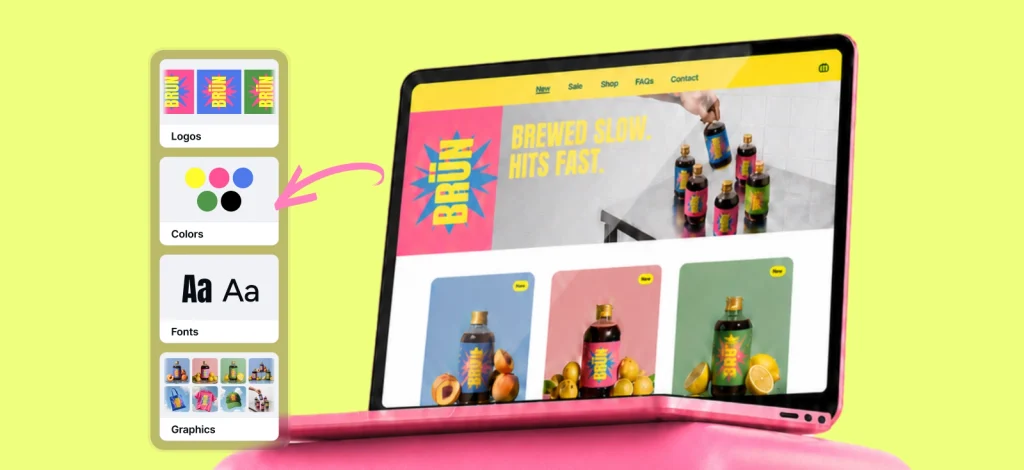
3) Kittl (Brand content + marketing visuals that don’t eat your entire day)
If your business relies on visuals — product launches, social posts, promos, seasonal campaigns, packaging, menus, signage, merch mockups — Kittl helps you make it look like you hired a designer… without turning your week into a design project.
What makes Kittl different as an AI tool in 2026 is that it’s not “one model, one output.” It’s a creative workflow: you generate, iterate, edit, and export in one place, with tools that feel built for real marketing work.

And when you’re creating content in batches (because that’s how small business marketing actually gets done), Kittl Flows is the feature that turns “doing it once” into “doing it fast, every time.”
Flows helps you repeat the steps you always end up doing anyway — generating an image, applying a consistent look, cleaning it up, upscaling it, and dropping it into a layout — so you’re not rebuilding the same production process for every promo, every product drop, and every seasonal push.

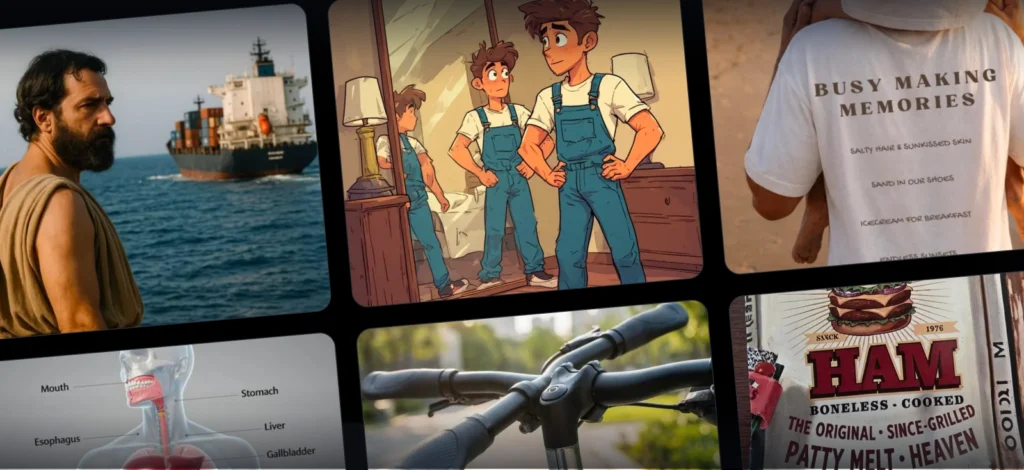
Inside Kittl AI Image Generator, you can choose from multiple models depending on the outcome you need with models like Google Imagen 4, Nano Banana Pro, DALL-E 3, Ideogram 3 Quality, Seedream 3, and so much more. That means you can match the model to the job — whether you’re aiming for photoreal visuals, typography-friendly compositions, fast concepting, or style experiments — instead of forcing one model to behave for everything.
Then, instead of exporting and “fixing it elsewhere,” Kittl keeps momentum inside the editor: background removal, vectorizer, upscaling, and image restyle are right there when you need them.
So a product photo can become a clean banner asset, a prompt-generated visual can become a print-ready graphic, and a set of campaign images can stay consistent through style reference / consistent style sets — which is exactly what small businesses need when they’re producing marketing in batches, not one-off masterpieces.
Best for: product brands, small shops, creators, service businesses that market on social, restaurants, event businesses.
4) ChatGPT (Generalist AI assistant for writing, planning, and ops thinking)
The reason this belongs on a small business list is simple: it can act like a first-draft machine for anything — policies, emails, job posts, customer replies, product descriptions, scripts, FAQs, even “help me think through pricing.”
Feature-wise, it’s especially good at rewriting in different tones, summarizing long notes or threads, generating variations for outreach and marketing, and turning messy thoughts into structured plans. It also works well for creating reusable building blocks — like customer support macros, onboarding checklists, proposal templates, or SOP drafts — so you’re not reinventing your own process every time. It’s also useful to learn how to avoid ChatGPT detection when publishing AI-generated content publicly, ensuring your writing maintains authenticity and originality.
Best for: every small team that needs a flexible assistant.
5) Zapier (Automation + AI workflows)
Zapier is one of the fastest ways to turn AI into actual operations — connecting your apps so work moves without you pushing it.
The practical magic is in automated workflows: new leads can be captured, enriched, routed into your CRM, and assigned as tasks automatically; support requests can create tickets and alert the right person; form submissions can trigger follow-ups.
Zapier’s AI features also help you build and describe workflows more easily, so you’re spending less time wiring things up and more time letting them run. In 2026, the winners won’t be the teams with the best prompts — they’ll be the teams with the best automations.
Best for: busy owners who keep repeating the same steps across tools.
6) Notion AI (Knowledge base + writing + team alignment)

Notion becomes especially powerful when your business has “a million little processes” that live in people’s heads. AI helps summarize, generate drafts, and find answers faster — turning scattered notes into usable knowledge.
Concretely, that looks like: turning meeting notes into action items, drafting SOPs from bullet points, rewriting documentation so it’s actually readable, and creating quick summaries of longer pages so new team members aren’t overwhelmed.
It’s also useful for keeping internal knowledge consistent — because the hardest part of documentation isn’t writing it once, it’s maintaining it when everything changes.
Best for: startups, agencies, teams scaling operations.
7) Google Workspace AI (Docs + Gmail + Sheets support)
If your team lives in Google Docs, Gmail, and Sheets, Google’s AI layer is a practical boost: faster drafting, summarizing, and lightweight analysis. It can help generate first drafts in Docs, rewrite passages in clearer language, and summarize long text into key points.
In Gmail, it’s helpful for tightening replies and speeding up routine customer responses. In Sheets, it can support quick interpretation and summaries — especially useful when you need to explain what the numbers mean without spending forever formatting, filtering, and writing an analysis paragraph from scratch.
Best for: teams that are Google-native and need less friction.
8) Grammarly (Writing polish everywhere)
Grammarly is still a small business favorite because it improves the writing you already do — emails, proposals, landing pages, customer replies — without asking you to “become a copywriter.”
Beyond grammar, its AI capabilities help with clarity rewrites, tone adjustments (friendlier, more confident, more direct), and shortening or expanding messages without losing meaning.
That’s especially useful when multiple people write on behalf of the business and you want communication to feel consistent and professional, even when you’re replying fast.
Best for: founders, sales teams, support teams, anyone writing daily.
9) Jasper (Marketing copy at scale)

If content is your growth engine — blogs, ads, email campaigns — Jasper is built for marketing workflows and brand voice consistency. The AI features are geared toward producing usable drafts quickly, then adapting that core message into multiple formats: long-form blogs, landing page sections, ads, and email sequences.
It’s also helpful when you want output that stays consistent — because “more content” is only useful if it still sounds like your business rather than a random generator.
Best for: content teams, ecommerce brands, agencies.
10) Copy.ai (Sales + marketing writing, especially outbound)
Copy.ai shines for outbound email sequences, product messaging variations, social captions, and quick copy tests. The AI strength is in generating multiple angles fast — subject lines, hooks, short ad variations, outreach follow-ups — so you can iterate without rewriting from scratch.
It’s especially handy when you’re testing positioning: you can generate five ways to say the same thing, pick what feels closest to your brand, then layer in your real proof points and customer language.
Best for: small sales teams, founders doing their own outreach.
11) Mailchimp AI (Email marketing + smarter campaigns)

Email marketing is still a high-ROI channel for small businesses, and AI helps remove friction: subject line ideas, draft generation, and faster campaign production when you’re short on time.
The value is speed with consistency — you can get a campaign out faster without it feeling rushed, and you can produce variations for different segments without rewriting everything. For businesses that rely on repeat customers, that’s what keeps email from becoming an “only when we have time” channel.
Best for: ecommerce, local businesses with loyalty, newsletters.
12) Klaviyo AI (Lifecycle marketing for ecommerce)
If you’re ecommerce and serious about retention, Klaviyo’s AI-assisted personalization and segmentation can move real metrics. The practical features show up in behavior-based flows: welcome sequences, browse abandonment, cart abandonment, post-purchase follow-ups, replenishment reminders, and win-backs — automations that keep running while you focus on the business.
The AI layer helps you personalize and segment more intelligently, so the right customers get the right message at the right time, instead of everyone getting the same blast.
Best for: ecommerce brands and subscription businesses.
13) Buffer AI (Social planning + content support)
Buffer is a clean, friendly tool for consistent posting — AI helps with drafting and repurposing without turning social into a second job. The AI assist is most useful when you’re trying to keep the cadence up: generating captions, rephrasing in different tones, or turning one idea into multiple post variations so you’re not stuck rewriting from scratch every time.
For small teams, it’s less about “going viral” and more about removing the daily friction that causes consistency to collapse.
Best for: small teams doing organic social.
14) Sprout Social (Social listening + insights)

If your business needs deeper social intelligence — trends, sentiment, competitor monitoring, message volume, performance reporting — Sprout Social is the grown-up option.
The AI-assisted value is in making social data legible: pulling insights from conversations, helping summarize performance, and spotting patterns in what people are asking or reacting to.
It’s useful when social isn’t just marketing anymore — it’s customer service, brand feedback, and community management happening in the same place.
Best for: brands with active communities and steady content cadence.
15) Descript (Video editing without the pain)
Descript is one of the easiest ways to start creating and editing video content for business marketing, because the workflow is built around text. AI transcription turns speech into editable text, then you cut and rearrange the video by editing the transcript.
AI features also help remove filler words, clean up audio, and speed up repurposing long recordings into smaller clips — perfect for founders, educators, and small teams who want video to be consistent without becoming a production studio.
Best for: founders, educators, marketers, podcasters.
16) Otter.ai (Meeting notes + summaries + action items)
Otter is an automated meeting assistant that handles the parts of meetings most teams don’t have time to do well: transcription, searchable notes, summaries, and action items.
The AI value is in turning “we talked for 45 minutes” into “here’s what we decided, and here’s what to do next,” so plans don’t stay trapped in calls. It’s also useful for client-heavy work, where accurate notes and clear next steps can prevent expensive misunderstandings.
Best for: consultancies, agencies, client-heavy businesses.
17) Fireflies.ai (Meeting intelligence across teams)
Fireflies is strong when you have lots of calls and you need institutional memory — recordings, transcripts, searchable highlights, and summaries you can actually use.
AI makes it easier to find the moments that matter, pull out recurring topics, and keep track of follow-ups across multiple conversations. For sales or customer success teams, this becomes a lightweight knowledge system: what customers keep asking, what objections show up often, and what messages land best.
Best for: sales + CS teams running repeated calls.
18) Krisp (Noise cancellation + cleaner calls)
Krisp is the underrated “do we sound professional?” tool. Its AI noise cancellation removes background noise in real time — keyboard clatter, barking dogs, street sound — so your calls sound clearer without needing studio equipment. If you want to explore how it stacks up against other options, this guide to the best noise cancelling software covers the top picks for different use cases.
That matters for small businesses because trust is built in tiny moments, and audio quality quietly influences how professional you come across in sales calls, consults, and customer support.
Best for: remote service businesses, agencies, sales teams.
19) Freshdesk Freddy AI (Customer support that actually scales)
AI in customer support is one of the clearest small business wins: faster answers, lower ticket load, and 24/7 coverage for the basics. Freshdesk’s Freddy AI is designed for that — assisting agents with suggested responses, helping deflect repetitive questions, and supporting faster resolution by pulling knowledge into the workflow. It can also help categorize and route tickets so the right issues reach the right people sooner, which matters when you don’t have a large support team.
Best for: ecommerce, SaaS, service businesses with growing support volume.
20) Intercom AI (Support + onboarding + customer messaging)
Intercom is a powerhouse if you want automated support plus strong customer messaging and segmentation. Its AI capabilities help answer common questions, guide users through basic troubleshooting, and support faster responses when a human needs to step in.
Where it becomes especially valuable is the combination of support and customer communication — helping you move from “reactive inbox” to “proactive messaging,” which is often the difference between scaling customer experience and drowning in it.
Best for: software, membership products, scaling CX.
21) Zendesk AI (Support operations for larger ticket volumes)

Zendesk is often the “we need serious support infrastructure” choice. AI features help with ticket routing, suggested replies, deflection through self-serve answers, and agent assistance — reducing time-to-resolution and improving consistency when volume increases.
For small businesses that are growing fast, Zendesk can be the point where support turns from a scramble into an operation: structured, trackable, and less dependent on heroic effort.
Best for: fast-growing companies that treat support as a core function.
22) Tidio (Chatbots for sales + support)
Tidio is a practical chatbot option for smaller teams that want better conversion and faster support on-site. AI chat helps answer FAQs, capture leads, and route people to the right next step — even when you’re offline.
The best use case is simple: reduce the number of messages that require a human response, while still making customers feel like they’re getting an immediate answer.
Best for: ecommerce, service businesses, lead gen sites.
23) Shopify Sidekick (Ecommerce assistant inside Shopify)
Shopify Sidekick is designed to help store owners handle routine ecommerce work faster. AI features help draft product descriptions, support store tasks, and surface insights so you’re not constantly digging through menus to understand what’s happening.
The benefit is staying in your ecommerce HQ: instead of exporting data or bouncing between tabs, you can use the assistant to move through daily tasks with less friction.
Best for: Shopify store owners.
24) Wix AI Website Builder (Websites without the rebuild spiral)

Wix’s AI website builder reduces one of the most common small business traps: spending weeks “almost launching” because the website never feels finished. AI helps generate a site structure and initial copy faster, then supports iteration so you’re not micromanaging every section from scratch.
AI website builders are especially helpful when you don’t have a dedicated dev team — you need something clean, credible, and live, without the endless tweaking cycle.
Best for: local businesses, solo founders, MVP launches.
25) Xero (Accounting support + automation)
Accounting tools that automate repetitive bookkeeping tasks and help you understand cash flow are quietly some of the most valuable AI use cases for small business. The real win is reducing manual financial admin — categorization, reconciliation, invoice workflows — so your books stay accurate without constant effort.
And the clearer your cash flow picture is, the easier it becomes to make decisions confidently, whether that’s hiring, restocking, or investing in marketing.
Best for: service businesses, ecommerce, anyone who hates bookkeeping.
Why do these tools matter?
A lot of small business owners feel this tension:
- AI looks powerful
- but the tools are overwhelming
- and you don’t have time to “become an AI person”
Here’s the clearest signal from the research: adoption is rising fast, but scale and ROI are where teams struggle, which is exactly why tool choice matters.
- McKinsey reported that 65% of respondents said their organizations were regularly using generative AI (as of early 2024), a huge spike in a short period.
- The U.S. Chamber of Commerce’s work on small businesses and technology points to very broad usage of AI-enabled tools among U.S. small businesses, even as regulation and capability gaps remain active concerns.
- Forrester’s 2026 predictions highlight the market’s shift from hype toward governance, skills, and ROI proof — meaning “cool demos” matter less than measurable workflow impact.
Practical takeaway: choose tools that are either:
- deeply embedded (email/docs/support/CRM), or
- connected (automation), or
- revenue-adjacent (marketing, sales, ecommerce, customer experience).
A simple “pick your stack” map (so you don’t try all 25)
If you want to keep this simple:

Kittl: A smarter way to create marketing visuals (without turning it into a second job)
Most small businesses don’t fail because they lack ideas. They fail because the execution overhead is brutal.
You need to:
- post consistently
- keep your visuals on-brand
- ship promos quickly
- launch seasonal campaigns
- create product marketing assets
- update headers, banners, packaging visuals, menus, flyers — whatever your business lives on
And you need to do all of it while also doing… everything else.
Kittl is built for that reality. It helps small business owners and small teams produce marketing visuals quickly, without that constant tradeoff between “fast” and “professional.”
Whether you’re building a mini brand kit, generating polished social assets, creating product promotions, or refreshing your look for a new season, Kittl gives you a workflow where making content feels like momentum — not like punishment.
If you want one AI-powered tool in your stack that directly supports growth activities (marketing, branding, and content output) while staying accessible to non-designers, Kittl belongs in the conversation and this is where AI can really make a difference.
FAQ: AI tools for small business owners (2026)
Do small businesses really use AI?
Yes — many already use AI-enabled tools as part of their daily workflow, even if they don’t label it “AI.” Some research and reporting suggests extremely broad adoption of AI-enabled software among U.S. small businesses.
What are the best AI tools for small business if I’m just starting?
Start with:
- a general assistant (ChatGPT),
- one embedded productivity tool (Microsoft 365 Copilot or Google Workspace AI),
- one marketing tool (Mailchimp/Klaviyo/HubSpot depending on size),
- and one automation layer (Zapier).
Are free AI tools for small business enough?
Sometimes. But “free” often means limited usage, weaker controls, or less support. A good path is to trial 2–3 tools for 30 days, then keep the one that changes your workflow, not just your curiosity.
How do I measure ROI from AI tools?
Track one primary metric: time saved, faster output, more leads, fewer tickets, or higher conversion. For 2026, the trend is clear: leaders are demanding stronger ROI proof from AI investments.
Your best AI stack is the one you actually reuse
The best AI tools for small business owners aren’t the fanciest ones. They’re the ones you’ll open on a Tuesday afternoon when you’re tired, busy, and trying to keep things moving.
If you pick 3–6 tools that:
- live inside your real workflow,
- reduce repetitive work,
- and support the parts of your business that create revenue,
…you’ll feel the difference fast.
And if brand content is part of your growth engine, Kittl is one of the easiest wins to add to that stack — because consistent, polished visuals don’t just look nice. They make your business easier to trust.

Shafira is a content writer who turns boring business talk into reads people actually enjoy. She grew up hoarding $1 novels in Singapore and writing hilariously bad fiction, but now she tackles content marketing with all that creative chaos since 2019. From blogs and newsletters to UX and SEO, she writes how she thinks: nerdy, honest, and a bit offbeat. She believes the best content is human-designed, not just plain text.