
Mid-Century design is iconic. And its presence in our lives across branding, product, interiors, graphic design, and more doesn’t seem to be going anywhere.
If you want to design in the mid-century modern style or incorporate elements of it into your work, you need to know each of the core characteristics first.
We’ve broken the mid-century modern design style down into five key characteristics that we’ll share below. Incorporate these five characteristics into your design projects to create authentic-looking mid-century visuals — whether for branding, poster design, a logo, or social posts.
What is mid-century modern?
Mid-century design is a clean, minimalist design style that emerged roughly between the 1940s and 1960s in response to its ornate predecessors and the end of WWII. Influenced by the principles of the Bauhaus movement and Scandanavian design, mid-century modern design is charactertized mainly by clean lines, organic shapes, and simple materials.
It focused on functionality and simplicity in terms of materials, structure, and aesthetic. It formed the blueprint for other popular styles such as Swiss Design and Minimalism, and remains trendy and highly influential today.
A brief history of mid-century design: where did it come from?
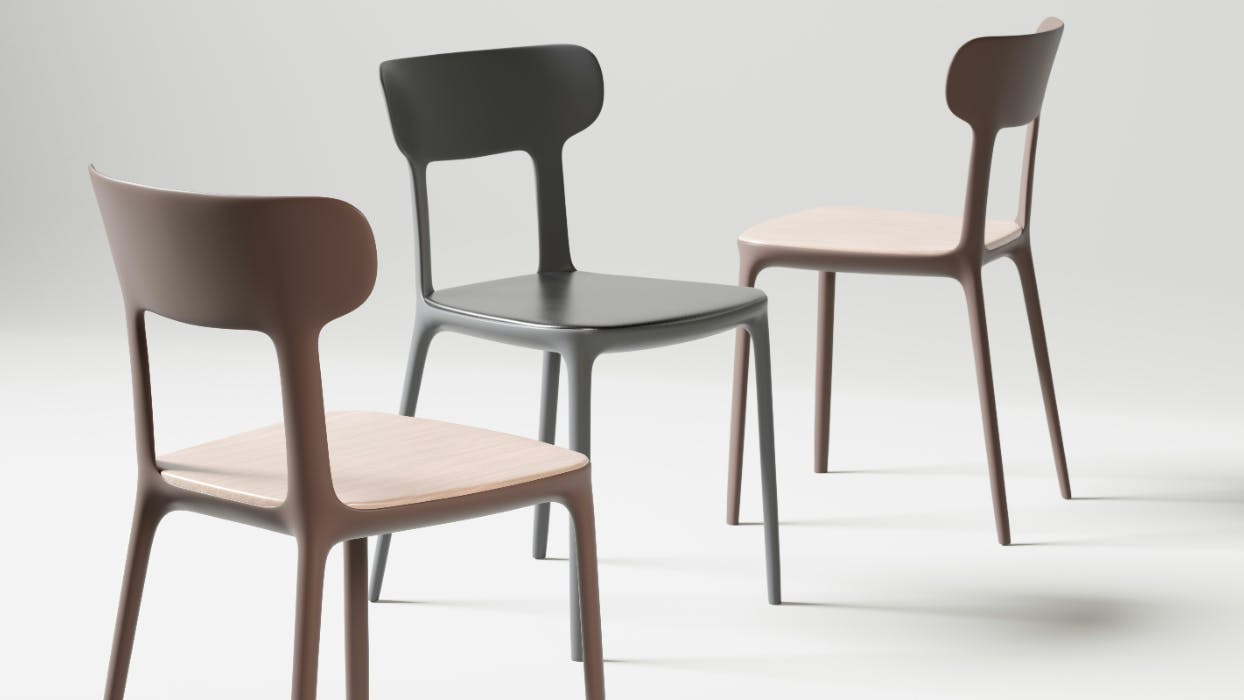
Mid-century modern emerged in the post–World War II era, roughly from the late 1940s to the mid-1960s. It wasn’t concretely labeled as “Mid-Century Design” until 1984 when Cara Greenberg defined it as a design movement in her book Mid-Century Modern: Furniture of the 1950s.
This period leading to the Mid-Century style marked a massive shift in technological growth. At the same time, designers wanted to create a new style that would branch away from the war era and into an optimistic future. They wanted to leave behind the previous design styles of Victorian and Art Deco, that were more luxurious and extravagant.
But there were more factors at play: they had to work with limited materials. So they ditched ornate detailing in favor of clean lines, geometric shapes, and accessible materials like plywood, fiberglass, and molded plastic.
All these factors led to the creation of the sleek, minimalism of Mid-Century design. A style that felt both practical and futuristic.
5 key characteristics of mid-century design
We mention above that Mid-Century design is charactertized mainly by clean lines, organic shapes, and simple materials. This can be broken down into five key characteristics. If you can grasp these, you can easily recreate the iconic style for your graphic design projects and beyond.
Let’s get into it:
1. Clean lines & geometric shapes
In interiors, this means furniture with tapered legs, sharp edges, and simple silhouettes. In graphic design, think strong grids, clear alignment, and bold geometric compositions. Mid-century layouts rely on order and structure.
This style works particularly well for posters, packaging, or digital interfaces as it fits naturally into the shape of the frame or screen. Its structured, boxy layouts feel intentional rather than restrictive, making it perfect for providing clarity, hierarchy, and visual balance.
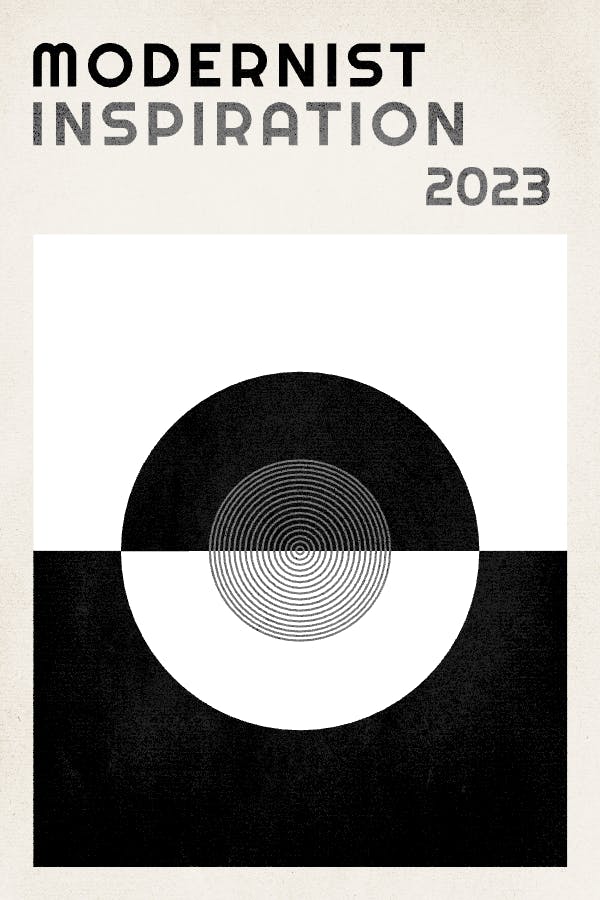
Modernist Inspiration Design. Use Template
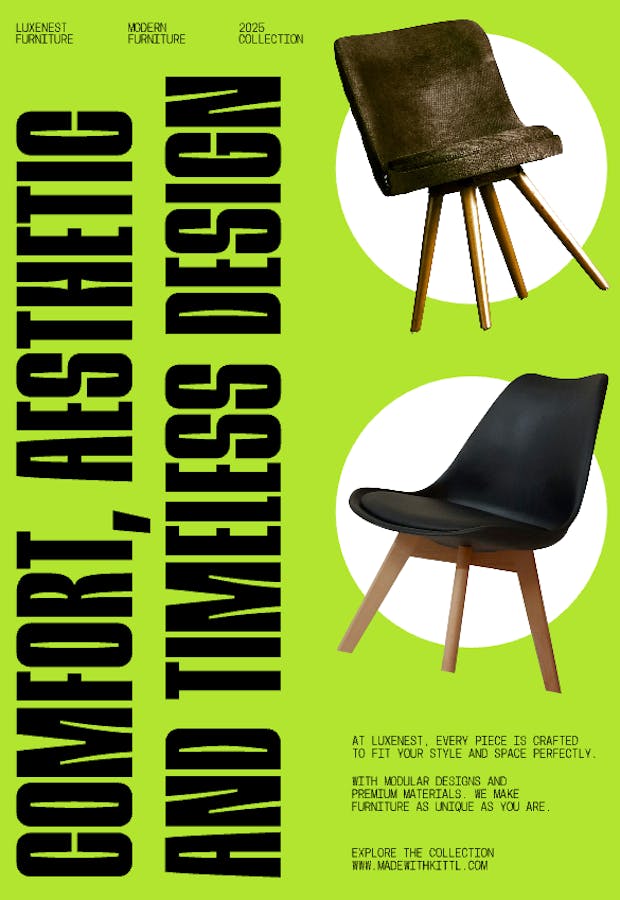
Furniture Product Magazine Ad. Use Template
2. A balanced color palette
The original palette leaned on warm earthy tones (mustard, avocado, burnt orange) mixed with bold accents (teal, cherry red, cobalt). You can see excellent examples of this through artwork or time on albums, film posters, or even through images of interiors during the time period.
In graphic design, you can keep it classic or modernize it — a classic look is pairing neutrals with strategic bursts of color for visual impact.
To use an authentic Mid-Century design color palette, take a photo from the time period (Pinterest is a great resource or you can check out Kittl’s image library), then use the Color Palette Generator in Kittl to automatically create a palette with colors pulled from the image. Or if you want specific colors, use the eye-dropper tool and pull colors directly from an image.
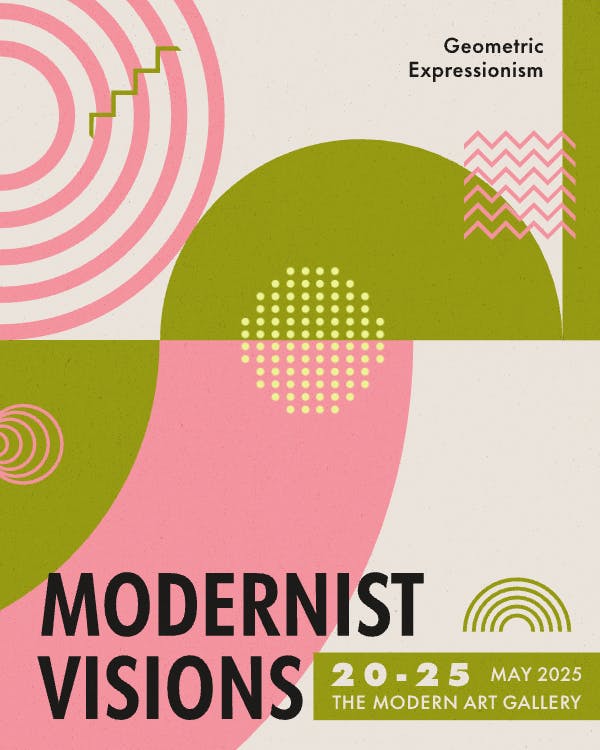
Art Show Event Bauhaus Design. Use Template
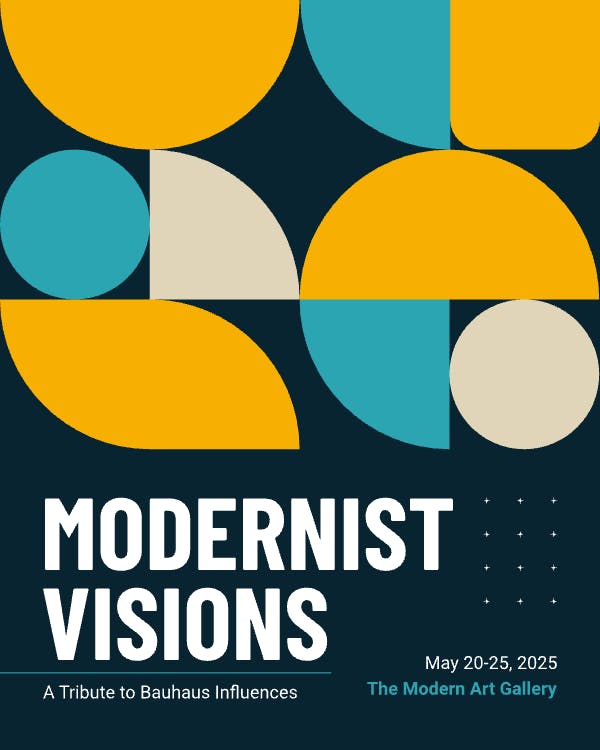
Art Show Event Bauhaus Design. Use Template
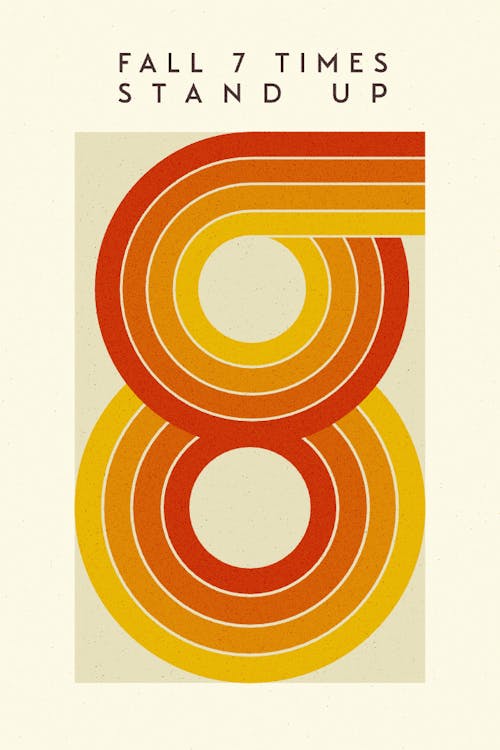
Stand Up 8 Modern Design.
Use Template
3. Minimalism with personality
Mid-century isn’t cluttered, but it’s never boring. You’ll see simplicity paired with playful elements such as asymmetry, abstract shapes, or organic patterns.
In graphic work, this could mean a minimal poster layout broken up with starbursts, arrows, or similar elements. Get creative and experiment with different options but keep it simple.
You can find an endless feed of shapes and icons in Kittl. Just navigate to the graphics panel, and search for “Mid-Century” to narrow results to exactly what you need.

Vintage Bar Staff Wanted Design. Use Template
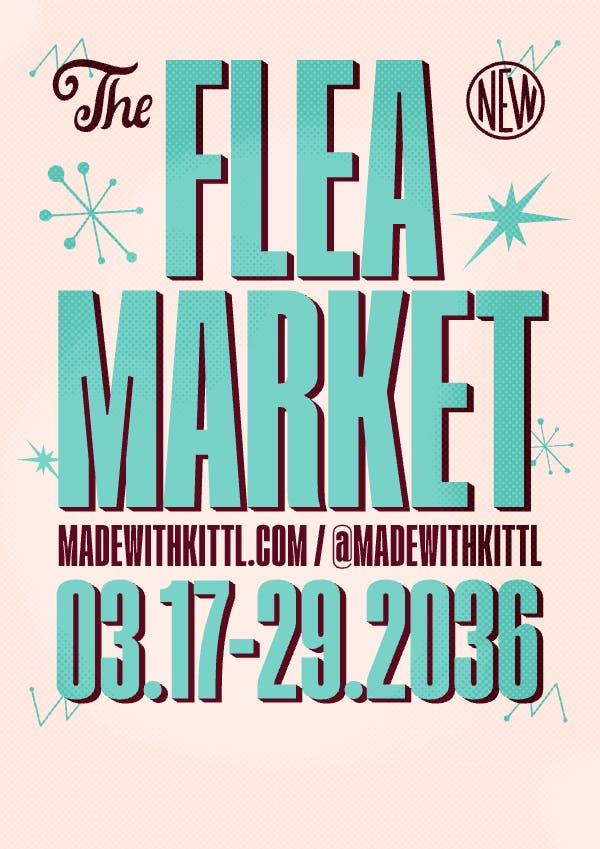
Retro Flea Market Sale Event. Use Template
4. Natural-looking textures & materials
Furniture and interiors mainly incorporated wood, brass, leather, and stone. But because of limited resources and advancements in manufacturing, synthetic materials made from plastic was also widely used. But it was still made to look real — like a natural wood.
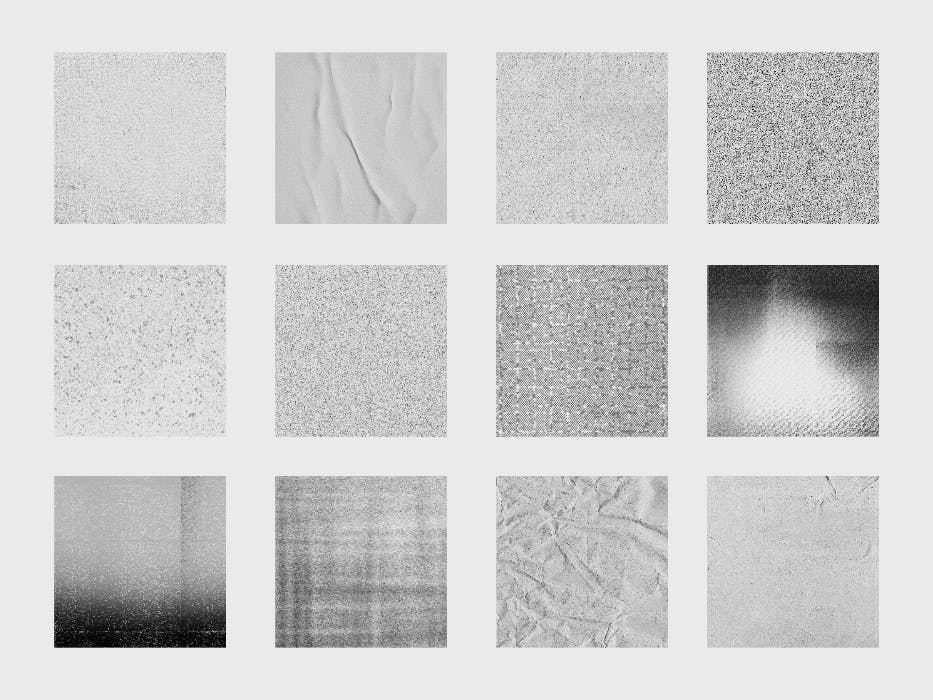
In graphic design, this can translate into subtle texture overlays like woodgrain backgrounds or subtle paper textures that add interest and depth while keeping a clean aesthetic.
Search through all the textures and free graphics available in Kittl that will perfectly match your mid-century modern designs. The textures below are from the coffee shop mid-century design bundle — available for download in Kittl!.
5. Typography that blends form and function
Mid-century typography is iconic and still a very popular design choice today. It focused on bold sans-serifs, modular display types, and playful scripts. Often combining bold, display san-serifs with playful scripts.
These typefaces communicate professionalism but also charm. They appear clean and simple but also sophisticated and a bit luxurious. Pairing them strategically, such as a strong sans-serif headline with a curved script accent, instantly signals mid-century style.
Are you wondering where you can find Mid-Century fonts for your graphic design projects? Look no further. We’ve created the list below of some of the most iconic and best Mid-Century fonts. Get started by jumping directy into the design project with a free account (no credit card is needed — just an email to access your account).

Why mid-century design is still trendy today
Mid-Century design is still extremely popular today. We’ve listed it as as a trending design style for 2025, but we imagine it’s popularity won’t decline anytime soon.
It’s versatile
The core of mid-century design is simple, modular structure. Whether in furniture, layouts, or graphics, it uses blocks of color, strong type, and generous whitespace. This makes it easy to adapt — you can take a vintage ad from the 1950s, tweak the palette or typography, and it feels current.
It bridges minimalism and maximalism
Design trends swing between extremes. Minimalism dominated for a while, then maximalism surged back. Mid-century comfortably sits between them. It offers the structure of minimalism with the freedom to inject maximalist color and flair.
So if you’re looking for a design style that’s simple but offers room for color and creativity — whether for visual branding, logos, social posts, or even product design — Mid-Century design could be the style for you.
It’s culturally relevant
Mid-century style keeps reappearing in pop culture — from Severance to classic and new Wes Anderson films. This keeps the aesthetic feeling fresh, even if the design language hasn’t changed much in decades.
Its typography is timeless
Mid-century typefaces are adaptable. They work for branding, packaging, posters, and digital — and they feel retro without being dated. And like we mentioned above, while they’re clean and simple, Mid-Century-inspired text appears luxurious and sophisticated.
So depending on the context you place your text in, you can create compositions that lean more luxurious or more retro.
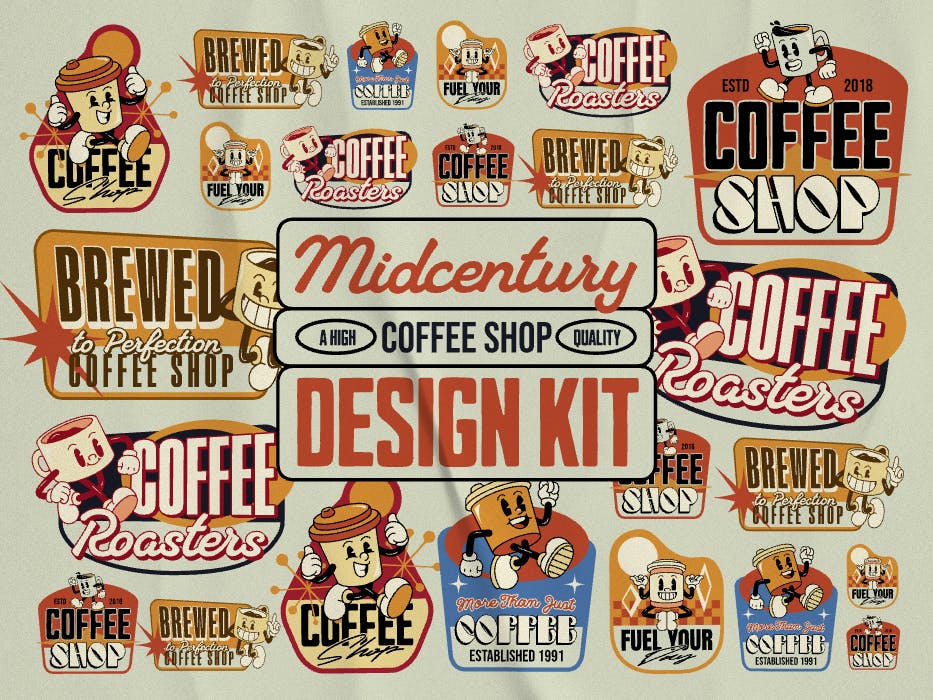
Check out the coffee shop design bundle below — inside you’ll find a curated collection of fonts, textures, illustrations, icons, and more that all perfectly encapsulate the mid-century modern design style. Open the project to access all the content. Don’t have a Kittl account yet? All you need is an email to sign up and start designing with a free account.
Key takeaway
While Mid-century design was originally invented largely for interior design to make beautiful design accessible for households everywhere, we’re happy to see it’s influenced design everywhere. It works beautifully in branding, product packaging, posters, social media, and more — even POD.
Watch the video below for more tips on how to create mid-century modern designs!
Whether you’re going for a true retro look or a more modern twist, it’s a style that lets you experiment. Which means you can create incredible Mid-Century designs but add your own unique creative touch. So your designs stand out from the crowd, but stay true to the iconic style.
If you’re ready to try it out for yourself, search for mid-century modern templates in our template library. All templates are are carefully crafted by designers and ready for your customizations. Use these templates as a layout for your own projects or use them as visual inspiration. They’re here to keep your creativity flowing.
From bold poster layouts to packaging-ready graphics, there’s a lot to explore. Get started now!